Guide
Carpal Tunnel vs Tendonitis: How to Tell the Difference
By Dr. Laura Chen, Occupational Therapist & RSI Specialist · Updated 2026-03-10

By Dr. Laura Chen, OT | Last updated: March 2026
Carpal tunnel syndrome and tendonitis are two of the most common wrist conditions affecting office workers, but they have different causes and require different treatments. Carpal tunnel involves compression of the median nerve, causing numbness and tingling in the fingers. Tendonitis is inflammation of the tendons, causing localized pain that worsens with movement. Knowing which condition you have is the first step toward effective relief.
The Complete Carpal Tunnel Recovery System — Everything in One Guide
Exercises, stretches, ergonomic setups, brace recommendations, and a step-by-step daily program. 40+ pages, instant download.
Get My Complete Carpal Tunnel Recovery Guide — $7Instant download • 30-day money-back guarantee
Table of Contents
- What Is Carpal Tunnel Syndrome?
- What Is Wrist Tendonitis?
- Carpal Tunnel vs Tendonitis: Side-by-Side Comparison
- How Symptoms Differ in Daily Life
- Can You Have Both at the Same Time?
- Diagnosis: How Doctors Tell Them Apart
- Treatment Options Compared
- Ergonomic and Lifestyle Changes That Help Both
- When to See a Doctor
- Frequently Asked Questions
- Sources
What Is Carpal Tunnel Syndrome?
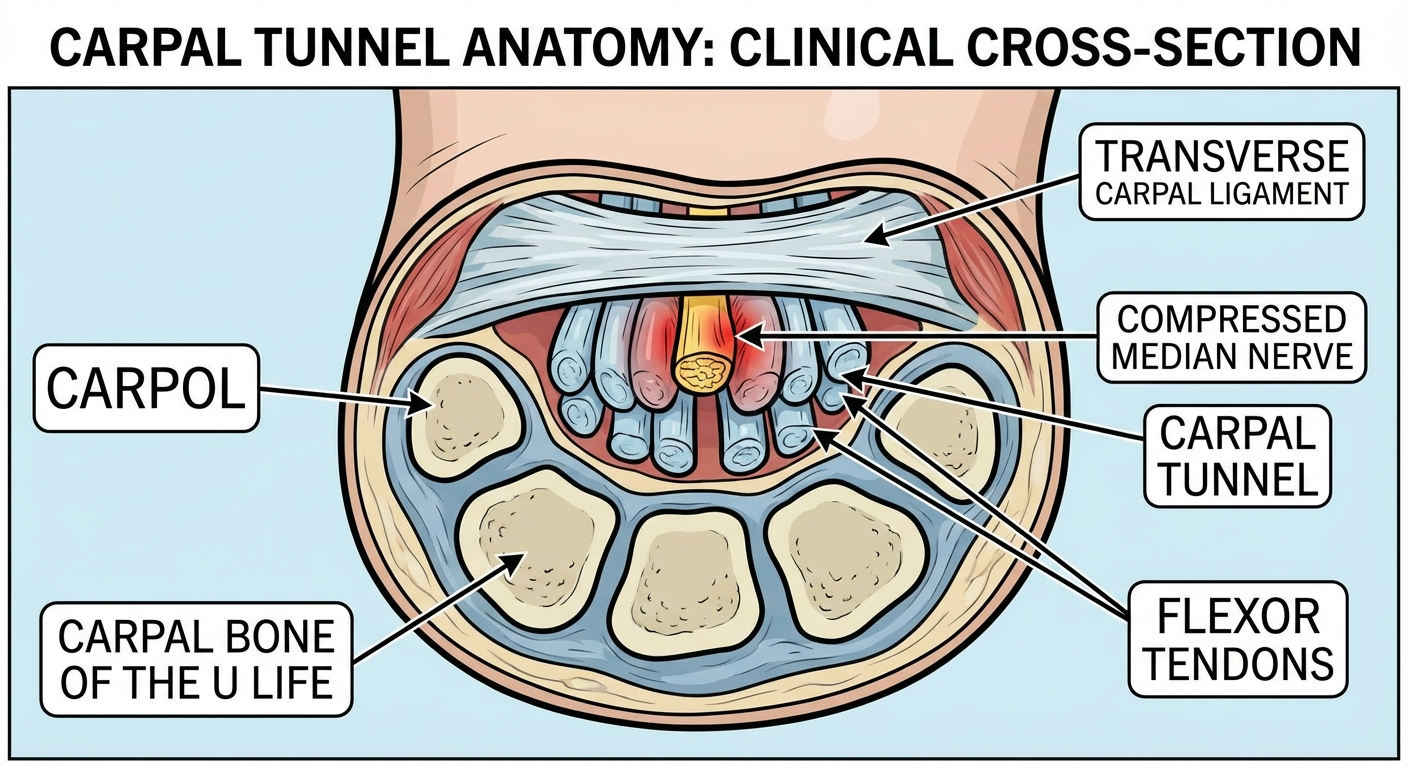
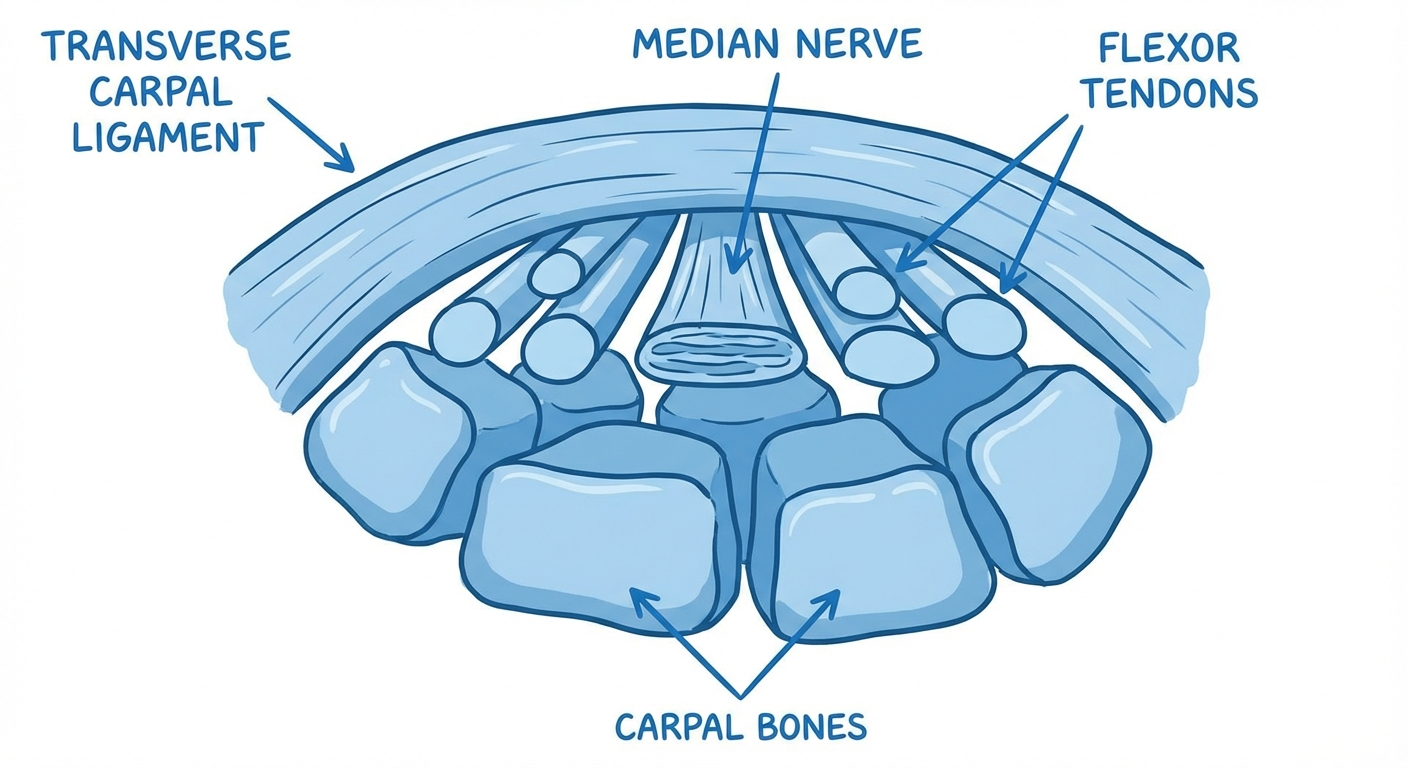
Carpal tunnel syndrome (CTS) occurs when the median nerve — one of the major nerves running from the forearm into the hand — becomes compressed as it passes through the carpal tunnel, a narrow passageway on the palm side of the wrist. This tunnel is formed by small wrist bones (carpals) on the bottom and a thick band of connective tissue (the transverse carpal ligament) across the top.
When the space inside this tunnel narrows — due to swelling, fluid retention, or repetitive strain — the median nerve gets squeezed. The result is a distinct pattern of symptoms that sets carpal tunnel apart from other wrist conditions.
According to the American Academy of Orthopaedic Surgeons (AAOS), carpal tunnel syndrome affects roughly 3 to 6 percent of the general adult population, with higher prevalence among people who perform repetitive hand-intensive tasks.
Common carpal tunnel symptoms include:
- Numbness and tingling in the thumb, index finger, middle finger, and half of the ring finger
- Pain that radiates up the forearm, sometimes reaching the shoulder
- Nighttime symptoms — many people are woken by tingling or numbness
- Weakness in grip strength, leading to difficulty holding objects
- A sensation of swelling in the fingers, even when no visible swelling is present
The hallmark of carpal tunnel syndrome is the nerve-driven nature of the symptoms. If your wrist pain comes with numbness or electric-sho
 ck sensations in specific fingers, CTS is a strong possibility.
What Is Wrist Tendonitis?
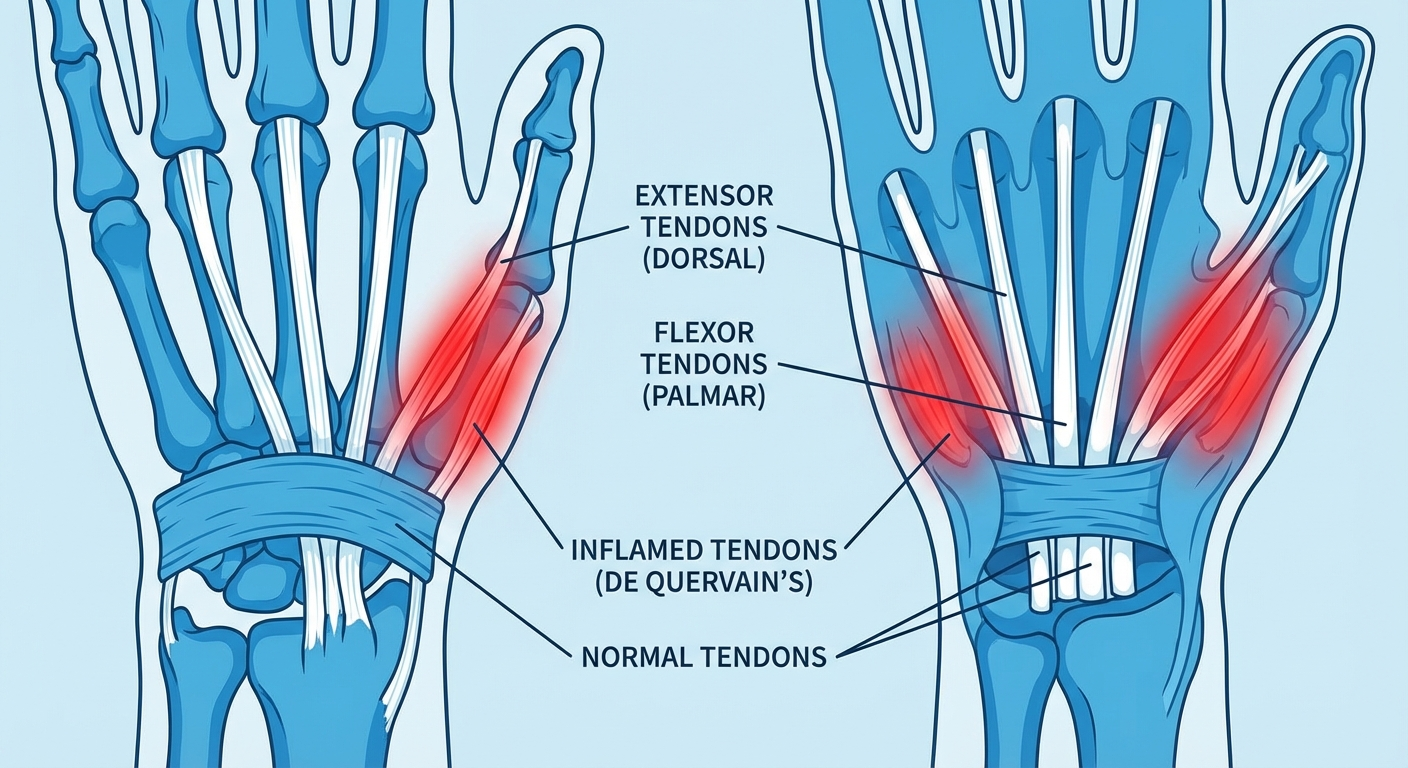
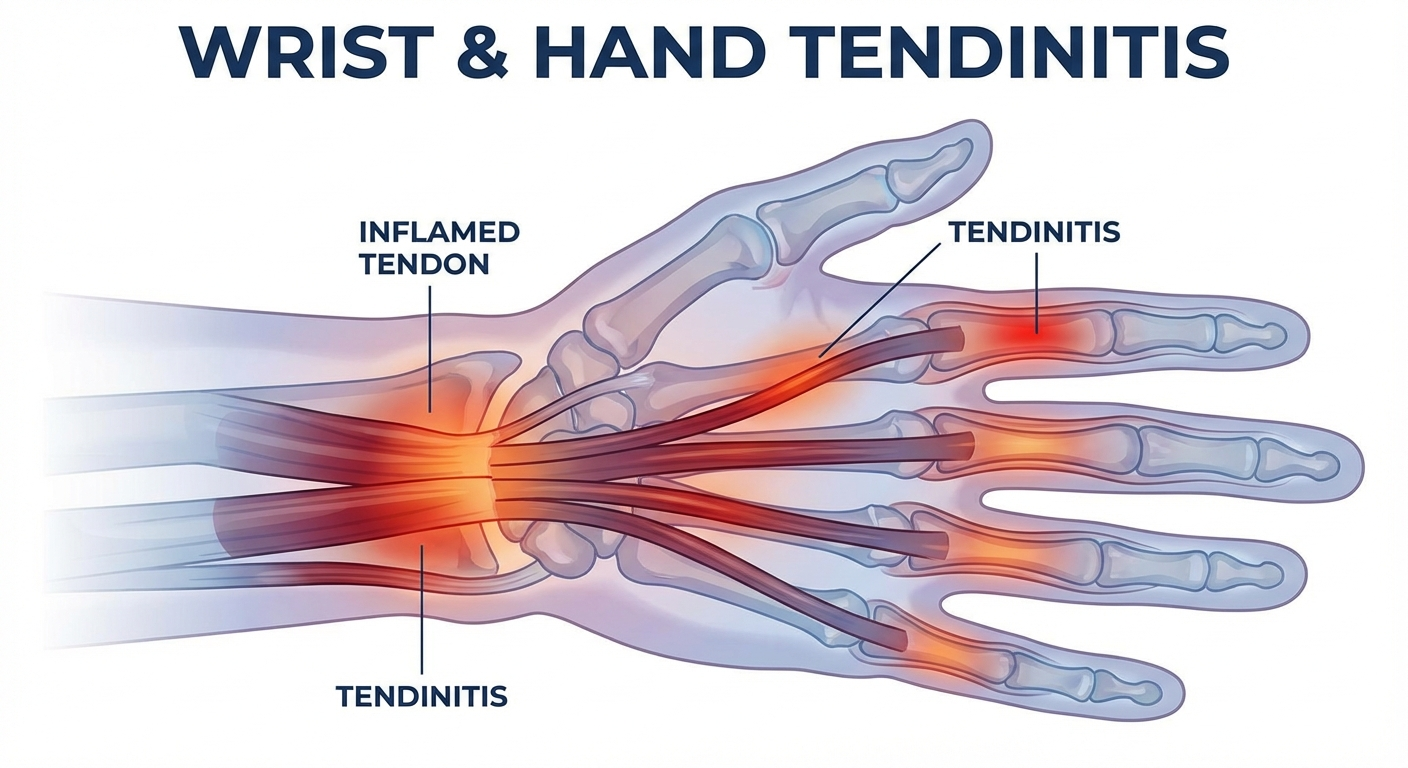
Wrist tendonitis is inflammation of one or more tendons in the wrist. Tendons are the thick, fibrous cords that connect muscles to bones, and the wrist has a complex network of them controlling hand and finger movement. When these tendons become irritated — usually from overuse — the surrounding tissue swells and the tendon itself may develop micro-tears.
The most well-known type of wrist tendonitis is de Quervain's tenosynovitis, which affects the tendons on the thumb side of the wrist. But tendonitis can develop in any wrist tendon, depending on which movements you repeat most often.
Common wrist tendonitis symptoms include:
- Localized pain along the affected tendon, often on the top or thumb-side of the wrist
- Swelling and warmth at the site of inflammation
- Pain that worsens with movement, gripping, or twisting motions
- A grinding or crackling sensation (crepitus) when moving the wrist
- Stiffness, especially in the morning or after periods of rest
- Tenderness to the touch directly over the inflamed tendon
The key distinction here is that tendonitis pain is mechanical — it is tied to movement and
 physical stress on the tendon. Unlike carpal tunnel, tendonitis does not typically produce numbness or tingling in the fingers.
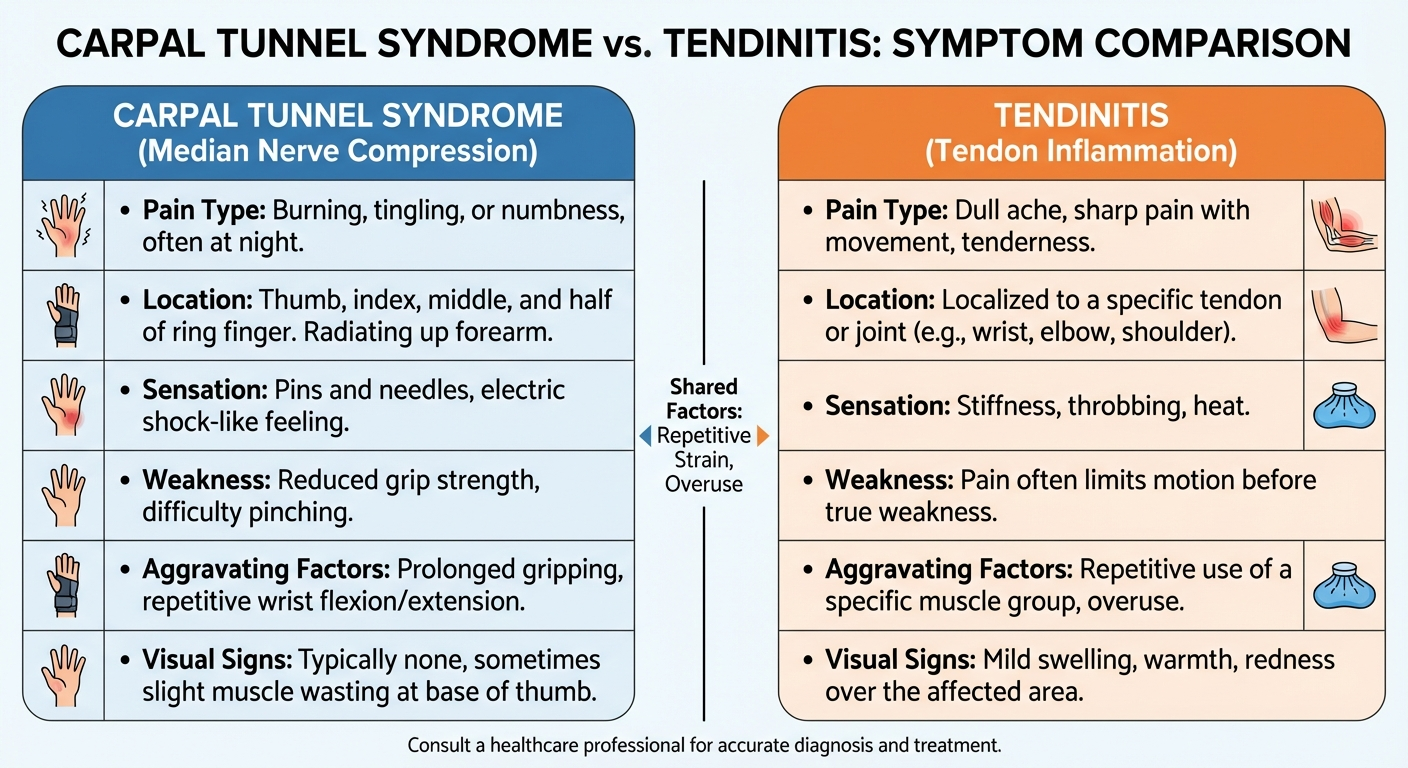
Carpal Tunnel vs Tendonitis: Side-by-Side Comparison
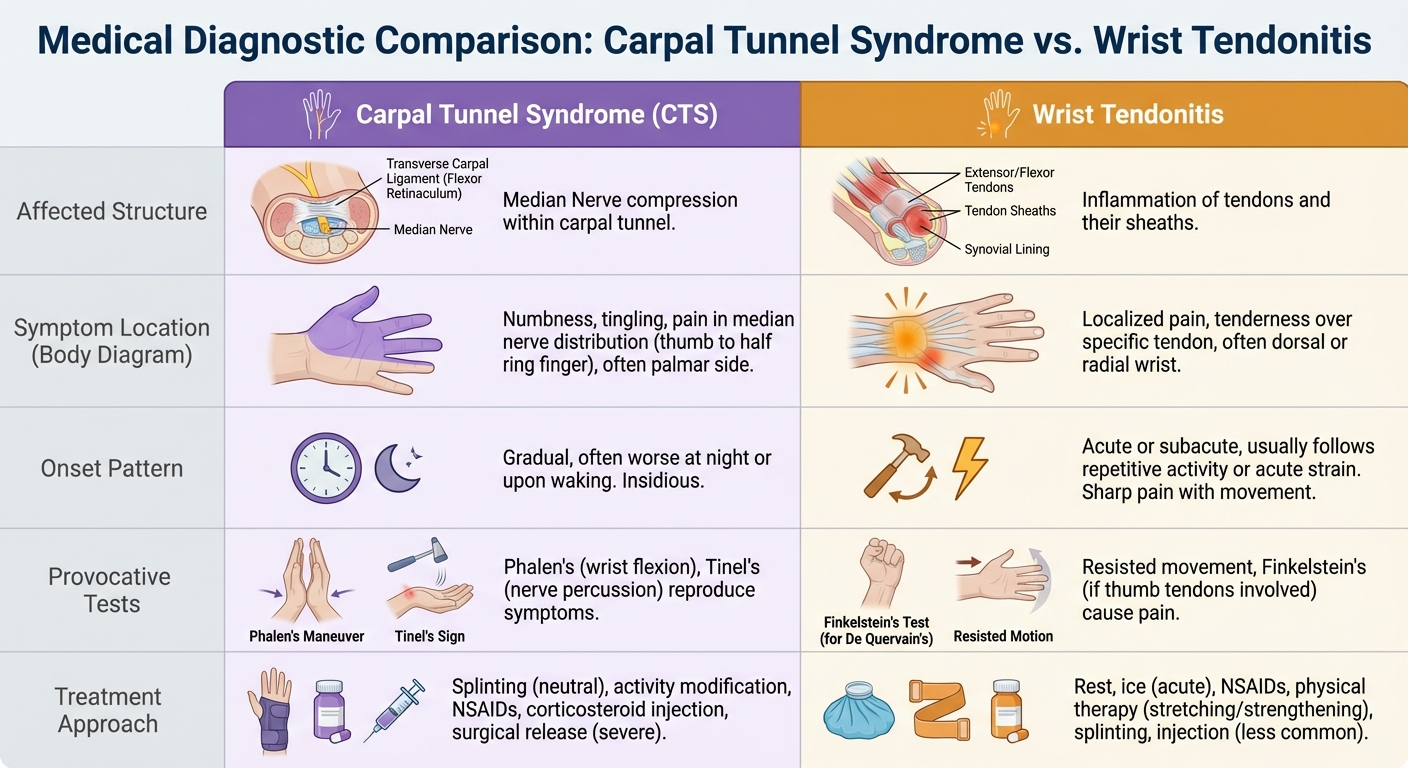
Here at WristWorkGuide, one of the most common questions we receive is how to tell these two conditions apart. The following comparison table breaks down the major differences:
| Feature | Carpal Tunnel Syndrome | Wrist Tendonitis |
|---|---|---|
| Primary Symptoms | Numbness, tingling, pins-and-needles in thumb, index, middle, and half of ring finger | Localized pain, swelling, and tenderness along the affected tendon |
| Affected Area | Palm side of hand; thumb, index, middle, and ring finger (median nerve distribution) | Varies — commonly thumb-side (de Quervain's), top of wrist, or inner wrist along specific tendons |
| Primary Cause | Compression of the median nerve inside the carpal tunnel | Inflammation or micro-tearing of wrist tendons from overuse or acute injury |
| Pain Type | Burning, tingling, or electric-shock sensation; often worse at night | Aching, sharp, or throbbing pain; worse with movement and gripping |
| Diagnosis | Tinel's sign, Phalen's test, nerve conduction study (NCS), electromyography (EMG) | Finkelstein's test (de Quervain's), palpation, ultrasound, MRI |
| Treatment | Wrist splinting, nerve glide exercises, corticosteroid injections, carpal tunnel release surgery | Rest (RICE protocol), anti-inflammatory medication, tendon-specific stretches, physical therapy, rarely surgery |
| Night Symptoms | Very common — tingling and numbness often wake patients | Uncommon — pain at rest is usually mild unless inflammation is severe |
| Risk Factors | Pregnancy, diabetes, thyroid disorders, obesity, repetitive hand work, wrist anatomy | Repetitive wrist motions, sudden increase in activity, poor ergonomics, sports involving gripping |
T
 his comparison table shows that the most reliable differentiator is the type of sensation you experience. Nerve-related symptoms (tingling, numbness, electric shocks) point toward carpal tunnel. Movement-dependent pain and tendon tenderness point toward tendonitis.
How Symptoms Differ in Daily Life

Understanding textbook definitions is one thing, but recognizing these conditions in your actual workday is another. Here is what each condition tends to feel like in practice.
Carpal tunnel at the office
You are typing an email and notice a tingling sensation creeping into your index and middle fingers. You shake your hand to get rid of it — and it works, temporarily. Later that night, you wake up at 2 a.m. with your hand feeling completely numb. In the morning, you struggle to button your shirt because your thumb feels weak and clumsy.
This "flick and shake" pattern — medically called the flick sign — is so characteristic of carpal tunnel syndrome that researchers have found it to be one of the most reliable self-reported indicators.
Tendonitis at the office
You have been mouse-clicking aggressively through a long spreadsheet. By mid-afternoon, the top of your wrist aches. When you try to pick up your coffee mug, a sharp pain shoots through the outer edge of your wrist. You notice the area is slightly puffy compared to the other wrist. The pain fades when you stop using your hand but returns immediately when you resume.
If you have de Quervain's tendonitis specifically, you will notice pain when you make a fist with your thumb tucked inside and tilt your wrist toward your pinky finger. This is essentially a self-administered Finkelstein's test.
The nighttime test
One of the simplest ways to differentiate the two conditions at home is to pay attention to what happens at night. Carpal tunnel symptoms typically intensify during sleep because many people sleep with their wrists bent,
 which further compresses the median nerve. If you are regularly woken by hand numbness or tingling, carpal tunnel syndrome is the more likely culprit.
Tendonitis, on the other hand, usually calms down at night because the tendons are at rest. You may notice some morning stiffness, but it is the daytime, movement-driven pain that defines the condition.
Can You Have Both at the Same Time?
Yes — and it is more common than many people realize. Research published in the Journal of Hand Surgery has shown that tendonitis and carpal tunnel syndrome frequently coexist, particularly in workers who perform repetitive manual tasks.
Here is why the overlap happens: the flexor tendons and the median nerve pass through the carpal tunnel together. When tendons become inflamed and swollen (tendonitis), they take up more space inside the already-tight tunnel, compressing the median nerve and triggering carpal tunnel symptoms.
This means a person can start with straightforward wrist tendonitis and, ove
 r weeks or months of continued overuse, develop secondary carpal tunnel syndrome. The WristWorkGuide editorial team frequently hears from readers who describe this exact progression — it begins as wrist soreness and gradually adds tingling fingers to the mix.
If you suspect you have both conditions, it is especially important to get a professional diagnosis. Treating only one condition while ignoring the other often leads to incomplete recovery.
Stop Guessing. Follow the System That Actually Works.
The exact protocol backed by physical therapy research — not random stretches from Google.
Get My Complete Carpal Tunnel Recovery Guide — $7Instant download • 30-day money-back guarantee
Diagnosis: How Doctors Tell Them Apart
A skilled clinician can usually distinguish between carpal tunnel syndrome and tendonitis through a combination of patient history, physical examination, and — when needed — diagnostic testing.
Physical examination tests
For carpal tunnel syndrome:
- Tinel's sign — The doctor taps over the carpal tunnel on the palm side of your wrist. A tingling sensation radiating into the fingers is a positive sign.
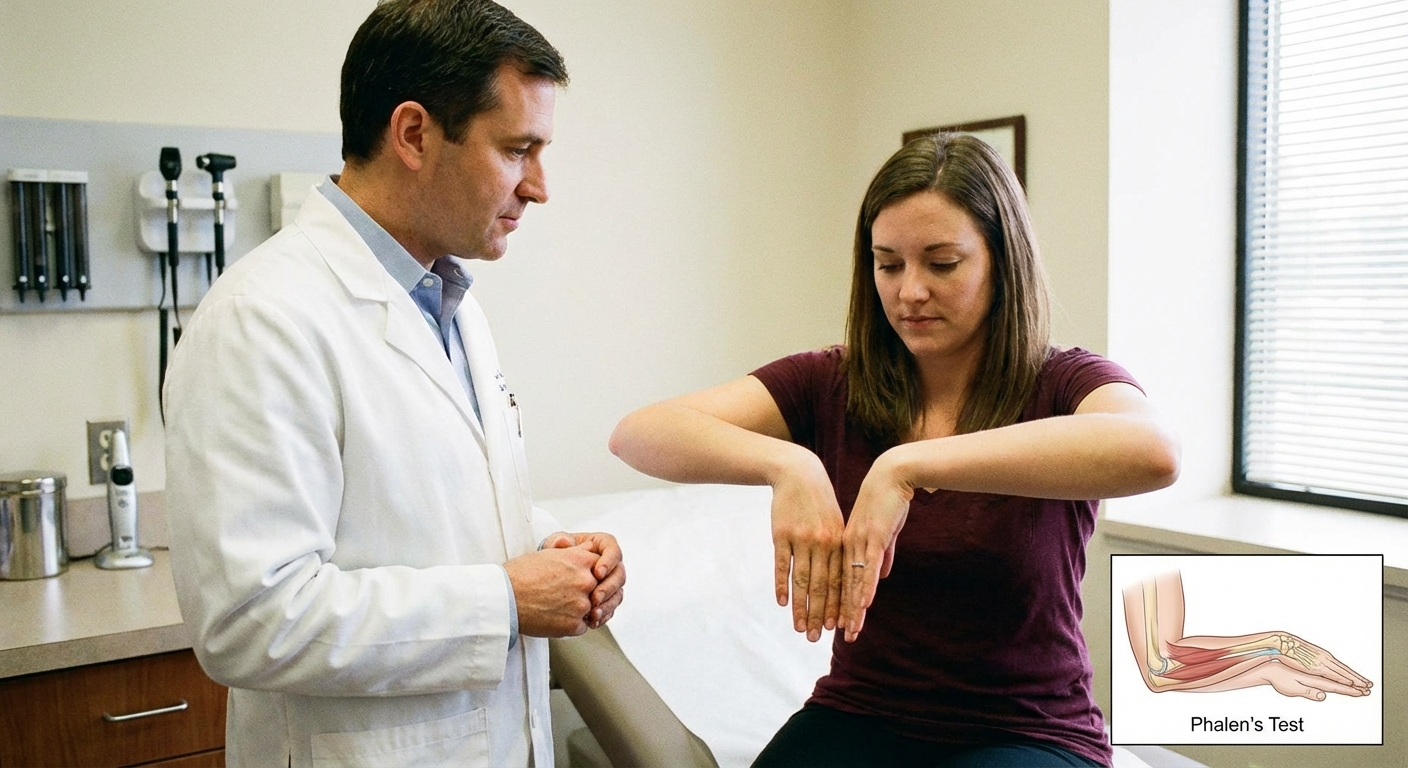
- Phalen's test — You hold both wrists in a fully flexed (bent downward) position for 60 seconds. Onset of numbness or tingling in the median nerve distribution is a positive result.
- Carpal compression test — The doctor applies direct pressure over the carpal tunnel for 30 seconds. Reproduction of symptoms suggests CTS.
For tendonitis:
- Finkelstein's test — Used specifically for de Quervain's tendonitis. You make a fist with your thumb inside, then the doctor bends your wrist toward the pinky side. Sharp pain along the thumb-side tendons is a positive result.
- Resisted movement testing — The doctor asks you to move your wrist against resistance in various directions. Pain during specific movements points to the affected tendon.
- Palpation — Simply pressing along the suspected tendon. Tenderness and swelling over the tendon sheath supports a tendonitis diagnosis.
Imaging and electrodiagnostic tests
When physical examination is inconclusive, doctors may order additional tests:
- Nerve conduction study (NCS) — Measures the speed of electrical signals throug
 h the median nerve. Slowed conduction across the wrist confirms carpal tunnel syndrome. The Mayo Clinic considers NCS the gold standard for CTS diagnosis.
- Electromyography (EMG) — Evaluates electrical activity in the muscles controlled by the median nerve. Abnormal results indicate nerve damage.
- Ultrasound — Can visualize swollen tendons, fluid in the tendon sheath, and even enlargement of the median nerve.
- MRI — Provides detailed images of soft tissues and can identify tendon tears, inflammation, and nerve compression simultaneously.
Treatment Options Compared
Treatment strategies differ significantly between the two conditions because of the underlying mechanism — nerve compression versus tendon inflammation.
Treating carpal tunnel syndrome
Conservative (non-surgical) treatment:
-
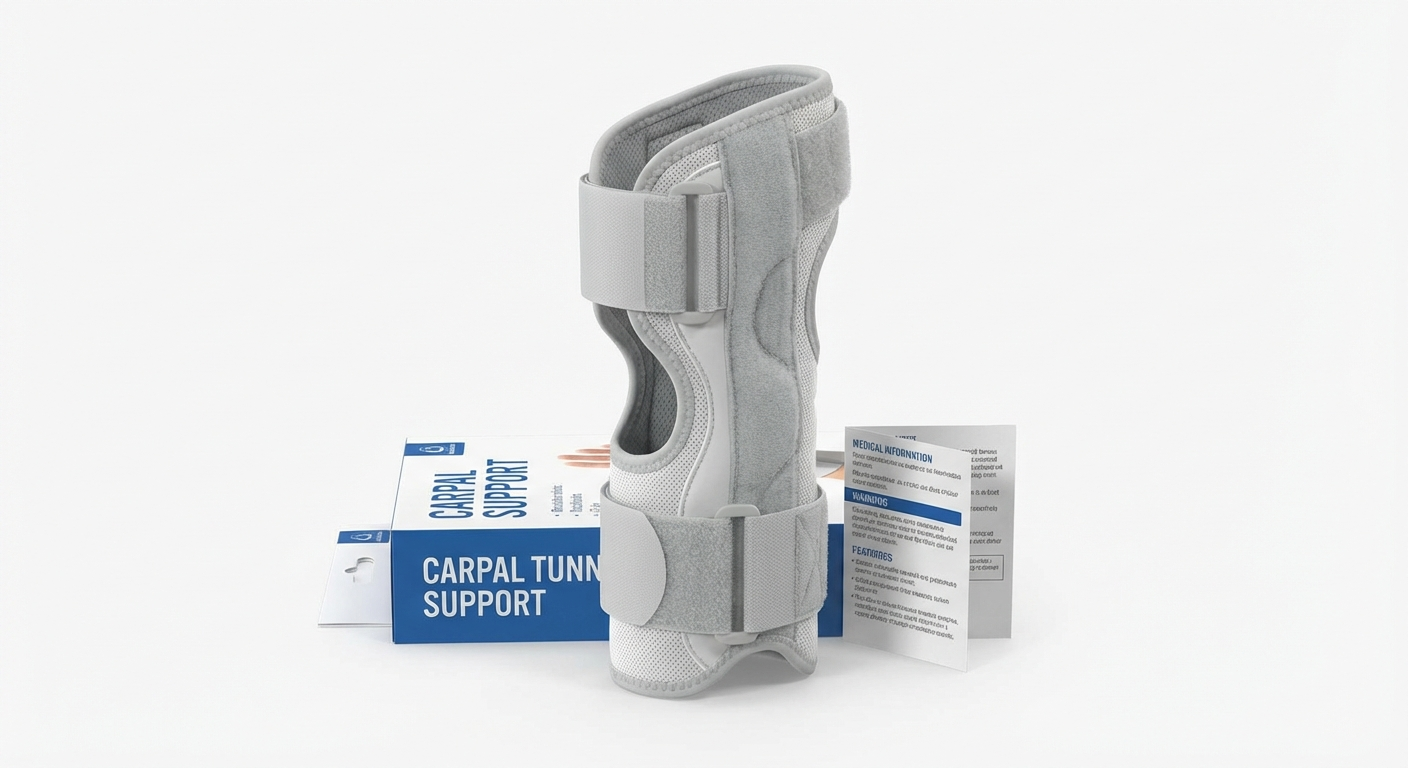
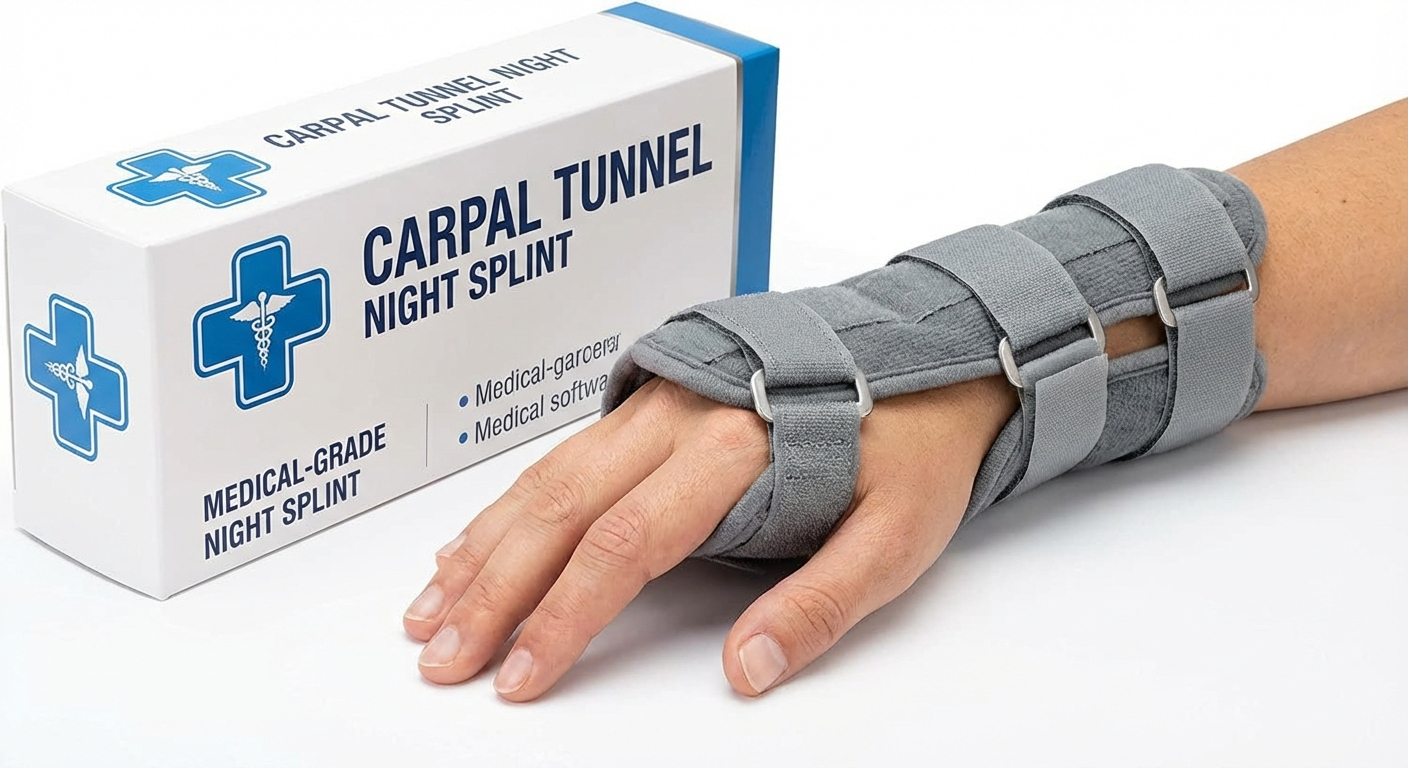
Wrist splinting — Wearing a wrist brace, especially at night, keeps the wrist in a neutral position and reduces pressure on the median nerve. This is often the first line of treatment recommended by occupational therapists. Check out our guide to the Best Wrist Brace for Carpal Tunnel for detailed product recommendations.
-
Nerve glide exercises — Specific exercises that encourage the median nerve to slide smoothly through the carpal tunnel can reduce symptoms. Our complete guide to Carpal Tunnel Exercises walks you through a daily routine.
-
Activity modification — Adjusting your workstation, taking frequent breaks, and using ergonomic tools to reduce wrist strain.
-
Anti-inflammatory medication — NSAIDs (ibuprofen, naproxen) may reduce swelling in mild cases, though their effectiveness for CTS is debated.
-
Corticosteroid injection — A steroid injection into the carpal tunnel can provide temporary relief by reducing inflammation. Studies suggest it provides meaningful improvement for an average of 2-3 months.
Surgical treatment:
- Carpal tunnel release surgery — The transverse carpal ligament is cut to relieve pressure on the median nerve. This can be done as an open procedure or endoscopically. According to the AAOS, carpal tunnel release is one of the most common surgical procedures in the United States, with a success rate exceeding 90 percent.
Shop Wrist Braces for Carpal Tunnel on Amazon
Treating wrist tendonitis
Conservative treatment:
-
RICE protocol — Rest, Ice, Compression, and Elevation remain the foundation of acute tendonitis treatment.
-
Anti-inflammatory medication — NSAIDs are more consistently effective for tendonitis than for carpal tunnel because inflammation is the primary problem.
-
Tendon-specific stretches and exercises — Eccentric strengthening exercises (where the muscle lengthens under load) have strong evidence supporting their effectiveness for tendon healing.
-
Physical or occupational therapy — A therapist can provide manual treatment, therapeutic ultrasound, and a structured exercise program.
-
Corticosteroid injection — Effective for reducing tendon sheath inflammation, though repeated injections carry a risk of tendon weakening.
-
Bracing or taping — A thumb spica splint is commonly used for de Quervain's tendonitis to immobilize the affected tendons.
Surgical treatment:
- Surgery for tendonitis is uncommon and typically reserved for chronic cases that fail to respond to 6+ months of conservative treatment. The procedure involves releasing the tendon sheath to give the tendon more room.
Shop Thumb Spica Splints for Tendonitis on Amazon
Ergonomic and Lifestyle Changes That Help Both
Regardless of which condition you are dealing with, the following workplace and lifestyle modifications can reduce symptoms and prevent recurrence. These recommendations are backed by occupational health research and are a core part of what we advocate here at WristWorkGuide.
Workstation setup
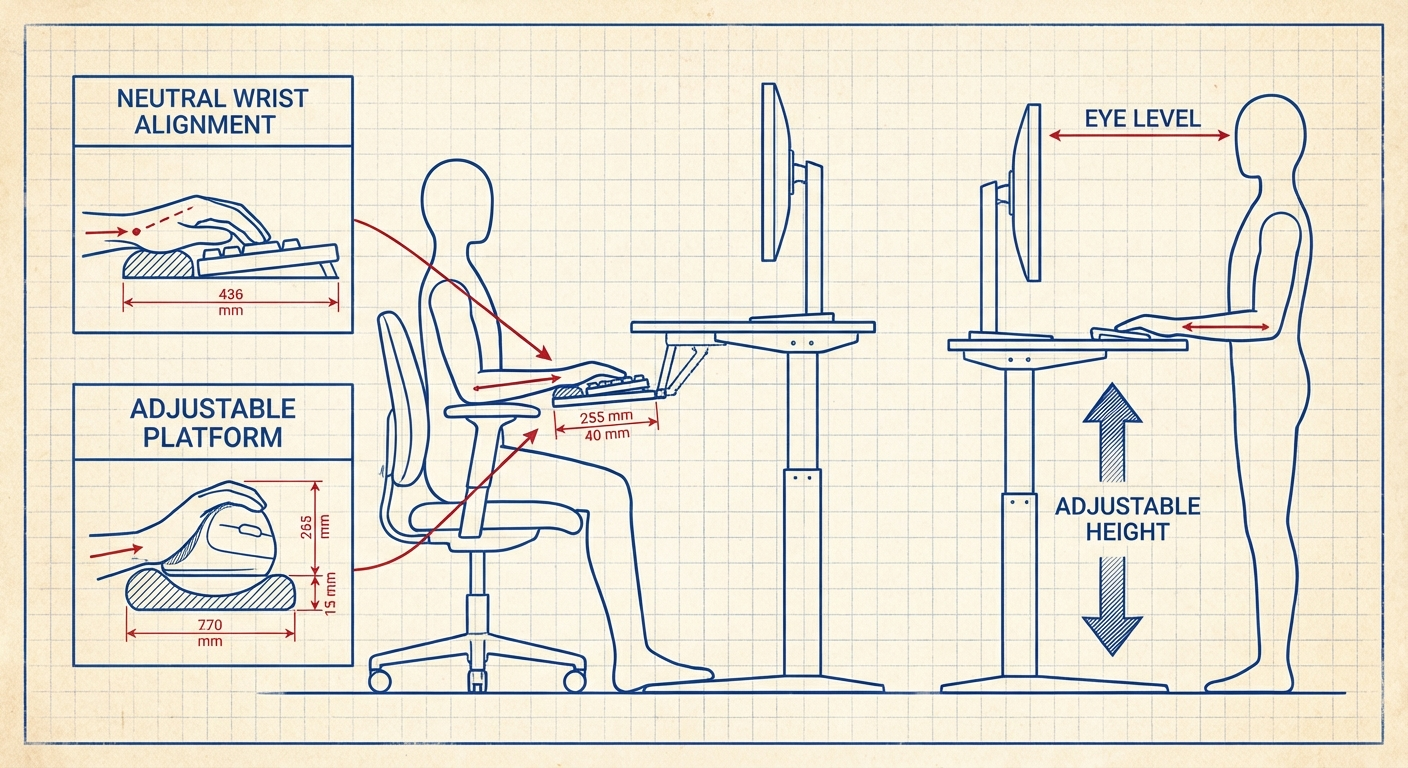
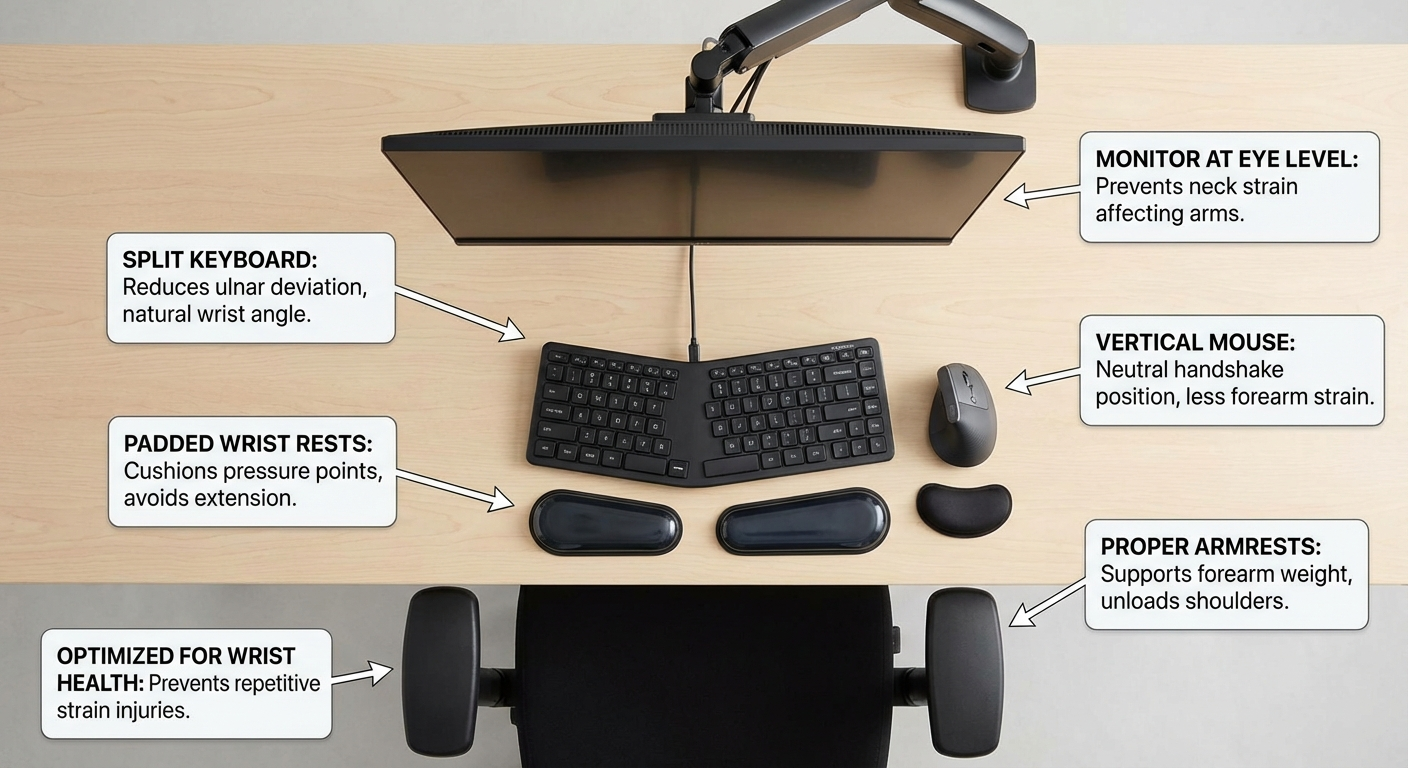
- Keyboard height — Your keyboard should be at a height that allows your forearms to be roughly parallel to the floor, with wrists in a neutral (not bent) position.
- Mouse positioning — Keep your mouse close to your keyboard, at the same height. Consider a vertical ergonomic mouse that places the hand in a handshake position, reducing strain on the wrist tendons and carpal tunnel.
- Monitor placement — Position your monitor at arm's length, with the top of the screen at or slightly below eye level. Poor monitor height leads to compensatory postures that affect the entire upper extremity chain.
- Chair armrests — Adjust them to support your forearms without forcing your shoulders up or your wrists into awkward angles.
Movement and breaks
- The 20-20-20 rule for hands — Every 20 minutes, take 20 seconds to stretch your wrists and fingers in at least 2 different directions. This simple habit can significantly reduce cumulative tendon and nerve stress.
- Microbreaks — Research from the National Institute for Occupational Safety and Health (NIOSH) supports taking short, frequent breaks over fewer long breaks for preventing repetitive strain injuries.
- Stretch routine — Incorporate wrist flexion and extension stretches, finger spreads, and tendon gliding exercises into your daily routine. Our Carpal Tunnel Exercises guide includes a 5-minute routine that targets both conditions.
Lifestyle factors
- Maintain a healthy weight — Obesity is an independent risk factor for carpal tunnel syndrome, likely because of increased fluid retention and pressure within the carpal tunnel.
- Manage underlying health conditions — Diabetes, thyroid disorders, and rheumatoid arthritis all increase the risk of both conditions. Proper management of these conditions can reduce wrist symptoms.
- Stay hydrated — Adequate hydration supports tendon health and may reduce fluid retention that contributes to carpal tunnel pressure.
- Grip awareness — Many people grip tools, mice, and phones far harder than necessary. Consciously relaxing your grip throughout the day reduces tendon strain.
Shop Ergonomic Keyboard and Mouse Combos on Amazon
When to See a Doctor
Both carpal tunnel syndrome and tendonitis can often be managed with home treatment in their early stages. However, there are clear warning signs that indicate professional evaluation is needed.
See a doctor promptly if you experience:
- Persistent symptoms lasting more than 2 weeks despite rest and home treatment
- Progressive numbness or tingling that is getting worse over time
- Hand weakness — dropping objects, difficulty with fine motor tasks like buttoning clothes
- Night symptoms that regularly disrupt your sleep
- Visible muscle wasting at the base of the thumb (thenar atrophy) — this is a sign of advanced carpal tunnel syndrome and requires urgent evaluation
- Symptoms after a fall or injury — to rule out fractures or acute tendon tears
- Symptoms in both hands — bilateral involvement may suggest a systemic cause
What to expect at your appointment
Your doctor will likely start with a thorough history — asking about your occupation, daily activities, symptom timeline, and any underlying health conditions. The physical examination will include the specific tests described earlier in this article.
If carpal tunnel syndrome is suspected, you may be referred for nerve conduction studies. For tendonitis, imaging such as ultrasound is sometimes ordered to assess the severity of tendon inflammation.
Based on the diagnosis, your doctor may refer you to an occupational therapist, a hand surgeon, or both. Early intervention consistently produces better outcomes for both conditions, so do not wait until symptoms become severe.
Frequently Asked Questions
What is the main difference between carpal tunnel and tendonitis?
Carpal tunnel syndrome involves compression of the median nerve, producing numbness, tingling, and weakness in specific fingers. Tendonitis involves inflammation of the tendons, producing localized pain and swelling that worsens with movement. The type of sensation — nerve symptoms versus pain-only — is the most reliable differentiator.
Can you have both carpal tunnel and tendonitis at the same time?
Yes. Inflamed tendons can swell inside the carpal tunnel and compress the median nerve, causing both conditions simultaneously. This is especially common in people who perform repetitive hand and wrist motions. Diagnosis by a doctor is important to ensure both conditions are treated.
How do I know if my wrist pain is carpal tunnel or tendonitis?
Pay attention to the type of symptoms. Numbness, tingling, or a pins-and-needles sensation in the thumb and first three fingers — particularly at night — suggests carpal tunnel syndrome. Localized pain, swelling, or tenderness along a tendon that increases with gripping or wrist movement suggests tendonitis.
Does carpal tunnel syndrome go away on its own?
Mild cases may improve with rest, splinting, and ergonomic changes, but carpal tunnel syndrome rarely resolves completely without some form of treatment. Without intervention, it typically progresses and can cause permanent nerve damage. The NIH recommends early treatment to prevent irreversible loss of hand function.
What is the fastest way to relieve wrist tendonitis?
The RICE protocol — Rest, Ice, Compression, and Elevation — is the most effective initial approach. Apply ice for 15-20 minutes several times per day, and use an over-the-counter NSAID like ibuprofen to reduce inflammation. Avoid the aggravating activity until symptoms subside, then gradually return with proper ergonomic support.
Is surgery necessary for carpal tunnel or tendonitis?
Not always. Many cases of both conditions respond well to conservative treatment, especially when caught early. Surgery for carpal tunnel syndrome (carpal tunnel release) is recommended when conservative measures fail after several months, or when nerve conduction studies show significant nerve damage. Surgery for tendonitis is rarely needed and is typically a last resort after 6 or more months of failed conservative therapy.
Key Takeaways
- Carpal tunnel syndrome is a nerve compression condition causing tingling, numbness, and weakness in specific fingers. Tendonitis is an inflammatory tendon condition causing localized pain that worsens with movement.
- The two conditions can coexist and even cause each other — inflamed tendons can compress the median nerve within the carpal tunnel.
- Nighttime numbness and tingling strongly suggest carpal tunnel syndrome. Movement-dependent pain and tendon tenderness suggest tendonitis.
- Both conditions benefit from ergonomic improvements, regular stretching, and early professional evaluation.
- Conservative treatment is effective for most cases, but do not delay seeking help if symptoms are worsening or affecting your daily function.
Getting the right diagnosis is the most important first step. Whether you are dealing with carpal tunnel, tendonitis, or both, understanding your condition empowers you to choose the right treatment and get back to working comfortably.
Sources
-
American Academy of Orthopaedic Surgeons (AAOS). "Carpal Tunnel Syndrome." OrthoInfo. https://orthoinfo.aaos.org/en/diseases--conditions/carpal-tunnel-syndrome/
-
Mayo Clinic. "Carpal Tunnel Syndrome — Diagnosis and Treatment." https://www.mayoclinic.org/diseases-conditions/carpal-tunnel-syndrome/diagnosis-treatment/drc-20355609
-
National Institute of Neurological Disorders and Stroke (NINDS), National Institutes of Health. "Carpal Tunnel Syndrome Fact Sheet." https://www.ninds.nih.gov/health-information/disorders/carpal-tunnel-syndrome
-
American Academy of Orthopaedic Surgeons (AAOS). "De Quervain's Tendinosis." OrthoInfo. https://orthoinfo.aaos.org/en/diseases--conditions/de-quervains-tendinosis/
-
National Institute for Occupational Safety and Health (NIOSH). "Ergonomic Guidelines for Manual Material Handling." Centers for Disease Control and Prevention. https://www.cdc.gov/niosh/
See also: ergonomic vertical mouse to prevent wrist overuse injury
Get the Complete Carpal Tunnel Recovery Guide — Same System That Helped Thousands
40+ pages of exercises, protocols, and the complete recovery plan. Instant download, 30-day money-back guarantee.
Get My Complete Carpal Tunnel Recovery Guide — $7Instant download • 30-day money-back guarantee