Guide
Wrist Rest Material and Size Fit Guide
By Carpal Tunnel Guide Editorial Team · Updated 2026-08-20
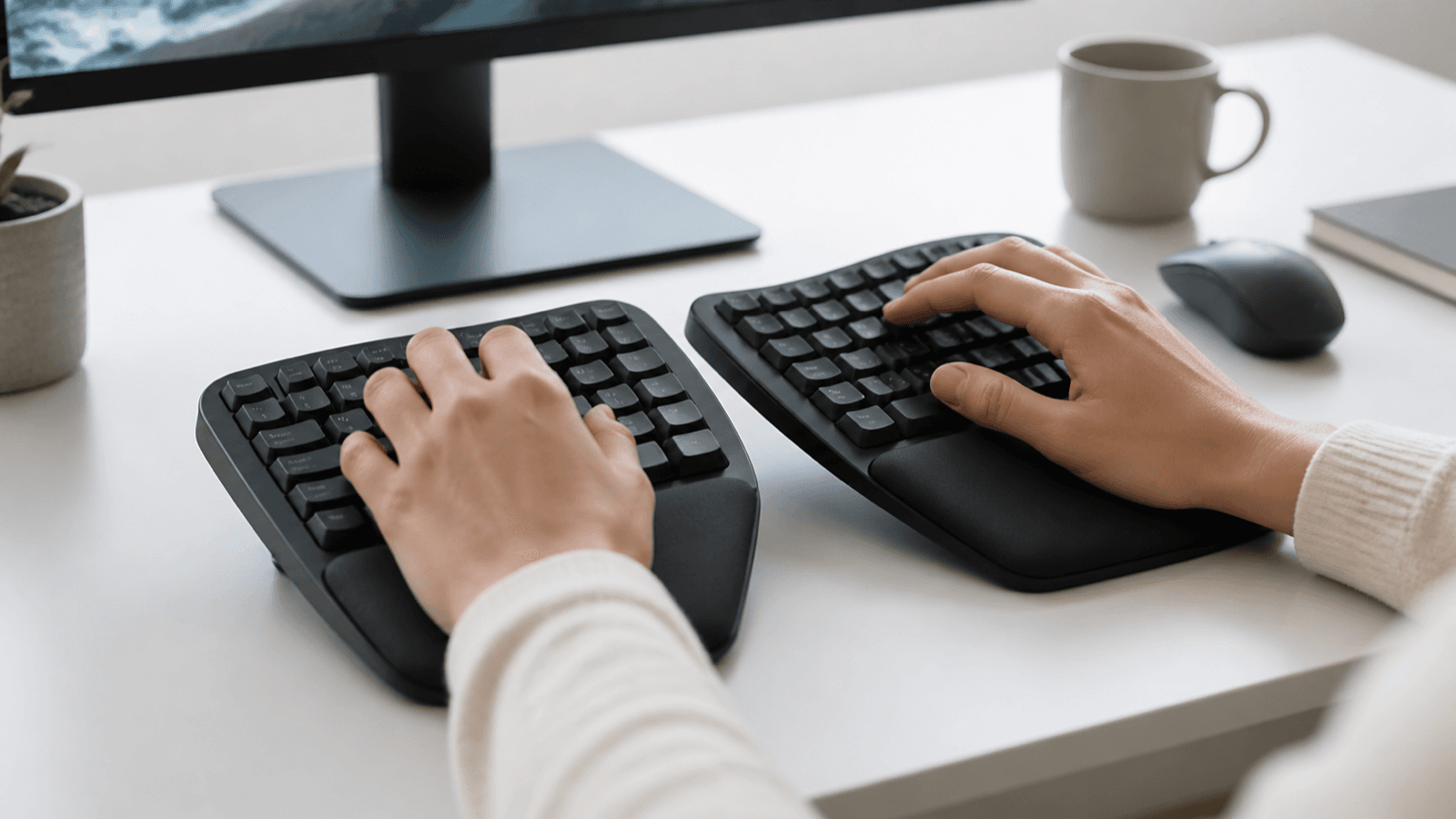
Quick answer: the best wrist rest is the one that satisfies the measured constraints of the real setup, not the product with the longest feature list. For typists comparing foam, gel, wood and fabric-covered supports, compare resting height, edge shape, surface firmness, then verify cover friction, keyboard width and cleaning method. Use current primary-source specifications, keep health or performance promises separate from product facts, and plan a reversible trial with clear return criteria.
Affiliate disclosure: Carpal Tunnel Guide may earn a commission from qualifying purchases made through clearly marked Amazon links. Retailer links are shopping paths, not proof that a product is suitable. We did not hands-on test or clinically evaluate products for this article.
Health boundary: This guide is general information, not diagnosis or individualized care. Seek qualified help for new, severe, progressive or worrying symptoms. Follow urgent-care advice from your local health service.
Relevant Amazon listings
Keyboard palm rests related to this guide
Checking Amazon catalog data
As an Amazon Associate I earn from qualifying purchases. Product details and availability can change.
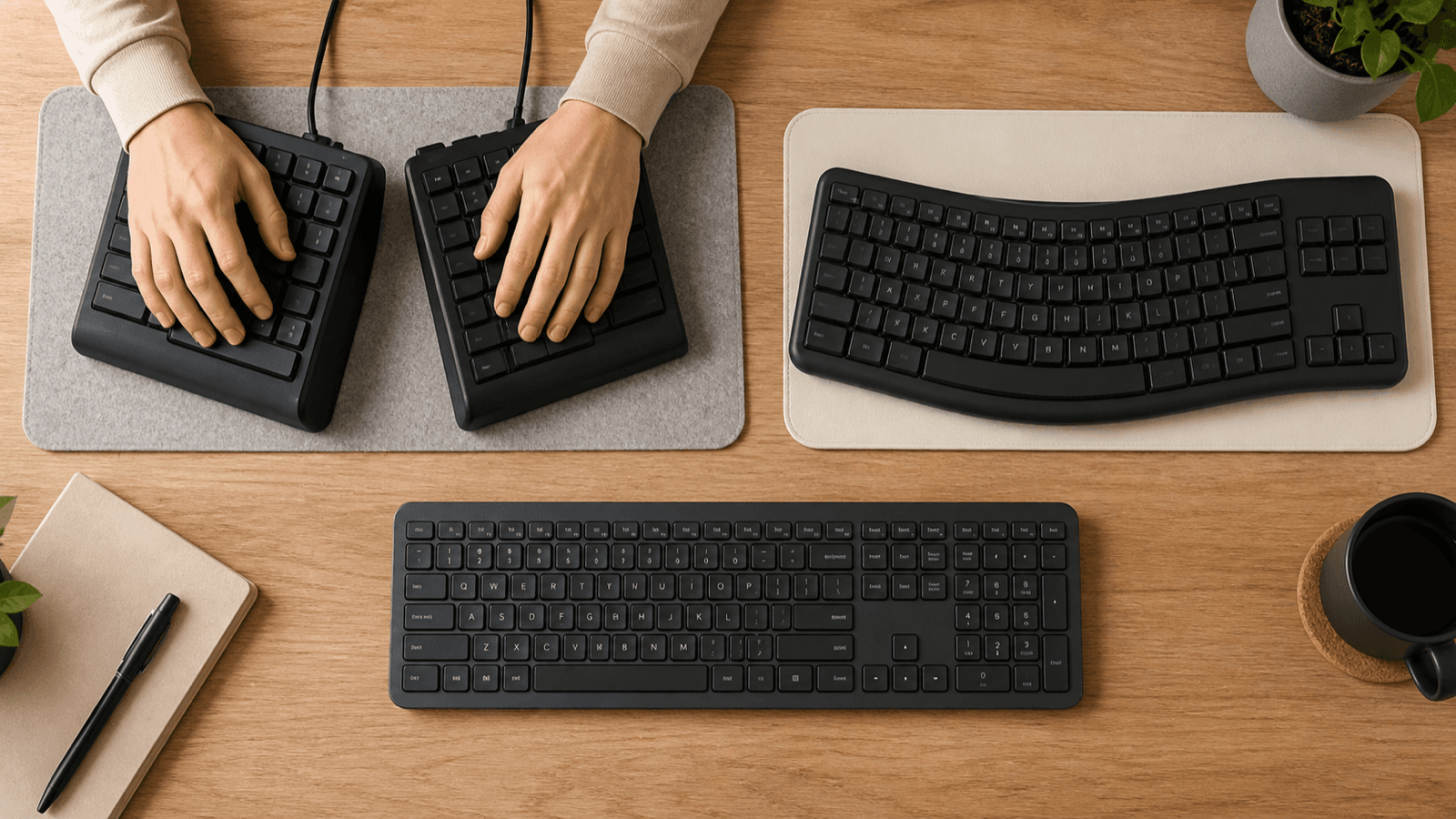
Table of contents
- Quick answer
- Who this guide is for
- Key takeaways
- Research and evidence method
- Comparison criteria
- Criterion: resting height
- Criterion: edge shape
- Criterion: surface firmness
- Criterion: cover friction
- Criterion: keyboard width
- Criterion: cleaning method
- Decision table
- Related guides
- Frequently asked questions
- Sources and update method
- Conclusion
Quick answer
Searching for wrist rest buying guide often produces pages that jump directly from a feature label to a recommendation. This guide uses a fit-and-use workflow instead. It translates the query into a handoff, operating routine and maintenance path. The result remains understandable even if models, prices or retailer listings change.
No single wrist rest is best for every person or setting. The strongest choice is the particular variant that fits the intended environment, is supported by current documentation, and can be returned or changed if the reversible experiment exposes a problem. That is a narrower promise than “best,” but it is more honest and more actionable.
Who this guide is for
This article is for typists comparing foam, gel, wood and fabric-covered supports. It is designed for readers who want to compare options carefully without confusing specifications with outcomes. It does not rank unverified models, repeat static prices, invent hands-on testing, or imply that an affiliate destination is independent evidence.
This guide compares dimensions, edge shape, surface behavior and cleaning. It does not claim that a palm or wrist rest treats carpal tunnel syndrome, and it does not replace adjustment of the chair, desk and keyboard. Seek qualified advice for persistent numbness, weakness, pain or other concerning symptoms.
Key takeaways
- Start with the job and environment, not a retailer category.
- Treat resting height and edge shape as measurable constraints.
- Verify the exact model, size, hand, format or edition; family-level facts are not enough.
- Separate product identity from comfort, durability, treatment, safety or performance claims.
- Prefer a reversible comparison with written pass and stop criteria.
- Recheck specifications and availability on the day you buy.
Research and evidence method
OSHA's workstation purchasing guide says a wrist rest should match the front edge of the keyboard in width, height, slope and contour. It describes a soft-but-firm pad, gives a depth of at least 1.5 inches, and says rests are designed for resting rather than continuous active keying. These statements support the size and use checks, not a claim that a rest treats carpal tunnel syndrome.
The OSHA evaluation checklist adds that a rest should be padded, free from sharp contacting edges and compatible with straight alignment of the forearms, wrists and hands. The Canadian Centre for Occupational Health and Safety wrist-rest fact sheet, revised in April 2026, distinguishes direct wrist support from palm support and discusses the debate around prolonged pressure. It recommends light contact at the heel or palm during rest and free hand movement while typing.
Those sources do not establish that gel, foam or wood is universally superior. Material comparisons below are limited to observable firmness, temperature, friction, edge construction and care. The manufacturer's current dimensions and cleaning instructions govern the exact product; marketplace copy cannot resolve missing specifications.
We did not test products or infer clinical outcomes from customer reviews. The evidence and links were checked on 2026-08-20 in Australia/Melbourne. Recheck manufacturer instructions, current availability and return conditions before purchase, especially when a rest is sold in multiple widths or materials.
Comparison criteria
The six criteria below turn a broad wrist rest buying guide search into a repeatable comparison. Give each one a status—pass, conditional, fail or unknown—and keep unknowns visible. Do not average away a failed mandatory constraint with several attractive optional features.
Comparison criterion: resting height
A choice that works once can still fail as a routine, so map setup, ordinary use, reset and storage as one workflow. Screen the whole system rather than one isolated feature. For wrist rest, resting height changes whether the route can serve typists comparing foam, gel, wood and fabric-covered supports. Stage the present constraint before comparing listings, identify what cannot change, and put unresolved questions in a handoff. Compatibility failures usually appear at the boundaries between products, people and routines. That operating workflow prevents a broad keyword such as “wrist rest buying guide” from turning into a generic recommendation.
Compare the support height with the front edge of the keyboard in its normal tilt position. OSHA's purchasing guide says a wrist rest should match the keyboard's front edge in height, slope and contour. A rest that sits higher can change the hand angle rather than simply filling space.
Pass when the rest meets the keyboard edge without lifting the hands during active keying. OSHA describes wrist rests as rests; minimize pressure on them while typing.
Comparison criterion: edge shape
A choice that works once can still fail as a routine, so map setup, ordinary use, reset and storage as one workflow. Use a reversible trial and record tradeoffs. For wrist rest, edge shape changes whether the route can serve typists comparing foam, gel, wood and fabric-covered supports. Stage the present constraint before comparing listings, identify what cannot change, and put unresolved questions in a handoff. An outcome is stronger when the buyer defines success before opening a product listing. That operating workflow prevents a broad keyword such as “wrist rest buying guide” from turning into a generic recommendation.
Inspect every edge that can contact the palms or forearms. The evaluation checklist calls for padding without sharp or square contacting edges. A rounded profile is more important than decorative bevels that sit outside the actual hand path.
Pass when no seam, corner or end cap creates a concentrated contact point during ordinary movement. Check both hands and every common keyboard zone.
Comparison criterion: surface firmness
A choice that works once can still fail as a routine, so map setup, ordinary use, reset and storage as one workflow. Separate observable facts from hoped-for outcomes. For wrist rest, surface firmness changes whether the route can serve typists comparing foam, gel, wood and fabric-covered supports. Stage the present constraint before comparing listings, identify what cannot change, and put unresolved questions in a handoff. Dimensions, materials and controls can be checked; comfort and usefulness still need an individual trial. That operating workflow prevents a broad keyword such as “wrist rest buying guide” from turning into a generic recommendation.
Press the surface slowly and release it. The support should be soft enough to avoid a hard pressure point but firm enough not to collapse immediately to the desk. Material names alone do not establish firmness; compare thickness, core construction and the return policy.
Pass when the surface supports brief resting without bottoming out or leaving a lasting ridge. Do not convert subjective softness into a treatment claim.
Comparison criterion: cover friction
A choice that works once can still fail as a routine, so map setup, ordinary use, reset and storage as one workflow. Start with fit, not marketing language. For wrist rest, cover friction changes whether the route can serve typists comparing foam, gel, wood and fabric-covered supports. Stage the present constraint before comparing listings, identify what cannot change, and put unresolved questions in a handoff. A useful comparison begins with the environment in which the item or plan must work. That operating workflow prevents a broad keyword such as “wrist rest buying guide” from turning into a generic recommendation.
Check whether the base stays put while the hands move on and off the keyboard. A very grippy base can also make repositioning difficult on a shared desk. Test the cover against skin, sleeves and cleaning products rather than assuming fabric, gel or wood has one universal feel.
Pass when the rest remains stable without trapping the hands in one position. Mark conditional if the cover becomes slick with normal heat or moisture.
Comparison criterion: keyboard width
A choice that works once can still fail as a routine, so map setup, ordinary use, reset and storage as one workflow. Treat every specification as a condition to verify. For wrist rest, keyboard width changes whether the route can serve typists comparing foam, gel, wood and fabric-covered supports. Stage the present constraint before comparing listings, identify what cannot change, and put unresolved questions in a handoff. A headline feature matters only when it fits the real task, space and user. That operating workflow prevents a broad keyword such as “wrist rest buying guide” from turning into a generic recommendation.
Measure the active keyboard width, not the marketing category. Decide whether the rest should span only the letter area, include the number pad or be separate for each half of a split board. Mismatched width can place a raised end directly under a moving hand.
Pass when the support aligns with the zones actually used and does not block controls, touchpads or a nearby pointing device.
Comparison criterion: cleaning method
A choice that works once can still fail as a routine, so map setup, ordinary use, reset and storage as one workflow. Screen the whole system rather than one isolated feature. For wrist rest, cleaning method changes whether the route can serve typists comparing foam, gel, wood and fabric-covered supports. Stage the present constraint before comparing listings, identify what cannot change, and put unresolved questions in a handoff. Compatibility failures usually appear at the boundaries between products, people and routines. That operating workflow prevents a broad keyword such as “wrist rest buying guide” from turning into a generic recommendation.
Read the maker's care instructions before purchase. Confirm whether the cover is removable, whether the core can be washed and how long it must dry. Shared workstations may need a wipeable surface; home users may value a washable cover.
Pass when routine cleaning follows the manufacturer's method and the product returns to service in a practical time.
Decision table
| Criterion | Evidence to capture | Decision use |
|---|---|---|
| resting height | Record the current constraint and exact variant | Measure before comparing listings |
| edge shape | Record the current constraint and exact variant | Verify compatibility and tradeoffs |
| surface firmness | Record the current constraint and exact variant | Measure before comparing listings |
| cover friction | Record the current constraint and exact variant | Verify compatibility and tradeoffs |
| keyboard width | Record the current constraint and exact variant | Measure before comparing listings |
| cleaning method | Record the current constraint and exact variant | Verify compatibility and tradeoffs |
Use the table before opening multiple retailer tabs. A written baseline makes it easier to reject irrelevant options and reduces the chance that advertising language will redefine the need. Keep links or screenshots for material specifications, but date them because models and listings change.
Gel, foam, wood and fabric: what the material changes
Material affects surface feel, cleaning, temperature, friction and how the rest changes shape. It does not by itself prove that a wrist rest prevents or treats carpal tunnel syndrome. Compare observable construction and fit, then test the product as a place for brief resting rather than a platform for loading the wrists while typing.
Memory foam
Memory foam compresses gradually and may contour around the palms. Density and thickness vary, so the material label does not reveal how far it will sink. A very soft core can bottom out; a tall dense core can sit above a low-profile keyboard. Check the published height, press response and whether the cover can be removed without damaging the foam.
Foam can retain heat and moisture depending on its cover. Look for care instructions that distinguish surface cleaning from washing the core. If a replacement cover is important, verify that it is sold for the exact model rather than assuming a generic sleeve will fit.
Gel
Gel rests commonly use a sealed core beneath fabric or a smooth wipeable skin. They can distribute pressure differently from foam, but seams, leaks and surface tack vary by construction. Inspect the perimeter and check whether the top becomes slippery or sticky during normal use.
OSHA's purchasing checklist describes a wrist rest as soft but firm and notes gel-type materials as an option. That is a purchasing consideration, not evidence that every gel product is suitable. Match the height and contour to the keyboard and preserve the user's ability to move freely.
Wood and other firm rests
Wooden rests change very little under load and can offer a smooth sliding surface. Their suitability depends heavily on edge radius, finish, height and the way the hands contact them. A hard rest with a sharp front or end can create a concentrated pressure point, while a well-rounded surface may function more like a low palm glide.
Check finish care and dimensional stability. Avoid assuming that harder means more supportive or that a natural material is automatically safer. The useful facts are shape, surface condition, height, width and the observed contact pattern.
Fabric and synthetic covers
The cover controls much of the day-to-day experience. Woven fabric may feel less tacky but collect lint; smooth synthetic skins may wipe clean but feel warmer. Seams should sit away from the main contact zones. For shared equipment, the ability to clean the surface according to the maker's instructions can be more important than the core material.
Size the rest to the actual layout
Measure from the left to right edge of the keyboard section used most often. A full-width rest may suit a conventional board, while a shorter rest can align with a tenkeyless layout. Split keyboards may work better with two independent supports or no rest, depending on spacing and movement. Check that the ends do not obstruct the pointer or press into the forearms.
Depth also matters. OSHA's purchasing guide recommends at least 1.5 inches of depth to reduce contact pressure, but a deep rest can push the keyboard farther away on a shallow desk. Test the complete front-to-back arrangement rather than applying one number without context.
Use and review
Keep the hands moving lightly during active typing and use the support primarily during pauses. Review the setup after ordinary work: note edge pressure, heat, slippage, cleaning and whether the keyboard has been pushed too far back. Stop using the rest if it creates a new pressure point or interferes with movement, and seek qualified advice for persistent or worsening symptoms.
Related guides
These internal resources cover adjacent decisions. Use them to avoid asking one page or product to answer every question in the topic cluster.
Frequently asked questions
What matters most when choosing wrist rest?
Match the rest to the keyboard's front-edge height, slope, contour and active width. Then inspect edge shape and firmness. Material is secondary to alignment: an expensive gel or wooden rest that sits too high is still the wrong fit.
How do I compare keyboard wrist rest size options?
Measure the portion of the keyboard used by the moving hands. A full-size board, tenkeyless model and separated split keyboard may need different lengths or multiple supports. Check depth as well, because a deep pad can push the keys farther away on a shallow desk.
Is a more expensive wrist rest automatically better?
Gel often holds its general shape; memory foam usually conforms more gradually. Actual firmness, cover and height vary widely inside both categories. Compare the exact construction and care instructions rather than assuming one material is universally cooler, softer or more supportive.
How long should I test the setup?
Use the rest through normal work and several pauses while keeping the hands free during active keying. Review slippage, heat, edge pressure and whether the keyboard moved farther back. Complete the test before the return window closes.
What should make me return or stop using it?
Stop if the rest lifts the hands, creates pressure under the wrist, restricts movement, develops a leak or cannot be cleaned as directed. Persistent numbness, weakness or pain should not be managed by repeatedly changing accessories without qualified assessment.
Can a wrist rest guarantee a health outcome?
No. A palm or wrist rest is a workstation accessory, not a treatment for carpal tunnel syndrome. It may change contact with the desk edge, but its effect depends on the complete setup, task and way it is used.
Sources and update method
- OSHA workstation purchasing guide
- OSHA workstation evaluation checklist
- CCOHS wrist-rest fact sheet
- OSHA keyboard guidance
Material descriptions are kept separate from health outcomes. Exact width, height, cover and care statements require current manufacturer evidence, and this guide should be reviewed when those records or the official guidance change.
Conclusion
A useful wrist rest buying guide decision starts with the real job and ends with a documented trial. Compare resting height, edge shape, surface firmness, cover friction, keyboard width, cleaning method; verify the particular variant; preserve unknowns; and keep outcome promises separate from observable product or planning facts. That process will not manufacture certainty, but it will help you make a clearer, safer and more defensible choice.