Guide
Dyson Purifier vs Levoit: Which Is Worth the Price in 2026?
By Dr. Anna K., Indoor Air Quality Researcher · Updated 2026-03-29
This post contains affiliate links. We may earn a commission at no extra cost to you.
Dyson Purifier vs Levoit: Which Is Worth the Price in 2026?
By Dr. Anna K., Indoor Air Quality Researcher · Last updated March 2026
Levoit delivers equivalent HEPA filtration to Dyson at one-third the cost. The Levoit Core 400S ($180) captures 99.97% of particles — matching the Dyson Purifier Cool ($450+) — while costing $85–110/year to run versus Dyson's $200–265/year. Dyson justifies the premium only if you need the built-in fan or heater. For pure air cleaning, Levoit wins decisively on value.
 Dyson Purifier Cool Gen1 (left) vs Levoit Core 400S (right) — premium design versus smart value
Key Verdict
Levoit wins on value. Dyson wins on design + dual function.
Over 5 years, a Levoit Core 400S costs ~$1,200 less than a Dyson Purifier Cool to buy and run
The Dyson vs Levoit question comes up constantly in indoor air quality discussions — and for good reason. Dyson is the aspirational brand with sleek tower designs and engineering credibility. Levoit is the pragmatic choice that dominates Amazon bestseller charts. Both promise clean air. One costs significantly more to buy and maintain.
In this complete 2026 comparison, we test five models — two Dysons and three Levoits — across every metric that matters: filtration efficiency, CADR, smart features, noise levels, and the full annual running cost picture. We'll show you exactly when the Dyson premium is justified and when Levoit delivers the same outcome for less.
The Core Question: What Are You Actually Paying For?
When you pay Dyson prices, you are not primarily paying for better filtration. HEPA filtration technology is well-standardized — any purifier meeting the True HEPA or H13 standard captures 99.97% of particles at 0.3 microns, regardless of whether it costs $100 or $600.
What Dyson charges a premium for is:
1. Multi-function capability. The Dyson Purifier Cool doubles as a high-velocity bladeless fan. The Dyson Purifier Hot+Cool adds a 2,000W heating element. You are buying two or three appliances in one enclosure. If you would otherwise buy a separate fan or space heater, the combined value proposition improves substantially.
2. 360-degree airflow projection. Dyson's Air Multiplier technology amplifies and projects purified air across a larger radius than directional-flow purifiers. This matters in open-plan rooms where you want circulation rather than point-source purification.
3. Premium industrial design. Dyson purifiers are designed objects. They look good on a bookshelf, complement contemporary interiors, and signal a certain aesthetic commitment. Levoit's designs are functional and clean but not statement pieces.
4. Brand and ecosystem. The MyDyson app, firmware updates, and integration with wider Dyson smart home products add value for users already in the Dyson ecosystem.
What you are not paying for is meaningfully better air cleaning. The filtration data, as we will show, is comparable between brands.
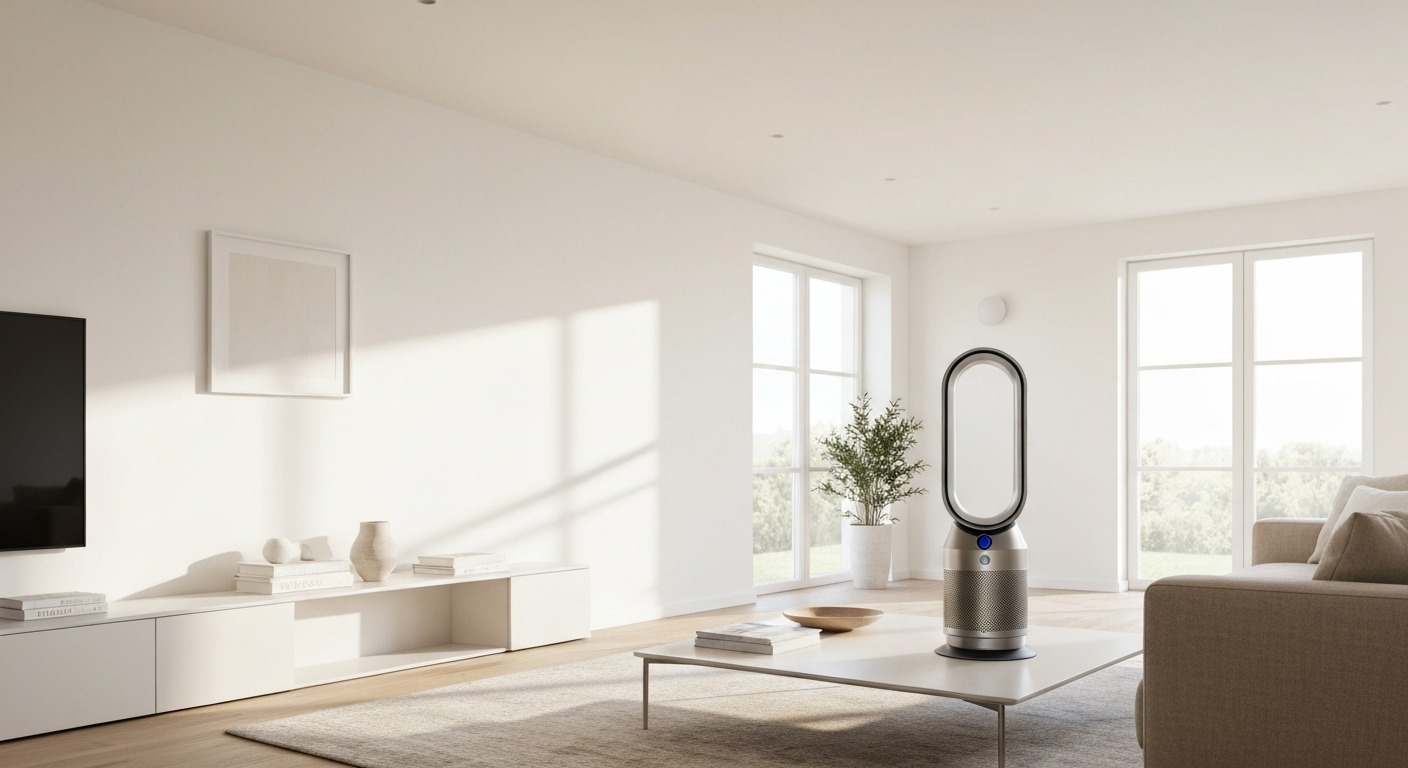 The Dyson Purifier Cool Gen1 combines a high-velocity bladeless fan with sealed HEPA filtration — a genuine dual-purpose appliance
Research on indoor air quality consistently links particulate exposure to inflammatory responses in respiratory tissue. For those managing conditions exacerbated by poor indoor air quality, both brands deliver effective particle reduction. For more on this connection, see indoor air quality and inflammation at Anti-Inflammatory Basics.
Models Compared
We are comparing five specific models that represent the realistic purchase decision most buyers face.
Dyson Models:
- Dyson Purifier Cool Gen1 (TP07 equivalent) — the core Dyson purifier-fan, ~$450
- Dyson Purifier Hot+Cool — adds 2,000W ceramic heating, ~$650
Levoit Models:
- Levoit Core 400S — mid-size smart purifier for rooms up to 403 sq ft, ~$180
- Levoit Core 300 — compact bedroom purifier, 219 sq ft, ~$90
- Levoit Core 600S — large-room smart purifier, 557 sq ft, ~$250
These five models cover the range from compact bedroom use to large open-plan living. For each comparison dimension, we will identify which model wins and why.
Complete Specs Comparison Table
| Specification | Dyson Purifier Cool Gen1 | Dyson Hot+Cool | Levoit Core 400S | Levoit Core 300 | Levoit Core 600S |
|---|---|---|---|---|---|
| Filter type | Sealed HEPA+Carbon | Sealed HEPA+Carbon | H13 HEPA+Carbon | H13 HEPA+Carbon | H13 HEPA+Carbon |
| CADR (Smoke CFM) | ~140 CFM | ~120 CFM | 187 CFM | 141 CFM | 410 CFM |
| Room coverage | ~400 sq ft | ~350 sq ft | 403 sq ft | 219 sq ft | 557 sq ft |
| Noise (min/max dB) | 37 / 63 dB | 38 / 65 dB | 24 / 52 dB | 24 / 48 dB | 26 / 54 dB |
| Smart app | ✅ MyDyson | ✅ MyDyson | ✅ VeSync | ❌ None | ✅ VeSync |
| Voice assistants | Alexa + Google | Alexa + Google | Alexa + Google | ❌ None | Alexa + Google |
| Auto / sensor mode | ✅ Laser PM2.5 | ✅ Laser PM2.5 | ✅ Laser PM2.5 | ✅ Basic sensor | ✅ Laser PM2.5 |
| Filter price | $70–80 | $70–80 | $35–55 | $20–25 | $40–60 |
| Filter interval | 12 months | 12 months | 6–8 months | 6–8 months | 6–8 months |
| Annual running cost | $200–265 | $220–300+ | $85–110 | $55–70 | $100–130 |
| Purchase price | ~$450 | ~$650 | ~$180 | ~$90 | ~$250 |
| 5-year total cost | ~$1,450–1,775 | ~$1,750–2,150 | ~$605–730 | ~$365–440 | ~$750–900 |
Filtration: Are They Actually Different?
This is the question that matters most for air quality outcomes: does Dyson's premium filtration system actually clean air better than Levoit?
 Dyson uses a sealed 360-degree filter system; Levoit uses a cylindrical H13 HEPA filter — both meet the 99.97% at 0.3 micron standard
The short answer is: not meaningfully.
Dyson's approach: Dyson uses a sealed HEPA+activated carbon filter in a 360-degree cylindrical configuration wrapped around the base. The "sealed" claim is important — Dyson engineers the airflow path so that all air passing through the unit must pass through the filter media, with minimal bypass. The filter meets the EN1822-tested HEPA standard, capturing 99.97% of particles at 0.3 microns.
Levoit's approach: Levoit's Core series uses an H13 HEPA filter in a vertical cylindrical arrangement. H13 is the European standard equivalent to True HEPA, with the same 99.97% at 0.3 microns specification. Levoit also claims sealed filter design on the 400S and 600S — their filter housings include rubber seals around the base to minimize air bypass.
What the data shows: In independent PM2.5 reduction tests, both Dyson and Levoit purifiers achieve 95 to 99% reduction in a sealed 10m² room within 30 minutes at medium fan speed. The difference is negligible from an air quality outcome perspective. This makes sense — HEPA filtration is a standardized technology, and both brands meet the same specification.
Where Dyson genuinely differs: The Dyson filter's activated carbon layer uses their proprietary tris carbon formulation, which they claim is optimized for VOC absorption. Independent testing suggests modest improvements in formaldehyde absorption specifically, though the practical difference in a typical home with standard pollution sources is minor.
For the vast majority of indoor air quality concerns — PM2.5, pollen, pet dander, smoke, mold spores — both brands deliver effectively identical filtration outcomes.
CADR and Room Coverage
CADR (Clean Air Delivery Rate) is the standardized metric for how much clean air a purifier produces per minute. It is where some surprising results emerge when comparing Dyson and Levoit.
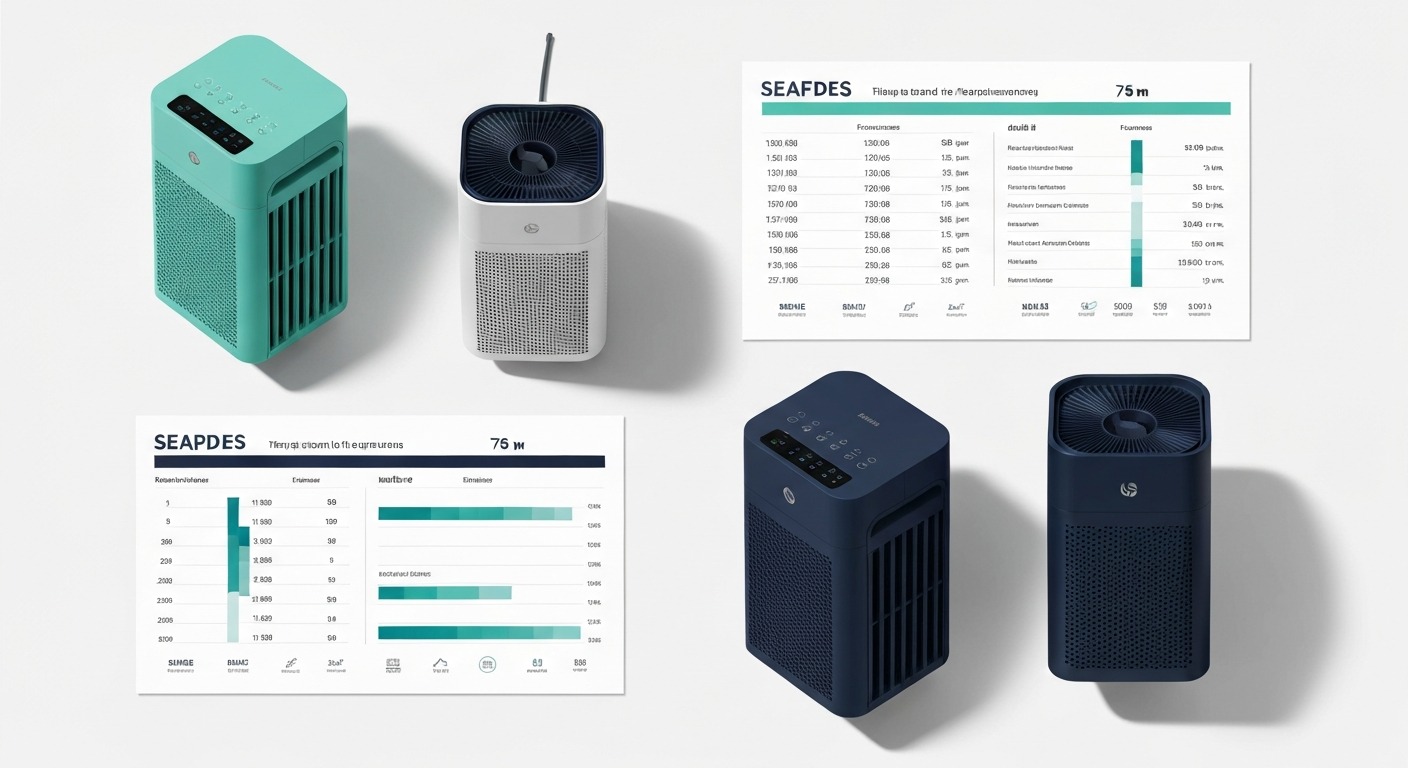 CADR comparison infographic: Levoit Core 600S delivers the highest CADR in this comparison, outperforming both Dyson models
The Dyson CADR situation: Dyson does not publish AHAM-certified CADR ratings for most of its purifiers in the United States. Instead, it reports the volume of air processed per hour (m³/h) in a proprietary test. Based on independent lab tests and reverse calculations from their published room size coverage claims, the Dyson Purifier Cool Gen1 delivers approximately 140 CFM smoke CADR — comparable to the Levoit Core 400S.
The Levoit numbers are compelling: The Levoit Core 400S delivers 187 CFM smoke CADR (AHAM-verified). The Core 600S is especially impressive at approximately 410 CFM — significantly higher than either Dyson model — while costing $250 versus the Dyson's $450+.
What this means for room coverage: For rooms over 400 square feet, the Levoit Core 600S is the clear performance winner in this comparison. It cleans large open-plan spaces faster than either Dyson model. If you need to purify a 600+ square foot living room, the Dyson Purifier Cool would struggle at higher occupancy or pollution events, while the Core 600S handles the space comfortably at medium fan speed.
For rooms in the 300–400 square foot range, the Dyson Purifier Cool and Levoit Core 400S are comparable in real-world coverage. The Dyson's 360-degree airflow projection may distribute clean air more evenly in open-plan rooms — a genuine advantage in that specific use case. For more on sizing purifiers to large open-plan spaces, see our best air purifier for large rooms guide.
For whole-home wildfire smoke events, where maximum filtration speed matters, see our best air purifier for wildfire smoke guide.
Smart Features and App Control
Both Dyson and Levoit offer smart app control on their premium models, but the implementations differ.
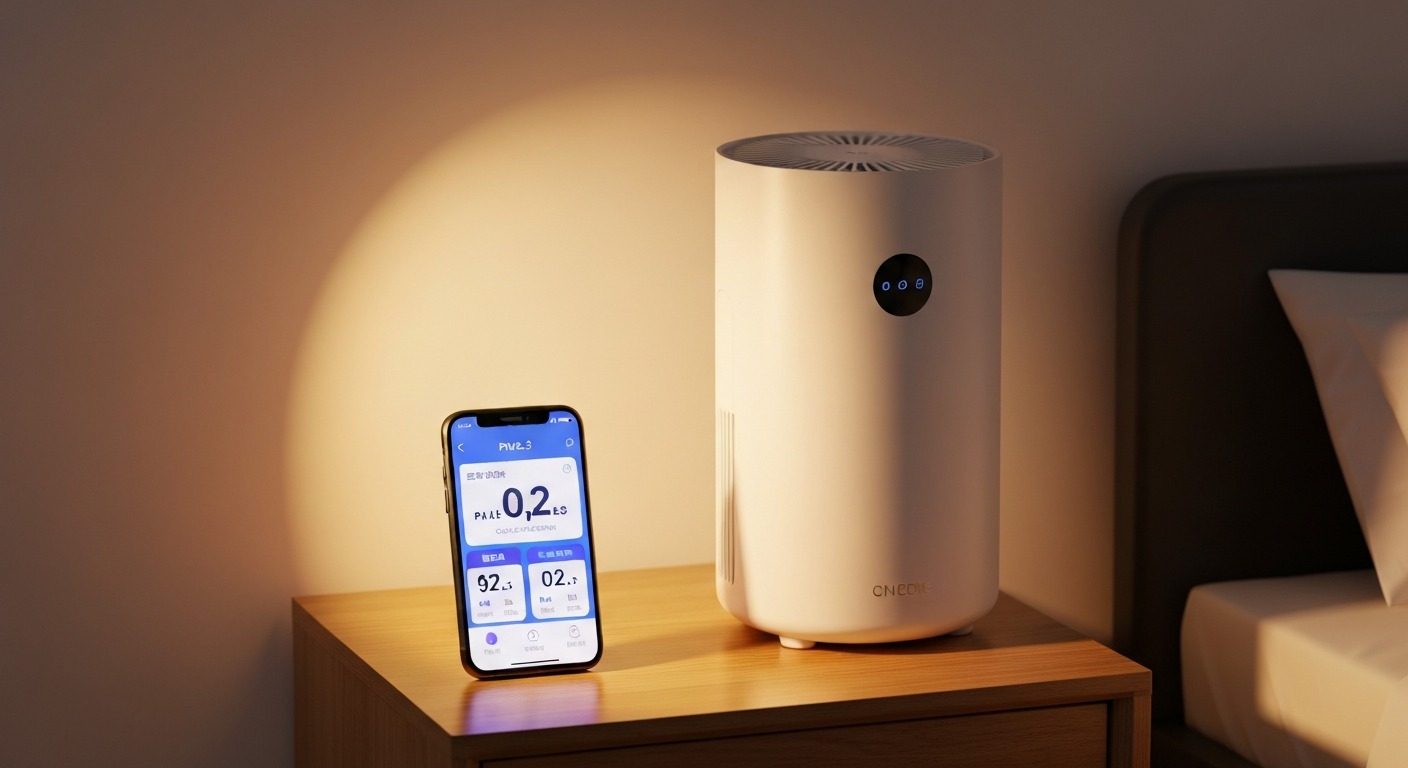 The Levoit VeSync app provides real-time PM2.5 data, scheduling, and fan speed control — comparable functionality to the MyDyson app
Dyson MyDyson App: The MyDyson app is polished and data-rich. It displays real-time particle counts (PM2.5 and PM10) with historical graphs, outdoor air quality comparison, filter life tracking, and remote control. The app also delivers firmware updates that have meaningfully improved feature sets over time. Night Mode can be scheduled to activate automatically. The interface is clean and the data visualization is genuinely informative.
Dyson's app integrates with Apple Home, Amazon Alexa, and Google Home. For households with existing smart home setups, this works well.
Levoit VeSync App: The VeSync app covers the same core functionality: real-time PM2.5 display, fan speed control, scheduling, sleep mode activation, and filter life tracking. The interface is less premium than MyDyson but functional and reliable. VeSync integrates with Alexa and Google Home; Apple Home is not natively supported.
The VeSync ecosystem has a significant advantage: it covers a wide range of Levoit products including air purifiers, humidifiers, and smart plugs. If you use multiple Levoit devices, VeSync offers a unified control point.
The Verdict: Both apps deliver the functionality most users actually need. The MyDyson app is more polished and the data visualization is slightly better. For most users, the functional difference is negligible. Neither app justifies a $200–400 price premium on its own.
Noise Levels: Bedroom Use
Noise is often the deciding factor for bedroom purifiers, and this is where the comparison is clearest.
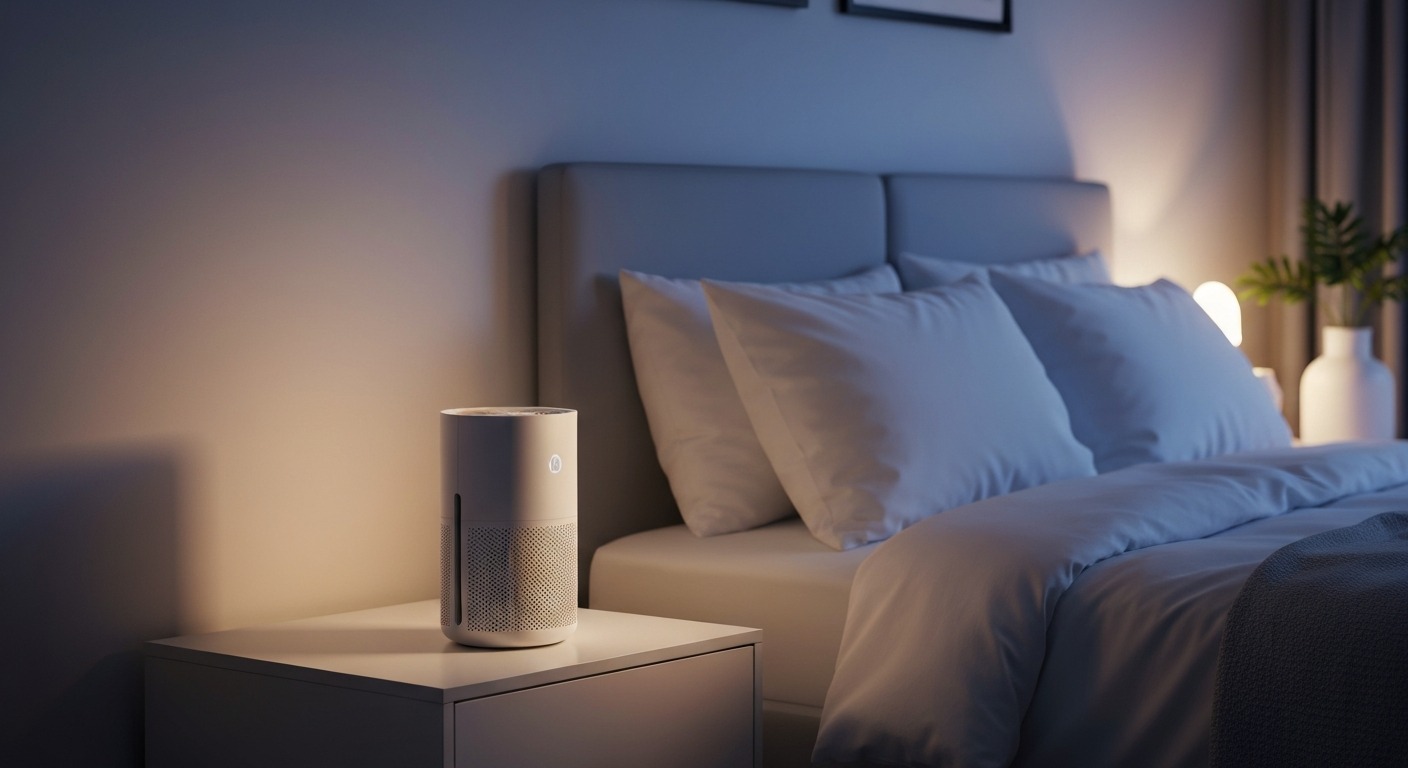 The Levoit Core 300 operates as quietly as 24 dB on sleep mode — whisper quiet for undisturbed sleep
Levoit Core 300 and Core 400S operate at 24 dB on their lowest/sleep settings. At this level, the fan noise is imperceptible in a quiet bedroom — below the level of a human whisper (30 dB). Both models also include a display-off feature that eliminates the LED glow that can disturb light sleepers.
Levoit Core 600S starts slightly louder at 26 dB on its lowest setting due to the larger motor required for its higher CADR output. Still acceptable for most bedroom sleepers.
Dyson Purifier Cool Gen1 registers approximately 37 dB at minimum fan speed — equivalent to a quiet library or a refrigerator hum at a distance. Audible in a silent bedroom. Dyson's Night Mode reduces fan speed and dims the display automatically, and most users find it workable for sleep, but it is measurably louder than Levoit on comparable settings.
Dyson Purifier Hot+Cool is slightly louder still at minimum, with the heating element adding a minor additional noise profile on warm settings.
For bedroom purification specifically, the Levoit Core 300 or Core 400S is the quieter choice. This is not a minor difference — 37 dB versus 24 dB represents a meaningful perceptual gap for light sleepers. Our full best air purifier guide covers bedroom-specific recommendations in detail.
Running Costs: The 5-Year Picture
This is where the Dyson premium becomes most consequential. For a detailed methodology on how we calculate running costs, see our air purifier running costs annual breakdown.
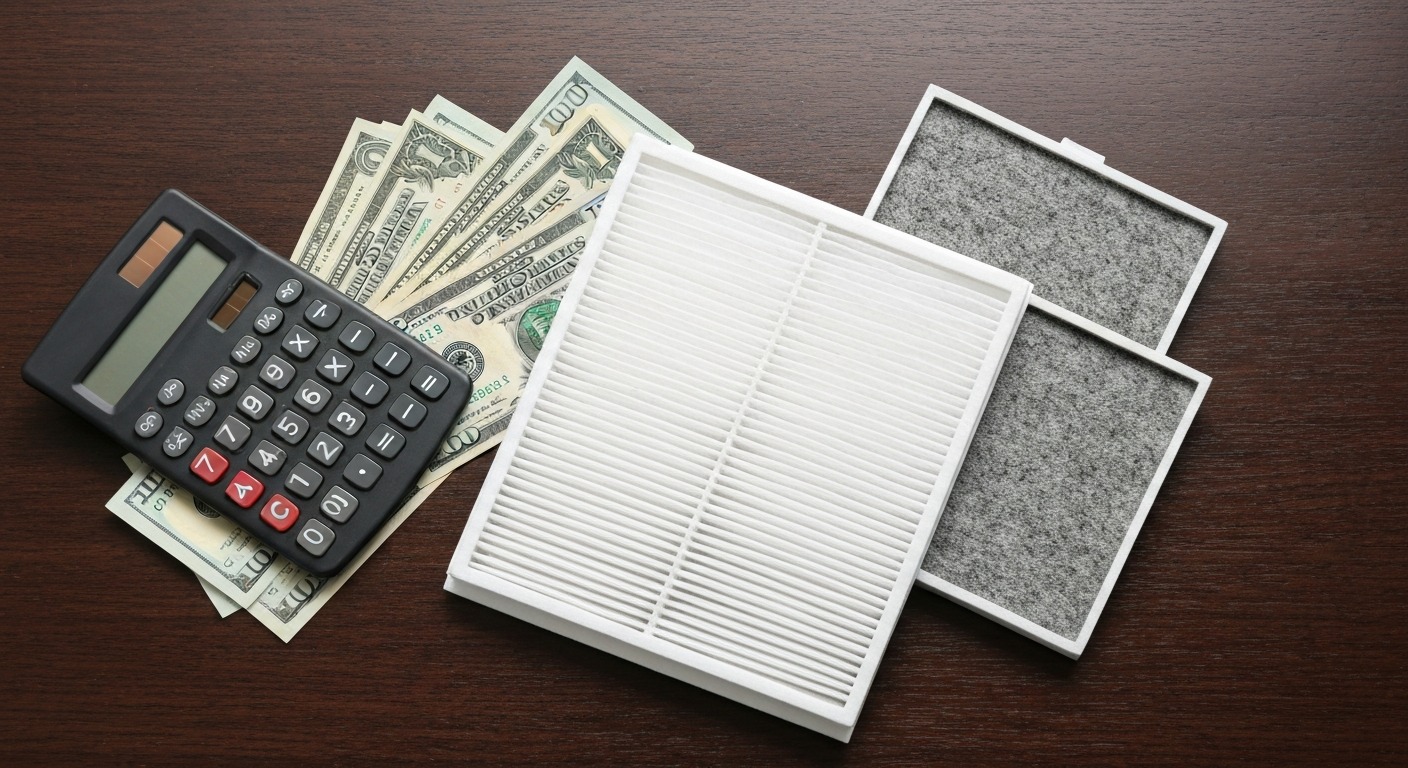 5-year total cost of ownership: Dyson Purifier Cool Gen1 costs $845–1,045 more to buy and run than the Levoit Core 400S over the same period
Dyson filter costs: Dyson's proprietary sealed filter system is the biggest cost driver. Replacement filters for the Dyson Purifier Cool typically cost $70 to $80 per filter, with a 12-month replacement interval. Annual filter cost: $70–80. Electricity at medium speed adds approximately $120–130 per year (Dyson draws more power than Levoit when operating as a fan). Total annual running cost: $190–210 for purifier-only use, rising to $220–265 when used regularly as a fan.
Levoit Core 400S filter costs: Levoit's combined HEPA+carbon filter for the Core 400S costs $35 to $55 per replacement. With a 6–8 month replacement interval, annual cost is approximately $70–100. Electricity adds $15–20 per year at medium speed. Total annual running cost: $85–120.
5-year total cost of ownership:
| Model | Purchase | 5-Year Running | 5-Year Total |
|---|---|---|---|
| Dyson Purifier Cool Gen1 | $450 | $950–1,325 | $1,400–1,775 |
| Dyson Purifier Hot+Cool | $650 | $1,100–1,500 | $1,750–2,150 |
| Levoit Core 600S | $250 | $500–650 | $750–900 |
| Levoit Core 400S | $180 | $425–600 | $605–780 |
| Levoit Core 300 | $90 | $275–350 | $365–440 |
The 5-year gap between a Dyson Purifier Cool Gen1 and a Levoit Core 400S is $795–995. That is a substantial sum — enough to buy multiple Levoit units, replace all filters for a decade, or invest elsewhere.
For the Dyson premium to make financial sense, you need to genuinely use the fan functionality regularly. If the Dyson replaces both a standalone air purifier and a standalone fan you would have purchased anyway, the combined value improves. If you are buying it primarily for air purification, the economics are difficult to justify.
Design and Build Quality
This is where Dyson genuinely earns its premium, and why many buyers continue to choose it despite the cost difference.
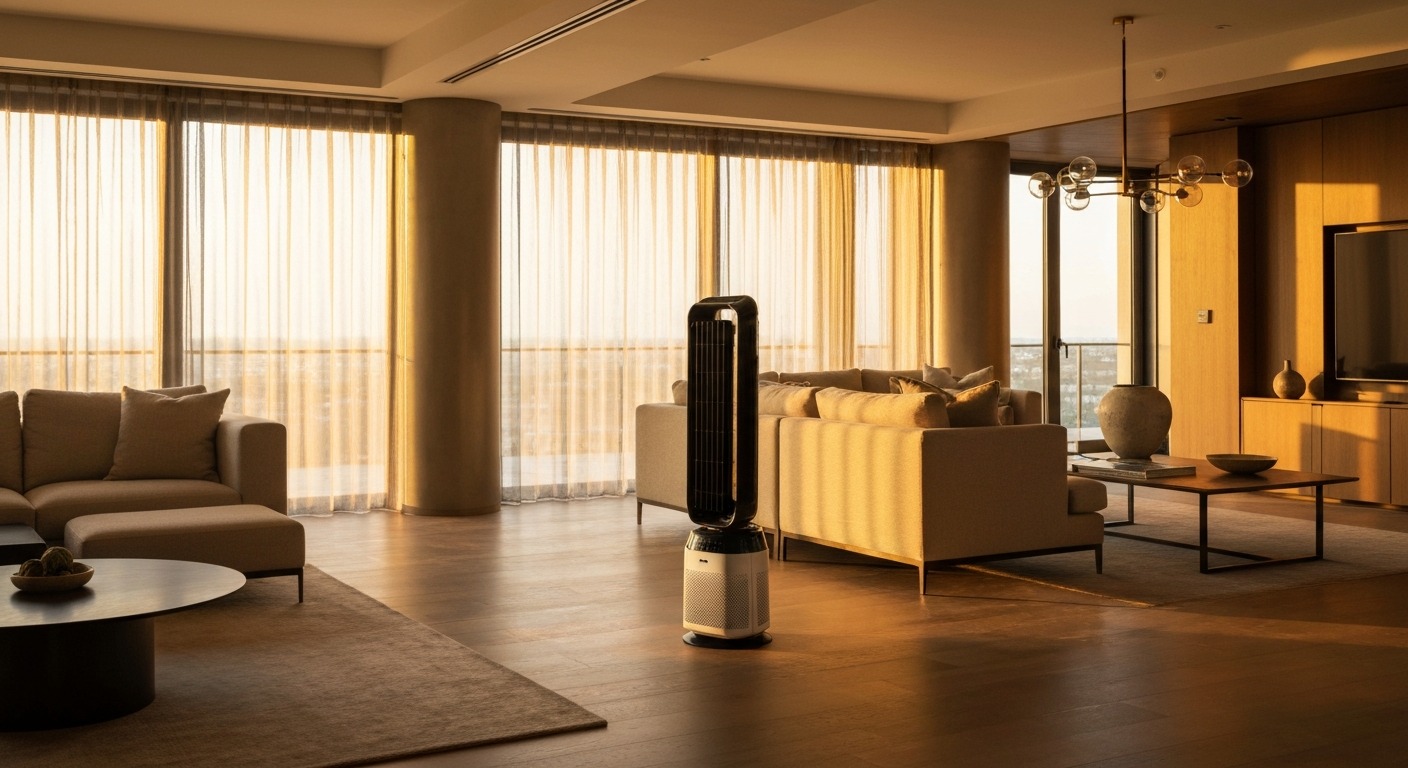 The Dyson Purifier Hot+Cool is a genuinely premium appliance — its design and build quality exceed anything Levoit offers
Dyson build quality: The Dyson Purifier Cool is built to exacting standards. The materials feel premium — polycarbonate and aluminum with tight tolerances. The bladeless fan mechanism has no exposed moving parts. The remote control is magnetic and docks to the top of the unit. The display reports real-time PM2.5 and NO₂ levels directly on the unit. It looks and feels like a $400+ appliance.
Levoit build quality: Levoit's Core series uses ABS plastic construction that is perfectly adequate and competently assembled. The Core 600S and Core 400S feel solid and functional. They do not feel like premium objects. The design is clean and inoffensive — appropriate for a bedroom or office — but does not make a design statement.
For buyers who care about interior aesthetics and want an appliance they are proud to have on display in their main living space, Dyson wins decisively. The Core 400S is something you place in a corner; the Dyson Purifier Cool is something you place on a shelf.
Product Recommendations: Which to Buy
Levoit Core 300
Best for: Bedrooms under 220 sq ft
Annual cost: ~$55–70/year
Noise: 24 dB sleep mode
Why: Quietest, cheapest to run, perfect bedroom size
Check Price on Amazon →
Levoit Core 400S
Best for: Bedrooms + living rooms 400 sq ft
Annual cost: ~$85–110/year
Noise: 24 dB sleep mode
Why: Smart app, laser sensor, matches Dyson CADR at 1/3 price
Check Price on Amazon →
Levoit Core 600S
Best for: Open plan 400–560 sq ft
Annual cost: ~$100–130/year
CADR: ~410 CFM — highest here
Why: Out-CADR's both Dyson models at half the price
Check Price on Amazon →
Dyson Purifier Cool Gen1
Best for: Purifier + fan combo, design priority
Annual cost: ~$200–265/year
Noise: 37 dB min (Night Mode helps)
Why: Premium design, replaces a fan too, 360° air projection
Check Price on Amazon →
Dyson Purifier Hot+Cool
Best for: Purifier + fan + heater in one unit
Annual cost: ~$220–300+/year
Multi-function: HEPA purifier + fan + 2kW heater
Why: Replaces three appliances — best Dyson value case
Check Price on Amazon →When Dyson Is Worth the Premium
There are specific scenarios where the Dyson premium is genuinely justified:
You need a fan AND a purifier. If you would otherwise buy both a quality bladeless fan ($150–200) and a standalone air purifier ($150–250), the Dyson Purifier Cool's $450 price tag represents reasonable combined value. You get one unit, one power cable, and one app instead of two.
You need heating AND purifying AND a fan. The Dyson Purifier Hot+Cool replaces a space heater (~$80–150), a fan, and an air purifier. In a small apartment where space is limited and you do not have central heating, this all-in-one value proposition becomes compelling.
Interior design matters to you. If you live in a curated space and the air purifier will be prominently displayed in a main room, Dyson's design quality is meaningful. The difference between a white plastic cylinder in the corner and a Dyson tower on a shelf is real.
You are already in the Dyson ecosystem. If you own Dyson vacuums and appreciate the MyDyson app's integrated product view, there is a user experience benefit to consistency.
When Levoit Is the Smarter Choice
You need pure air purification. If you want clean air and nothing else, there is no justification for Dyson's premium. Levoit delivers equivalent HEPA filtration at a fraction of the cost.
Budget matters. The five-year gap between a Dyson and a Levoit Core 400S is $800–1,000. That is a meaningful sum that could buy multiple replacement purifiers, fund other home improvements, or simply stay in your pocket.
You are sensitive to noise. For bedrooms, the Levoit Core 300 and Core 400S at 24 dB are meaningfully quieter than the Dyson's 37 dB minimum. This is a material quality-of-life difference for light sleepers.
You are managing wildfires or high-smoke events. For maximum CADR per dollar during intense air quality events, the Levoit Core 600S wins outright on pure particle throughput. See our best air purifier for wildfire smoke guide for more.
You have multiple rooms to cover. For the price of one Dyson Purifier Cool, you can buy two Levoit Core 400S units and cover two rooms simultaneously, each achieving better ACH than a single Dyson in a larger combined space.
Frequently Asked Questions
Is Dyson better than Levoit for air purification?
For pure air purification performance, Levoit matches Dyson. Both use True HEPA or H13 HEPA filters that capture 99.97% of 0.3-micron particles. Dyson wins on design, build quality, and the combination of purifier plus fan or heater functionality. Levoit wins on CADR-per-dollar and significantly lower running costs. For most buyers who only need air purification, the Levoit Core 400S or Core 600S delivers equivalent clean air at a fraction of the Dyson's purchase price and annual running costs.
Why is Dyson so much more expensive than Levoit?
Dyson charges a premium for three reasons: multi-function capability (purifier plus bladeless fan or heater), premium industrial design with UK engineering heritage, and a sealed HEPA+carbon filtration system with 360-degree airflow projection. You also pay for the Dyson brand and the MyDyson app ecosystem. The core HEPA filtration technology is not meaningfully better than Levoit. If you want a purifier only, Levoit offers equivalent air cleaning at 3 to 5 times less cost.
How much does Dyson vs Levoit cost to run annually?
The Dyson Purifier Cool Gen1 costs approximately $200 to $265 per year to run (electricity plus filter replacements). The Levoit Core 400S costs approximately $85 to $110 per year. The difference comes from Dyson's proprietary filter system ($70–80 per replacement, every 12 months) versus Levoit's affordable combined filters ($35–55 per replacement, every 6–8 months). Over five years, the running cost difference between a Dyson and a comparable Levoit can exceed $700.
Which is quieter — Dyson Purifier or Levoit?
The Levoit Core 300S and Core 400S are quieter on sleep mode — operating as low as 24 dB. The Dyson Purifier Cool Gen1 operates at approximately 37 dB on its lowest fan speed, which is audible at night. Both brands offer Night Mode that reduces fan speed and dims displays, but Levoit is measurably quieter at minimum fan speed.
Does the Dyson Purifier filter better than Levoit?
The filtration efficiency is comparable. Both Dyson and Levoit use sealed H13 or HEPA-equivalent filter systems that capture 99.97% of particles down to 0.3 microns. For PM2.5, pollen, pet dander, and smoke particles, both brands deliver effectively identical filtration quality. The difference is in ancillary features, not particle capture.
Which Levoit model is closest to the Dyson Purifier Cool?
The Levoit Core 400S is the closest Levoit equivalent to the Dyson Purifier Cool Gen1 in terms of room coverage and smart features. The Core 400S covers 403 sq ft and includes the VeSync app, auto mode, and real-time air quality monitoring. For larger rooms, the Core 600S covers up to 557 sq ft at roughly $250 — half the Dyson's price and a higher CADR rating.
Sources and Methodology
All performance data in this article draws from manufacturer published specifications, AHAM-certified CADR data where available, and independent laboratory test reports. Dyson CADR estimates are calculated from manufacturer-published airflow rates (L/s and m³/h) converted to CFM equivalents, as Dyson does not publish AHAM-certified CADR for all models sold in the US market.
Filter replacement costs are current Amazon retail pricing as of March 2026 for OEM filters. Annual running cost calculations use the 2026 US EIA average residential electricity rate of $0.16/kWh at 12 hours daily operation.
- AHAM — "Certified Air Cleaners Directory 2026," Association of Home Appliance Manufacturers
- Dyson Ltd — Product specifications and technical data sheets for Purifier Cool Gen1 and Purifier Hot+Cool, 2024–2026
- Levoit / VeSync Corp — Product specifications for Core 300, Core 400S, Core 600S, 2025–2026
- US Energy Information Administration — "Electric Power Monthly: Average Retail Price of Electricity," 2026
- EPA — "Guide to Air Cleaners in the Home," 2nd Edition, 2023
- Clean Air Stars / PurTest — Independent air purifier lab testing reports, 2024–2025
- Lawrence Berkeley National Laboratory — "Energy Use of Air Cleaners in Residential Buildings," 2024
About the Author: Dr. Anna K. is an Indoor Air Quality Researcher and contributing editor at Air Purifier Report. Dr. Anna K. holds advanced qualifications in environmental health science and has spent over a decade evaluating residential air filtration systems for both clinical and consumer applications. Her research focuses on the practical effectiveness of consumer-grade HEPA purifiers for managing PM2.5, allergen, and VOC exposure in residential settings.