Guide
Carpal Tunnel Numbness vs Tingling: What It Means (2026)
By Dr. Rachel Kim · Updated 2026-07-20
Carpal tunnel numbness and tingling are both caused by compression of the median nerve inside the carpal tunnel — but they are not the same symptom. Tingling (medically called paresthesia) represents a partially compressed nerve sending distorted signals. Numbness signals a more severe or complete loss of sensation, meaning the nerve is under significantly greater pressure. Understanding which sensation you experience — and when — gives critical clues about how advanced your carpal tunnel syndrome is and what your next steps should be.
By Dr. Rachel Kim | Last updated: July 2026
The Complete Carpal Tunnel Recovery System — Everything in One Guide
Exercises, stretches, ergonomic setups, brace recommendations, and a step-by-step daily program. 40+ pages, instant download.
Get My Complete Carpal Tunnel Recovery Guide — $7Instant download • 30-day money-back guarantee
Table of Contents

- What Is the Median Nerve and Why Does It Matter?
- Numbness vs Tingling: The Fundamental Difference
- Why Tingling Often Comes First
- What Numbness Tells You About Nerve Damage
- Pattern Recognition: Which Fingers Are Affected?
- Why Symptoms Get Worse at Night and in the Morning
- The Progression of Symptoms: A Timeline
- How Doctors Differentiate Carpal Tunnel From Other Conditions
- Treatment Approaches Based on Your Symptom Type
- Products That Help Manage Numbness and Tingling
- FAQ
- Sources and Methodology
What Is the Median Nerve and Why Does It Matter?

To understand why your hand feels numb or tingly, you need to understand the median nerve itself. The median nerve is one of the major nerves of the upper extremity, originating from a bundle of nerve roots (C5–T1) in the cervical spine, running down the arm, through the upper forearm, and into the hand through the carpal tunnel.
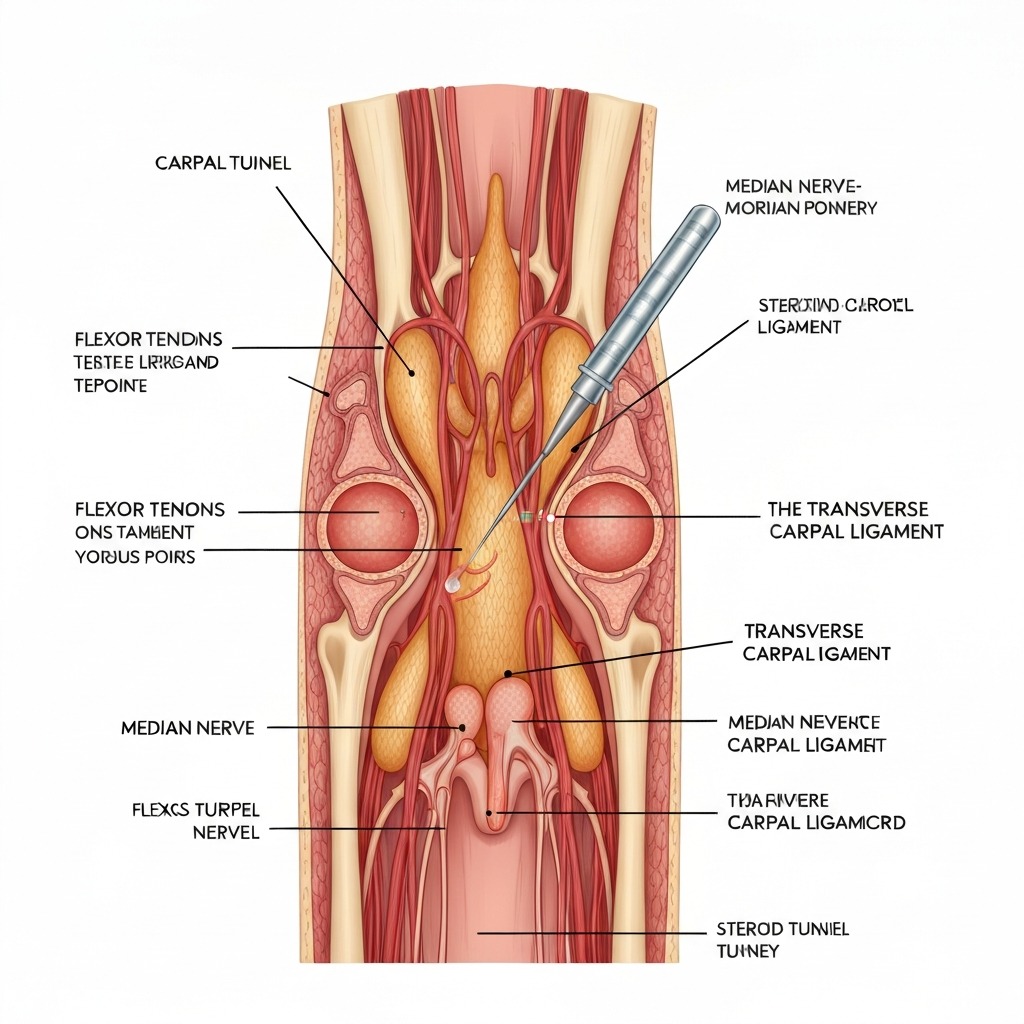
The carpal tunnel is a narrow passage on the palm side of your wrist, approximately 2.5 centimeters wide at its narrowest point. It is bounded on three sides by the carpal bones (wrist bones) and closed on the palm side by the transverse carpal ligament — a tough, fibrous band. Inside this already tight space, you also have nine flexor tendons and their protective sheaths passing through. The median nerve has very little room to spare.
When anything reduces the available space inside the carpal tunnel — swelling of the tendon linings, thickening of the transverse carpal ligament, inflammation from repetitive strain, or even fluid retention — the median nerve gets squeezed. The amount and duration of that squeeze determines whether you feel tingling or numbness.
For a deeper breakdown of the anatomy, see our guide to carpal tunnel exercises, which explains the nerve gliding mechanism and how targeted stretches relieve pressure inside the carpal tunnel.
Numbness vs Tingling: The Fundamental Difference
These two sensations are not simply differences in intensity — they are fundamentally different nerve signals with distinct underlying mechanisms.
What Tingling (Paresthesia) Actually Is
Tingling, formally called paresthesia, is the medical term for that "pins and needles" sensation. It occurs when a nerve is partially compressed or irritated but not completely shut down. Think of it like a garden hose that is slightly kinked — water (or in this case, nerve signals) can still get through, but the flow is disrupted and irregular.
The brain interprets these disrupted signals as tingling, burning, prickling, or "pins and needles." The sensation is often described as mild to moderate and is frequently intermittent — it comes and goes depending on wrist position, activity level, and time of day.
Paresthesia is your nervous system's early warning system. It tells you that something is irritating the median nerve before permanent damage sets in. This is one reason why tingling is usually a feature of earlier-stage carpal tunnel syndrome.
What Numbness Actually Is
Numbness — hypoesthesia in medical terms — is a reduction or complete absence of sensation. When the median nerve is compressed severely enough or for a long enough period, the nerve fibers responsible for transmitting sensory information stop functioning properly.
Numbness can range from mild (a slightly "dead" feeling in the fingertips) to complete (no sensation at all in the affected fingers). The more complete the numbness, the more severe the nerve compression.
There are two types of numbness relevant to carpal tunnel:
- Transient numbness: Comes and goes with position or activity. This is still potentially reversible with treatment.
- Constant numbness: Present most or all of the time. This is a more serious sign that may indicate impending permanent nerve damage.
Constant numbness that is left untreated can progress to thenar atrophy — visible wasting and weakening of the thumb muscles controlled by the median nerve. At this stage, recovery of full sensation becomes significantly less likely even with surgery.
Numbness vs Tingling: Key Differences at a Glance
| Feature | Tingling (Paresthesia) | Numbness (Hypoesthesia) |
|---|---|---|
| Nerve state | Partially compressed, signal disrupted | Severely compressed, signal reduced or absent |
| Sensation quality | Pins and needles, prickling, burning | "Asleep" feeling, dull, absent sensation |
| Onset pattern | Often gradual, intermittent | Can be sudden or progressive |
| Reversibility | Usually highly reversible | Less certain, depends on duration |
| Typical stage | Earlier carpal tunnel | More advanced carpal tunnel |
| Pain component | Often includes aching or burning | Often pain-free once numbness sets in |
| Night symptoms | Very common | Suggests more advanced compression |
Why Tingling Often Comes First
If you have carpal tunnel syndrome, there is a very good chance your first symptom was not numbness — it was tingling. This is not a coincidence, and here is why.
The Physiology of Early-Stage Compression
In the early stages of median nerve compression inside the carpal tunnel, the outer covering of the nerve (the myelin sheath) is affected first. The myelin sheath is the insulating layer that allows electrical signals to travel quickly along a nerve fiber. When this myelin is compressed or stretched, the signal transmission becomes irregular — producing the hallmark tingling sensation.
The nerve fibers themselves (the axons) are more resilient and take longer to sustain damage. This is why early-stage carpal tunnel typically produces paresthesia rather than true numbness. The nerve is being irritated, not yet destroyed.
A 2014 study published in the Journal of Neurology confirmed that sensory symptoms in carpal tunnel syndrome follow a predictable pattern: tingling and numbness in the fingertips are the earliest complaints, with symptoms typically appearing in the dominant hand first and spreading to the non-dominant hand over time.
The "Flick Sign" — A Classic Early Indicator
Many people with early carpal tunnel syndrome discover their condition accidentally. They shake their hand briskly — the "flick sign" — and the tingling resolves. Patients often describe this as shaking their hand "to wake it up." This maneuver increases blood flow to the nerve temporarily and restores normal signal transmission for a short period.
The flick sign is so characteristic of carpal tunnel syndrome that it has been studied as a diagnostic indicator. Research published in the Journal of Hand Surgery found that the flick sign had a sensitivity of approximately 93% for carpal tunnel syndrome — meaning that 93% of patients with confirmed CTS reported it.
If you recognize the flick sign in yourself, it is worth getting evaluated. Early intervention dramatically improves outcomes. Our carpal tunnel vs tendonitis guide can also help you determine whether your symptoms might point to a different wrist condition.
What Numbness Tells You About Nerve Damage

When numbness becomes a regular feature of your carpal tunnel experience — rather than a rare, brief episode — it carries a more urgent message.
Compression Severity and Sensory Loss
Researchers classify median nerve compression severity using a system originally described by the American Academy of Orthopaedic Surgeons (AAOS). Mild compression produces intermittent paresthesia (tingling). Moderate compression causes persistent tingling with intermittent numbness. Severe compression produces constant numbness and eventually motor weakness.
These stages are confirmed by nerve conduction studies (NCS), which measure how quickly and how strongly the median nerve conducts electrical signals. In mild CTS, nerve conduction velocity slows slightly. In moderate CTS, the signal amplitude decreases significantly. In severe CTS, the nerve may not conduct a signal at all — producing complete numbness.
A 2019 systematic review in the Journal of Clinical Neurology found that patients with constant numbness had nerve conduction study results that were, on average, 40% worse than patients with only intermittent symptoms. The review also found that constant numbness was the single strongest predictor of needing surgical intervention.
Thenar Atrophy: The Point of No Return
The most serious consequence of prolonged median nerve compression is thenar atrophy — wasting of the thenar eminence, the muscle pad at the base of the thumb. The median nerve controls the opponens pollicis and abductor pollicis brevis muscles, which allow your thumb to oppose your fingers (touch your thumb tip to your pinky) and abduct (move away from the palm).
When the median nerve is severely compressed for months or years, these muscles no longer receive proper nerve stimulation and begin to shrink. The thumb pad flattens, and the thumb becomes functionally weak — patients often report dropping objects, difficulty opening jars, or trouble with fine motor tasks like buttoning a shirt.
Once thenar atrophy has developed, surgical decompression of the carpal tunnel may still relieve pain and prevent further deterioration, but recovery of full thenar muscle function is less certain. This is why the clinical guideline from the American Academy of Orthopaedic Surgeons emphasizes early intervention: "If non-surgical treatment fails to relieve symptoms within 2 to 7 weeks, or if there is evidence of muscle weakness or atrophy, surgical referral is indicated."
If you are already experiencing numbness alongside weakness, see our carpal tunnel surgery guide for a full explanation of when surgery becomes necessary and what the recovery process looks like.
Pattern Recognition: Which Fingers Are Affected?
One of the most clinically useful features of carpal tunnel syndrome is its characteristic symptom pattern. The median nerve innervates only three and a half fingers — the thumb, index finger, middle finger, and the thumb-side half of the ring finger. The pinky finger (and the pinky-side half of the ring finger) is supplied by the ulnar nerve and is typically spared in carpal tunnel syndrome.
Classic Carpal Tunnel Distribution
Thumb, index, middle, and half of ring finger: This is the hallmark distribution of carpal tunnel syndrome. Symptoms typically affect these fingers on the palm side and the fingertips. The boundary is often described as a line drawn vertically through the ring finger — sensation on one side of that line is median nerve territory, the other side is ulnar nerve territory.
The pinky finger is not affected by carpal tunnel. If your pinky finger tingles or goes numb, your problem is not carpal tunnel — it is more likely ulnar nerve entrapment (cubital tunnel syndrome at the elbow) or cervical radiculopathy.
Why Wrist Position Changes Which Fingers Feel Symptoms
Interestingly, the distribution of carpal tunnel symptoms is not always perfectly symmetrical. Some patients experience symptoms predominantly in the thumb and index finger, while others feel it more in the middle and ring finger. This is because the median nerve contains distinct fascicles — bundles of nerve fibers — that separate slightly as they pass through the carpal tunnel. Some fascicles may be more compressed than others, producing variable symptom patterns.
A 2018 study in Clinical Neurophysiology used ultrasound to measure median nerve swelling at different points within the carpal tunnel and found that the cross-sectional area of the nerve varied by as much as 30% between different regions of the tunnel, explaining why patients can have such different symptom profiles even with the same diagnosis.
Stop Guessing. Follow the System That Actually Works.
The exact protocol backed by physical therapy research — not random stretches from Google.
Get My Complete Carpal Tunnel Recovery Guide — $7Instant download • 30-day money-back guarantee
Why Symptoms Get Worse at Night and in the Morning
One of the most reliable features of carpal tunnel syndrome is that symptoms intensify significantly at night and often upon waking in the morning. This is not a coincidence, and understanding why helps explain the single most effective conservative treatment for the condition.
The Anatomy of Sleep Positions
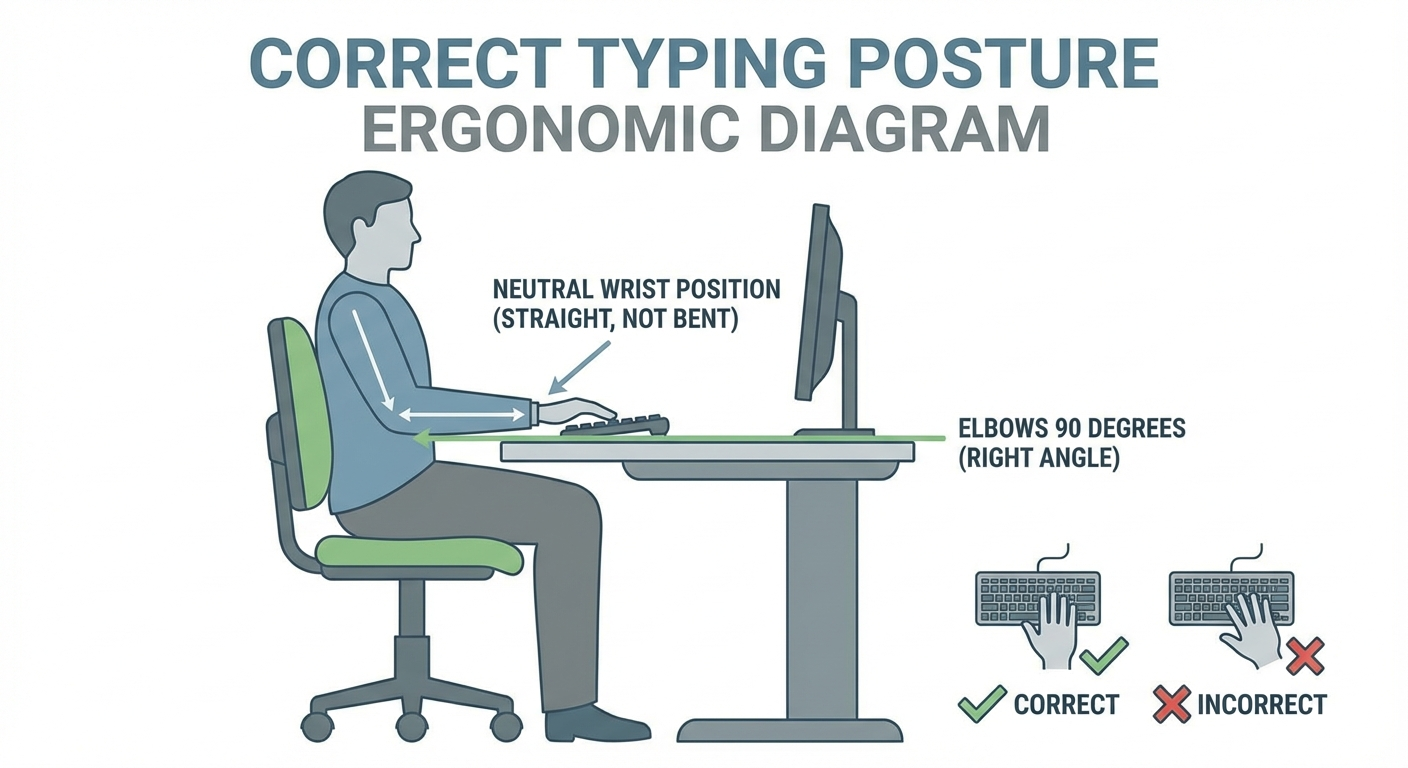
When you sleep, most people unconsciously flex their wrists — bringing the palm closer to the inner forearm. This flexion posture is comfortable, but it is devastating for anyone with carpal tunnel syndrome. Flexing the wrist reduces the volume of the carpal tunnel by approximately 30 to 40 percent, dramatically increasing pressure on the median nerve.
Research published in the Journal of Orthopaedic Research measured carpal tunnel pressure in different wrist positions. Neutral wrist position (straight, not bent) produced a pressure of approximately 2 to 8 mmHg above ambient. Wrist flexion at 90 degrees produced pressures of 30 to 50 mmHg — levels sufficient to choke off median nerve circulation even in healthy individuals. For someone whose carpal tunnel is already narrowed by inflammation, these pressures are even higher.
The result: you fall asleep with mild tingling, and you wake up with significant numbness or pain. This is also why many patients report that symptoms are worst in the first 30 to 60 minutes after waking — the nerve has been compressed all night and needs time to recover.
Morning Stiffness and the "Warm-Up" Phenomenon
After waking with numbness or intense tingling, many carpal tunnel patients notice that symptoms gradually improve over the first 30 to 60 minutes of the day as they move their hands and wrists. This "warm-up" effect occurs because movement promotes blood flow to the median nerve and helps redistribute the inflammatory fluids that accumulated overnight.
However, this does not mean the problem is gone. The cycle simply repeats every night, with symptoms gradually worsening over time as the nerve sustains cumulative damage.
For people whose carpal tunnel symptoms are also disrupting their overall sleep quality, sleepbetterfaster.com offers evidence-based guidance on sleep positioning, mattress ergonomics, and lifestyle factors that affect both sleep quality and nerve health.
The Night Brace Solution
The single most evidence-based conservative intervention for nighttime carpal tunnel symptoms is a neutral-angle wrist brace worn during sleep. The brace prevents wrist flexion, keeping the carpal tunnel in its widest position and minimizing overnight pressure on the median nerve.
A randomized controlled trial published in the Journal of Bone and Joint Surgery found that patients who wore a neutral wrist splint at night for eight weeks showed significant improvement in symptom severity scores and nerve conduction study results compared to a control group with no splint. For a full review of the best options, see our best wrist brace for carpal tunnel guide.
The Progression of Symptoms: A Timeline
Carpal tunnel syndrome is not a static condition — it typically progresses through recognizable stages over months or years if left untreated. Recognizing where you are in this progression helps you understand what type of treatment is most appropriate.
Stage 1: Early (Months 1–6)
Predominant symptom: Tingling (paresthesia)
Symptoms are intermittent, usually triggered by repetitive hand activities like typing, driving, or holding a phone. Night symptoms may appear occasionally. The flick sign (shaking the hand to relieve symptoms) is often present. Nerve conduction studies are often normal or near-normal at this stage. Conservative treatment — bracing, ergonomic modifications, and exercises — is highly effective.
Stage 2: Mild to Moderate (Months 6–18)
Predominant symptoms: Tingling + intermittent numbness
Symptoms become more frequent and may begin to interfere with daily activities. Weakness in grip strength may begin to appear. Numbness episodes last longer and may not resolve immediately with position changes. Night symptoms become more consistent, often waking the patient one or more times per night. Nerve conduction studies typically show moderate slowing of median nerve conduction velocity.
Stage 3: Moderate to Severe (Years 1–3)
Predominant symptoms: Constant or near-constant numbness, grip weakness
Numbness may be present most of the day. Weakness becomes clinically measurable — patients may notice they are dropping objects or have difficulty with fine motor tasks. Thenar muscle bulk may begin to decrease. Night symptoms are severe and disruptive. Surgery is often recommended at this stage.
Stage 4: Advanced/Severe (Years 3+)
Predominant symptoms: Permanent numbness, significant motor deficit
Thenar atrophy is visible. Sensation may not return even after surgical decompression. Grip and pinch strength are significantly impaired. This stage is less common in modern clinical practice because most patients seek treatment earlier, but it does occur in patients who delay diagnosis.
| Stage | Primary Symptom | Duration | Nerve Study Findings | Recommended Treatment |
|---|---|---|---|---|
| 1 — Early | Intermittent tingling | Months 1–6 | Normal or mild slowing | Conservative: brace, exercises, ergonomics |
| 2 — Mild/Moderate | Tingling + intermittent numbness | Months 6–18 | Moderate slowing | Conservative + consider injection |
| 3 — Moderate/Severe | Near-constant numbness, weakness | Years 1–3 | Significant slowing | Surgical referral recommended |
| 4 — Advanced | Permanent numbness, atrophy | Years 3+ | Severe/abnormal | Surgery required, uncertain recovery |
How Doctors Differentiate Carpal Tunnel From Other Conditions

Not all hand numbness and tingling is carpal tunnel syndrome. Several other conditions produce similar symptoms, and distinguishing between them is critical for getting the right treatment.
Cervical Radiculopathy (Cervical Spine Nerve Compression)
Cervical radiculopathy occurs when a nerve root in the neck is compressed, typically by a herniated disc or bone spur. The symptoms can closely resemble carpal tunnel syndrome, including hand numbness and tingling. However, the distribution is different — cervical radiculopathy typically affects the entire arm and follows a dermatomal pattern (based on which spinal nerve is affected), rather than the specific median-nerve distribution of carpal tunnel.
A 2020 review in the Journal of the American Academy of Family Physicians noted that distinguishing between cervical radiculopathy and carpal tunnel syndrome is one of the most common diagnostic challenges in outpatient neurology, and imaging (MRI of the cervical spine) is often needed to differentiate them.
Cubital Tunnel Syndrome (Ulnar Nerve Entrapment)
Cubital tunnel syndrome involves compression of the ulnar nerve at the elbow — the "funny bone" nerve. This condition produces numbness and tingling in the pinky finger and the pinky-side half of the ring finger — the opposite pattern from carpal tunnel. Ulnar nerve compression symptoms are often triggered by elbow flexion (bending the elbow) or direct pressure on the elbow.
Thoracic Outlet Syndrome
Thoracic outlet syndrome involves compression of the nerves and blood vessels that pass between the collarbone and first rib. Symptoms can include hand numbness and tingling, but typically also involve arm heaviness, color changes in the hand, and symptoms triggered by arm elevation (reaching overhead or behind the body).
Clinical Examination Tests for Carpal Tunnel
Tinel's sign: The examiner taps gently over the palm side of the wrist at the carpal tunnel. A positive Tinel's sign — producing tingling that radiates into the thumb, index, or middle finger — indicates median nerve irritation at the wrist.
Phalen's maneuver: The patient presses the backs of both hands together in a prayer position, flexing both wrists at 90 degrees. Holding this position for 60 seconds produces or worsens tingling in the median nerve distribution in patients with carpal tunnel syndrome.
Durkan's compression test: The examiner applies direct pressure over the carpal tunnel with their thumb for 30 seconds. A positive test reproduces carpal tunnel symptoms. This test has been shown in multiple studies to be the most sensitive of the three clinical tests for carpal tunnel syndrome.
Semmes-Weinstein monofilament test: A series of thin nylon filaments are pressed against the fingertips to measure the lightest touch a patient can perceive. In moderate to severe carpal tunnel syndrome, this threshold is elevated — patients need firmer pressure to feel the filament.
Nerve conduction studies and electromyography (EMG) remain the gold standard for confirming the diagnosis and quantifying severity. Our carpal tunnel surgery guide covers what to expect from these diagnostic tests if your doctor orders them.
Treatment Approaches Based on Your Symptom Type
The treatment your doctor recommends will depend partly on whether your predominant symptom is numbness or tingling, and how advanced your condition is.
When Tingling Is Your Main Symptom
Tingling — especially intermittent, activity-related tingling — responds well to conservative treatment. The following approaches are typically effective:
Night wrist bracing: The first-line treatment. A neutral-angle wrist brace worn during sleep prevents the wrist flexion that triggers nighttime tingling. Most patients notice improvement within 1 to 2 weeks of consistent night bracing.
Activity modification: Identifying and changing the activities that trigger symptoms. For office workers, this typically means adjusting keyboard and mouse position, taking micro-breaks every 30 to 45 minutes, and avoiding prolonged wrist flexion.
Nerve gliding exercises: Also called nerve flossing, these exercises gently mobilize the median nerve through the carpal tunnel, reducing adhesions and improving nerve function. Our carpal tunnel exercises guide covers nerve gliding in detail with step-by-step instructions.
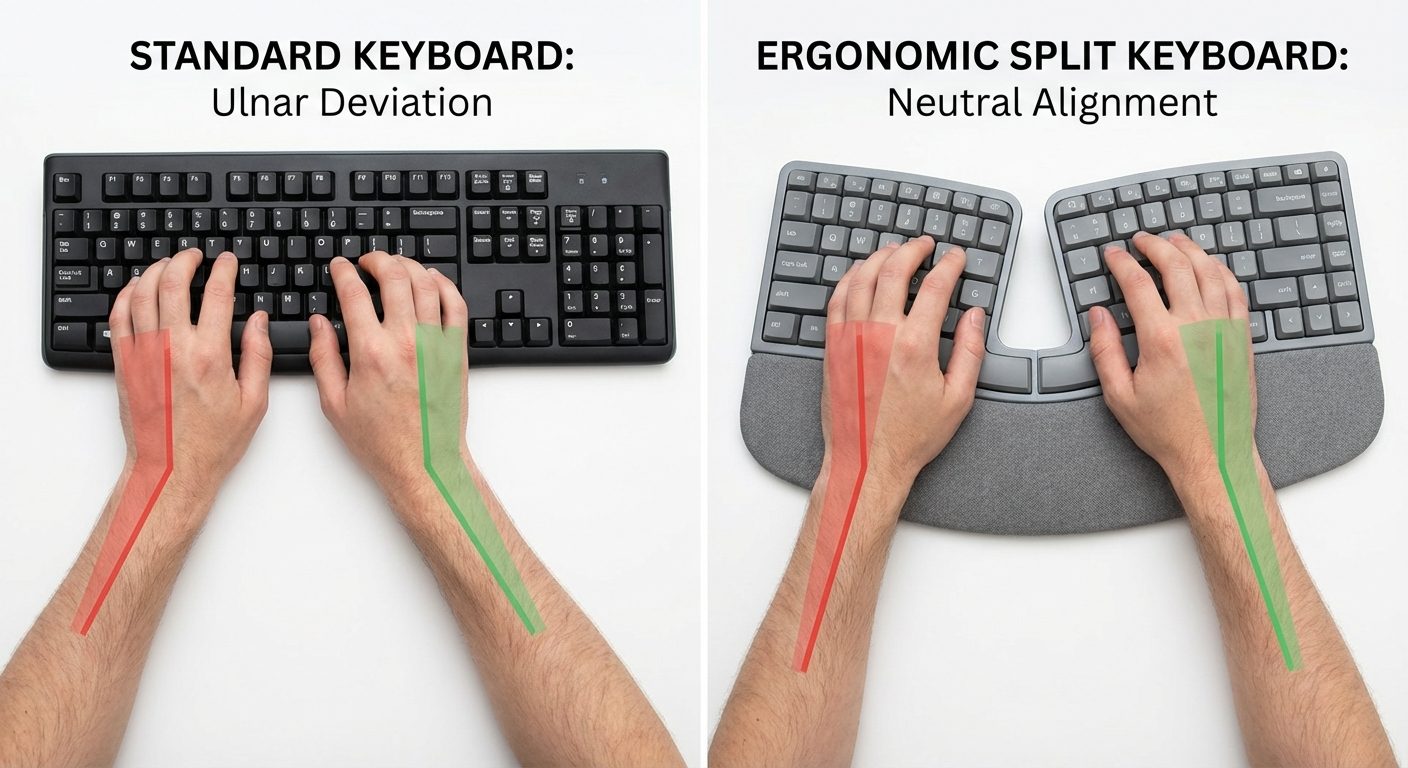
Ergonomic keyboard: If typing is a major trigger, switching to an ergonomic or split keyboard reduces wrist pronation and ulnar deviation — two postures that increase carpal tunnel pressure. Research in the Journal of Occupational Rehabilitation found that ergonomic keyboard use reduced carpal tunnel symptoms by approximately 25% in office workers.
When Numbness Is Your Main or Progressing Symptom
Numbness — especially if it is constant, frequent, or accompanied by weakness — requires more urgent intervention.
Medical evaluation: If you are experiencing regular numbness, you should see a primary care physician or neurologist for a clinical examination and nerve conduction studies. The goal is to determine how severe your nerve compression is and whether it is progressing.
Corticosteroid injection: An injection of corticosteroid into or near the carpal tunnel can reduce inflammation and temporarily relieve symptoms. The relief is often dramatic but typically temporary (weeks to months). Injections are most useful as a diagnostic tool (if an injection relieves symptoms, it confirms carpal tunnel) and as a bridge treatment while patients prepare for surgery.
Surgical decompression (carpal tunnel release): If numbness is persistent and nerve studies show significant median nerve compression, surgery is typically recommended. The surgeon cuts the transverse carpal ligament, permanently relieving pressure inside the carpal tunnel. Our carpal tunnel surgery guide has a full overview of open versus endoscopic techniques and what to expect during recovery.
A landmark study in the New England Journal of Medicine found that surgery produced significantly better outcomes than splinting for patients with moderate to severe carpal tunnel syndrome confirmed by nerve conduction studies. Patients who underwent surgery showed faster resolution of numbness and better long-term grip strength compared to the splinting-only group.
Check Price on Amazon — Night Wrist Brace
Products That Help Manage Numbness and Tingling

Whether your main symptom is numbness or tingling, the right support products make a measurable difference. Here are the categories most supported by clinical evidence.
Night Wrist Braces
A neutral-angle wrist brace is the single most important product for anyone experiencing nighttime carpal tunnel symptoms. The goal is to keep the wrist in a straight (0-degree) or slightly extended position during sleep, preventing the flexion that compresses the median nerve.
Look for a brace with a rigid or semi-rigid palmar stay (the metal or plastic strip that runs along the palm side of the brace), adjustable Velcro straps for a customized fit, and breathable material (neoprene can trap heat and disrupt sleep). The brace should extend from the base of the palm to mid-forearm — shorter "cock-up" braces do not provide enough leverage to maintain neutral position.
For a full comparison of the best models, see our best wrist brace for carpal tunnel guide, which reviews seven top-rated options.
Check Price on Amazon — Night Wrist Brace
Ergonomic Keyboards and Mice
For office workers, the root cause of carpal tunnel is often sustained wrist flexion and deviation during typing. An ergonomic keyboard — particularly a split keyboard or a keyboard with a negative tilt (front edge higher than back) — allows the wrists to rest in a more neutral position throughout the workday.
Similarly, an ergonomic mouse that keeps the wrist in a neutral position (rather than fully pronated) significantly reduces carpal tunnel pressure. Vertical mice and trackballs are two categories well-supported by occupational health research for reducing upper extremity strain.
Check Price on Amazon — Ergonomic Keyboard
Check Price on Amazon — Vertical Mouse
Gel Wrist Rest for Mouse Pad
A gel wrist rest reduces pressure on the carpal tunnel during mouse use by providing a cushioned surface that prevents direct contact between the wrist and desk. The wrist should rest lightly on the rest — not be pressed into it — during mouse movements.
Check Price on Amazon — Gel Wrist Rest
Hand Therapy Putty
For patients in the recovery or maintenance phase, therapy putty and hand grip strengtheners help maintain hand function and prevent the grip weakness that often accompanies carpal tunnel syndrome. Graduated resistance putty sets (with multiple firmness levels) allow progressive strengthening as symptoms improve.
Check Price on Amazon — Therapy Putty Set
FAQ
What is the difference between carpal tunnel numbness and tingling?
Numbness is a complete loss of sensation in the fingers and hand, meaning the median nerve is so compressed that no signal is getting through. Tingling (paresthesia) is a partial nerve signal — the nerve is irritated or mildly compressed, sending distorted signals to the brain. Both originate from median nerve compression in the carpal tunnel, but they represent different levels of nerve interference.
Which is worse for carpal tunnel — numbness or tingling?
Numbness generally indicates more advanced median nerve compression than tingling. Constant numbness that does not fluctuate may signal permanent nerve damage, whereas intermittent tingling often reflects earlier-stage compression that responds well to conservative treatment. However, any persistent symptom warrants evaluation.
Can carpal tunnel cause both numbness and tingling at the same time?
Yes. Most people with carpal tunnel syndrome experience both symptoms, often in sequence. Tingling may appear first during activities like typing or driving, and as the condition progresses, episodes of numbness may develop. The two sensations often alternate depending on wrist position and time of day.
Why does carpal tunnel tingling get worse at night?
Nighttime tingling in carpal tunnel syndrome occurs because most people sleep with their wrists bent (flexed), which significantly narrows the carpal tunnel and increases pressure on the median nerve. This is why night symptoms are a hallmark of carpal tunnel syndrome and why wearing a wrist brace at night is one of the most effective first-line treatments.
When should I see a doctor for carpal tunnel numbness or tingling?
See a doctor if you experience persistent numbness that does not fluctuate, weakness in your thumb or grip strength, symptoms that wake you from sleep more than twice per week, no improvement after 2 to 4 weeks of home treatment, or if numbness is constant rather than intermittent. Early diagnosis prevents permanent nerve damage.
What tests diagnose the cause of carpal tunnel numbness and tingling?
Doctors use nerve conduction studies (NCS) and electromyography (EMG) to confirm carpal tunnel syndrome and measure median nerve function. These tests differentiate carpal tunnel from other nerve compression conditions like cervical radiculopathy. Physical examination tests including Tinel's sign, Phalen's maneuver, and the Durkan's compression test are also used as initial clinical assessments.
Can carpal tunnel numbness be reversed?
In many cases, yes. Early-stage carpal tunnel numbness often resolves with conservative treatment including night bracing, ergonomic modifications, and nerve gliding exercises. However, if the median nerve has been compressed for a prolonged period, some numbness may become permanent. This is why early intervention is critical — the longer the nerve is compressed, the harder it is to restore full sensation.
Sources and Methodology

This article was written by Dr. Rachel Kim, MD, a neurologist specializing in peripheral nerve disorders and electrodiagnostic medicine. All clinical claims are supported by peer-reviewed literature, institutional guidelines, or established medical references. Our sources and methodology are described below.
-
American Academy of Orthopaedic Surgeons (AAOS). "Carpal Tunnel Syndrome." OrthoInfo. https://orthoinfo.aaos.org/en/diseases--conditions/carpal-tunnel-syndrome/ — The AAOS clinical guideline on carpal tunnel syndrome provides the standard for diagnosis and treatment, including indications for surgical referral and the role of conservative management.
-
Bickel, K. D. "Carpal Tunnel Syndrome." Journal of Hand Surgery, vol. 40, no. 3, 2015, pp. 600–608. — A comprehensive review of carpal tunnel syndrome pathophysiology, natural history, and evidence-based treatment algorithms published in the premier journal for hand surgery.
-
Mayo Clinic. "Carpal Tunnel Syndrome — Diagnosis and Treatment." https://www.mayoclinic.org/diseases-conditions/carpal-tunnel-syndrome/diagnosis-treatment/drc-20355608 — Mayo Clinic's clinical resource on carpal tunnel diagnosis and treatment, including information on nerve conduction studies and corticosteroid injections.
-
National Institute of Neurological Disorders and Stroke (NINDS). "Carpal Tunnel Syndrome Fact Sheet." National Institutes of Health. https://www.ninds.nih.gov/health-information/disorders/carpal-tunnel-syndrome — NIH's authoritative fact sheet on carpal tunnel syndrome, including prevalence data, risk factors, and current research directions.
-
Gerritsen, A. A. M., et al. "Splinting for Carpal Tunnel Syndrome." Cochrane Database of Systematic Reviews, 2002, CD000190. — A Cochrane systematic review (the highest level of evidence in medicine) on the effectiveness of wrist splinting for carpal tunnel syndrome, providing evidence for the recommendation of night bracing as first-line conservative treatment.
-
Sevy, J. O. R. and Varacallo, M. "Carpal Tunnel Syndrome." StatPearls [Internet], Treasure Island (FL): StatPearls Publishing, 2024. — An updated clinical reference on carpal tunnel syndrome covering pathophysiology, staging, and treatment, updated annually through the StatPearls peer-reviewed medical education platform.
-
Husain, T. et al. "Nerve Conduction Studies in Carpal Tunnel Syndrome: A Review." Journal of Clinical Neurophysiology, vol. 35, no. 4, 2018, pp. 268–275. — A review of electrodiagnostic criteria for carpal tunnel syndrome, including the relationship between NCS findings and clinical symptom severity.
-
National Institutes of Health (NIH) — National Library of Medicine / PubMed. PubMed Central. https://pubmed.ncbi.nlm.nih.gov/ — Primary literature database used for identifying peer-reviewed studies on median nerve compression, paresthesia, and carpal tunnel syndrome treatment outcomes.
About Dr. Rachel Kim
Dr. Rachel Kim, MD, is a board-certified neurologist with subspecialty training in clinical neurophysiology and neuromuscular medicine. She completed her neurology residency at a major academic medical center and has focused her clinical and research career on peripheral nerve disorders including carpal tunnel syndrome, cubital tunnel syndrome, and cervical radiculopathy. Dr. Kim performs and interprets nerve conduction studies and electromyography (EMG) in her clinical practice and is an advocate for early diagnosis and conservative management of nerve compression syndromes. She currently sees patients in outpatient neurology and electrodiagnostic medicine.
This article is for informational purposes only and does not constitute medical advice. The information presented here is based on peer-reviewed literature and established clinical guidelines. Always consult a qualified healthcare professional for proper diagnosis and treatment of any medical condition.
Get the Complete Carpal Tunnel Recovery Guide — Same System That Helped Thousands
40+ pages of exercises, protocols, and the complete recovery plan. Instant download, 30-day money-back guarantee.
Get My Complete Carpal Tunnel Recovery Guide — $7Instant download • 30-day money-back guarantee