Guide
Carpal Tunnel and Diabetes: Understanding the Link
By Carpal Tunnel Guide Editorial Team · Updated 2026-04-21

If you have diabetes, your likelihood of developing carpal tunnel syndrome is two to three times higher than someone without diabetes — and if you have both conditions, managing them together requires understanding the specific ways they interact. The connection is not coincidental: high blood glucose causes structural changes in peripheral nerves that make them more vulnerable to compression inside the carpal tunnel, and vice versa, carpal tunnel syndrome makes diabetes harder to manage by disrupting sleep and limiting physical activity.
Last updated: April 2026
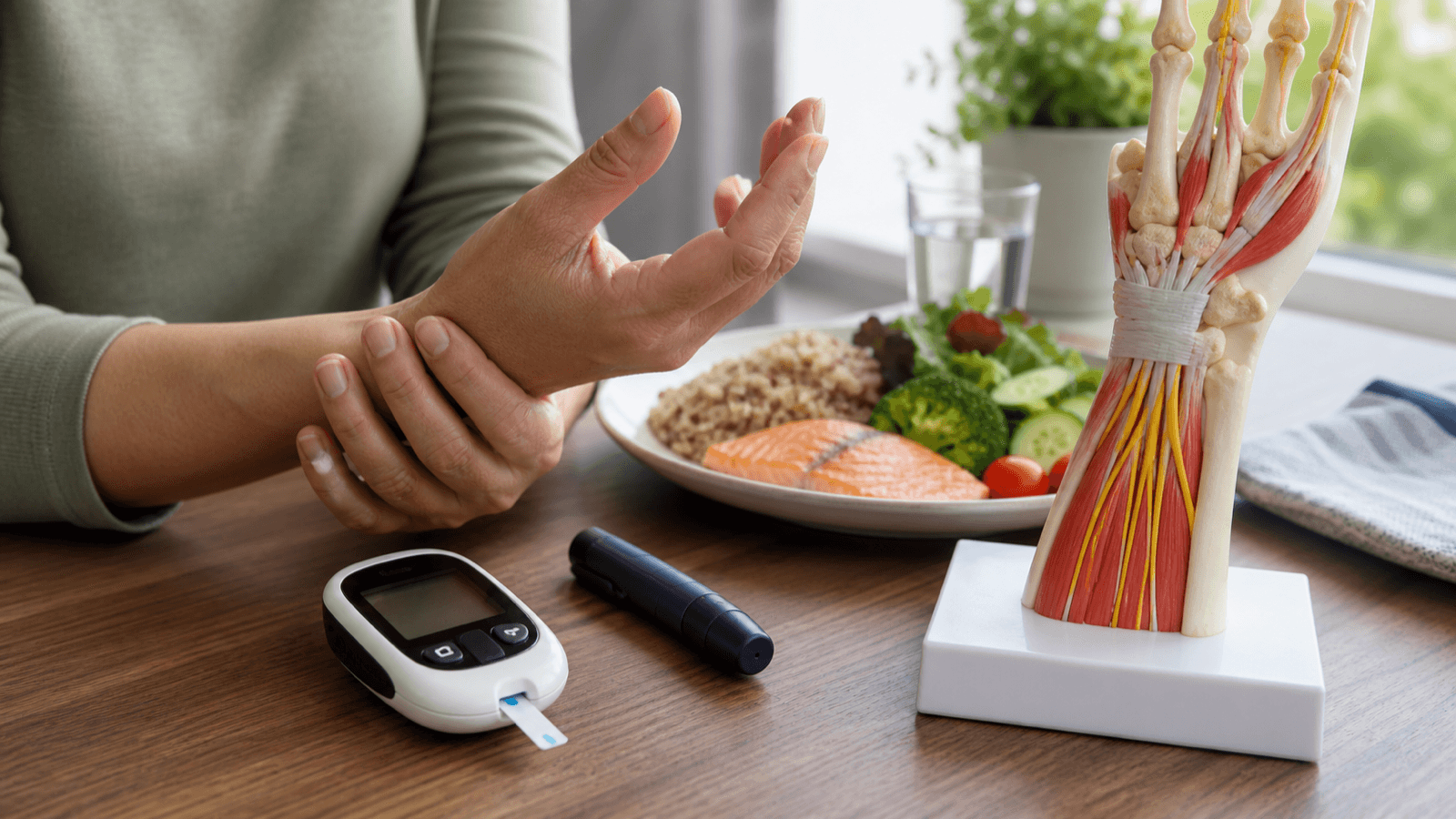
Table of Contents
- The Epidemiological Link Between Diabetes and Carpal Tunnel
- How Diabetes Damages Nerves in the Wrist
- The Bidirectional Relationship: Why Each Condition Worsens the Other
- Differential Diagnosis: Distinguishing Diabetic Neuropathy from Carpal Tunnel
- Why Carpal Tunnel Makes Diabetes Harder to Control
- Screening Recommendations for Diabetic Patients
- Treatment Approaches When You Have Both Conditions
- Glucose Control and Nerve Recovery
- Living With Both Conditions: Practical Strategies
- FAQs
- Sources & Methodology
The Epidemiological Link Between Diabetes and Carpal Tunnel
The association between diabetes mellitus and carpal tunnel syndrome is one of the most consistently documented relationships in orthopedic epidemiology. Multiple large-scale studies have established that:
- Between 20% and 30% of people with diabetes develop carpal tunnel syndrome at some point in their lives
- Type 1 and Type 2 diabetics both show elevated carpal tunnel risk, though the mechanisms differ slightly
- Diabetic carpal tunnel syndrome presents at a younger average age than idiopathic carpal tunnel
- Bilateral carpal tunnel (both hands) is significantly more common in diabetics than in non-diabetic populations
The American Diabetes Association's 2024 Standards of Care explicitly identifies carpal tunnel syndrome as one of the musculoskeletal complications of diabetes, noting that early identification and treatment improves outcomes in this population.
The reason the link is so consistent across populations is that high blood glucose damages nerves through multiple simultaneous mechanisms — and each mechanism makes the median nerve inside the carpal tunnel more susceptible to compression injury.
Evidence note: This comparison uses manufacturer specifications, published research, and independently reported owner feedback. We have not independently verified laboratory measurements, clinical outcomes, or long-term-use claims.
How Diabetes Damages Nerves in the Wrist
Advanced Glycation End Products (AGEs)
When blood glucose is chronically elevated, glucose molecules attach to proteins in nerve tissue through a process called glycation. These advanced glycation end products (AGEs) accumulate in peripheral nerve sheaths, causing them to thicken and stiffen. A thicker nerve sheath inside the already-narrow carpal tunnel means less space for the median nerve — and more compression with any additional swelling.
Research published in the journal Diabetologia demonstrated that median nerve cross-sectional area (measured via ultrasound) is significantly larger in diabetic patients even before they develop carpal tunnel symptoms. This baseline nerve enlargement narrows the available space within the carpal tunnel from the outset.
AGEs also form cross-links with collagen in the flexor retinaculum (the roof of the carpal tunnel), making it thicker and less compliant. The result is a double compression scenario: the nerve is larger (due to glycation damage) and the space is smaller (due to retinacular stiffening). Even minor additional swelling — from typing, from a minor tendon inflammation — can trigger carpal tunnel symptoms at lower thresholds than would affect a non-diabetic person.
Microvascular Damage
Diabetes damages the small blood vessels that supply the peripheral nerves with oxygen and nutrients. This damage, called diabetic microangiopathy, affects the vasa nervorum — the tiny blood vessels that run within and alongside peripheral nerves, delivering oxygen and clearing metabolic waste.
Reduced blood flow to the median nerve impairs its ability to recover from even minor compression injuries. A non-diabetic nerve with adequate blood supply can recover from temporary compression within hours; a diabetic nerve with compromised microcirculation may take days or weeks — or may not fully recover.
This microvascular component explains why diabetic patients with carpal tunnel often have more severe electrodiagnostic findings than their symptom severity would predict. The nerve has been accumulating subclinical damage from microvascular insufficiency, making it less able to tolerate even mild mechanical compression.
Neuropathic Threshold Reduction
Diabetic peripheral neuropathy creates a state where nerves are more sensitive to mechanical compression than they would otherwise be. This means that the same degree of wrist flexion or tendon swelling that causes temporary symptoms in a non-diabetic patient causes persistent or worsening symptoms in a diabetic patient. The neuropathic threshold is effectively lowered.
This lowered threshold has clinical implications: what would be a mild, intermittent symptom in a non-diabetic person may become constant numbness in a diabetic person at the same degree of mechanical compression. The compression threshold for symptom generation is lower, and the recovery time from those symptoms is longer.
Endoneurial Edema
Fluid accumulates inside the nerve sheath itself in diabetic patients due to dysfunction in the blood-nerve barrier. This internal edema, called endoneurial edema, increases the cross-sectional pressure the nerve exerts against the flexor retinaculum (the roof of the carpal tunnel), raising intracarpal canal pressure even without additional external swelling from tendons.
Ultrasound studies of the median nerve in diabetic patients consistently show increased cross-sectional area and increased fluid within the nerve sheath — changes that are detectable even before the patient reports symptoms. These changes explain why diabetic patients can have significant nerve compression on electrodiagnostic testing while reporting only mild symptoms: the neuropathy has already dulled sensation, masking the severity of the mechanical compression.
The Bidirectional Relationship: Why Each Condition Worsens the Other
The relationship between diabetes and carpal tunnel syndrome is not one-directional. While diabetes creates the conditions that make carpal tunnel more likely, carpal tunnel syndrome itself makes diabetes harder to manage through several well-documented pathways.
This bidirectionality is clinically important because it means that treating carpal tunnel effectively is not just about hand health — it is also about metabolic control. Improving carpal tunnel symptoms can lower blood glucose; improving blood glucose can reduce carpal tunnel symptoms. The two conditions are locked in a feedback loop.
Understanding this loop is the key to effective management: a patient who treats only the diabetes while ignoring the carpal tunnel will see suboptimal results in both conditions. Similarly, a patient who treats only the carpal tunnel without addressing blood glucose control will experience recurrence or incomplete resolution.
Differential Diagnosis: Distinguishing Diabetic Neuropathy from Carpal Tunnel
One of the most clinically important challenges in managing diabetic patients with hand symptoms is distinguishing between diabetic peripheral neuropathy and carpal tunnel syndrome — because the treatment approaches differ significantly, and both conditions can coexist.
Clinical Features That Point Toward Carpal Tunnel
- Unilateral or asymmetric symptoms — though diabetic CTS can be bilateral, marked asymmetry suggests focal compression rather than diffuse neuropathy
- Numbness limited to median nerve distribution — thumb, index, middle, and half of ring finger supplied by the median nerve
- Worse at night or upon waking — characteristic of carpal tunnel; neuropathy tends to be constant
- Positive Tinel's sign — tapping over the median nerve at the wrist crease produces tingling radiating into the fingers
- Positive Phalen's maneuver — sustained wrist flexion reproduces or worsens symptoms
- Thenar muscle weakness — difficulty with thumb opposition or grip on the thumb side of the hand
Clinical Features That Point Toward Diabetic Neuropathy
- Symmetric, stocking-glove distribution — symptoms affect the feet before the hands, in a pattern that doesn't follow specific nerve territories
- Constant numbness — not worse at night, not posture-dependent
- No Tinel's or Phalen's signs — mechanical maneuvers don't reproduce symptoms
- Associated with other neuropathy signs — decreased ankle reflexes, loss of vibration sense, foot ulcers or calluses
Electrodiagnostic Testing: The Definitive Tool
Nerve conduction studies and electromyography (EMG) are the gold standard for distinguishing between these two conditions. In diabetic peripheral neuropathy, nerve conduction studies show:
- Reduced conduction velocity across all tested nerves (generalized slowing)
- Reduced amplitude in distal nerves
- Symmetric pattern
In carpal tunnel syndrome:
- Prolonged distal latency of the median nerve at the wrist
- Reduced conduction velocity across the carpal tunnel segment
- Preserved conduction in the ulnar and radial nerves
In many diabetic patients, both patterns are present — diabetic neuropathy in addition to focal median nerve compression at the carpal tunnel. This combination is called diabetic superposition syndrome, and it requires treatment addressing both the diffuse neuropathy and the focal compression.
If your diabetic patient reports hand symptoms, a referral for electrodiagnostic testing is warranted before beginning any treatment program. Without clear diagnosis, treatment is guesswork.
Why Carpal Tunnel Makes Diabetes Harder to Control
The relationship between the two conditions is bidirectional. Just as diabetes worsens carpal tunnel through nerve damage, carpal tunnel syndrome makes diabetes more difficult to manage through several mechanisms.
Sleep Disruption
Nighttime numbness and tingling from carpal tunnel disrupts sleep architecture. Multiple awakenings prevent deep REM sleep, which is when the body is most metabolically active in clearing glucose from the bloodstream. Research published in Diabetes Care has consistently shown that sleep deprivation raises fasting blood glucose and HbA1c levels. People with carpal tunnel who wake frequently have higher morning blood sugar readings than they would with the condition treated.
The mechanism involves cortisol: sleep disruption elevates cortisol, and cortisol antagonizes insulin function, creating a state of relative insulin resistance. Higher cortisol means the body needs more insulin to process the same amount of glucose — a metabolic burden that worsens glycemic control.
For diabetic patients, whose glucose management is already precarious, this additional cortisol burden can be the difference between an HbA1c of 7.5% and one of 8.5% — a clinically significant difference in terms of long-term complication risk.
Reduced Physical Activity
Hand pain and weakness limit grip-dependent activities, which include most forms of exercise. An inability to comfortably hold weights, grip exercise equipment, or even walk while carrying water bottles creates barriers to physical activity — one of the most effective non-pharmaceutical tools for managing Type 2 diabetes.
The reduction in physical activity feeds back into the condition: less activity means higher blood glucose, which worsens neuropathy, which worsens carpal tunnel, which reduces activity further. Breaking this cycle requires treating both the hand symptoms (so the patient can exercise) and the underlying diabetes (so nerve health improves).
Chronic Pain and Cortisol
Persistent pain from untreated carpal tunnel elevates cortisol levels. Cortisol antagonizes insulin function, creating a state of relative insulin resistance. Higher cortisol means the body needs more insulin to process the same amount of glucose — a metabolic burden that worsens glycemic control.
Depression and Diabetes Management
Chronic health conditions compound psychologically. People managing both diabetes and carpal tunnel pain report higher rates of depression and anxiety, which independently correlate with poorer diabetes self-management, lower medication adherence, and worse glycemic outcomes.
The psychological burden of managing multiple chronic conditions should not be underestimated. Integrated care that addresses both the physical and psychological dimensions of living with diabetes and carpal tunnel produces better outcomes than siloed treatment of each condition separately.
Screening Recommendations for Diabetic Patients
The American Diabetes Association recommends annual screening for carpal tunnel syndrome in all diabetic patients, using validated symptom questionnaires and clinical examination.
Screening Protocol
- Symptom questionnaire: Ask about numbness, tingling, or burning in the thumb, index, middle, and half of ring finger — particularly if symptoms are worse at night or upon waking
- Clinical examination: Tinel's sign (tapping over the median nerve at the wrist crease) and Phalen's maneuver (wrist flexion for 60 seconds) both reproduce symptoms in most carpal tunnel patients
- Semmes-Weinstein monofilament test: A 10g monofilament applied to the fingertip pads tests for diminished light touch sensation — an early sign of median nerve compression in diabetics
- Two-point discrimination: An inability to distinguish two sharp points separated by more than 6mm on the fingertip indicates advanced nerve compression
- Nerve conduction studies (EMG): The gold standard for confirming carpal tunnel diagnosis; recommended if clinical examination is positive or symptoms are progressive
Diabetic patients with symptoms should be referred to a hand surgeon or neurologist for formal electrodiagnostic testing before beginning any treatment program.
High-Risk Indicators Requiring Urgent Referral
Certain findings in a diabetic patient with hand symptoms warrant urgent referral rather than routine screening:
- Thenar atrophy — visible wasting of the thumb pad muscles indicates prolonged, severe compression
- Constant numbness — not intermittent, not posture-dependent, suggests advanced nerve damage
- Weakness in thumb opposition — difficulty touching the thumb tip to the pinky finger indicates median nerve motor involvement
- Symptoms progressing rapidly — rapid worsening over weeks rather than months suggests aggressive compression
Any of these findings should trigger an urgent referral to a hand surgeon for surgical evaluation, regardless of the patient's diabetes control status.
Treatment Approaches When You Have Both Conditions
Conservative Treatment First
For mild-to-moderate carpal tunnel in diabetic patients, the same conservative treatments used for non-diabetic patients are recommended — with greater attention to blood glucose control and more frequent follow-up to monitor for progression.
Night bracing is the cornerstone of conservative management for diabetic carpal tunnel patients. Wrist neutral positioning at night prevents the sustained flexion that compresses the median nerve during sleep. Diabetic patients should wear a rigid night brace continuously for at least 6-8 weeks to assess whether conservative management is effective. Because diabetic nerves are more vulnerable and recover more slowly, the trial period is typically longer than for non-diabetic patients.
Ergonomic modification is equally important. Any activity that involves sustained gripping, vibration, or wrist flexion is more damaging in a diabetic nerve. Workplace modifications — negative tilt keyboard trays, ergonomic mouse, voice-to-text software — reduce the mechanical triggers that compound diabetic nerve vulnerability.
Physical therapy focusing on nerve gliding and tendon mobilization helps diabetic patients maintain median nerve mobility and prevents tendon adhesions that would further narrow the carpal tunnel. A physical therapist familiar with both diabetes-related neuropathy and hand therapy provides the most comprehensive approach.
Corticosteroid Injections
Corticosteroid injections into the carpal tunnel reduce inflammation and swelling, providing temporary relief of carpal tunnel symptoms. For diabetic patients who cannot or will not have surgery, injections can be part of an ongoing management strategy.
The evidence for steroid injection in diabetic carpal tunnel patients is mixed. While injections provide short-term symptomatic relief (typically 4-8 weeks), diabetic patients tend to have lower response rates and shorter durations of benefit compared to non-diabetic patients. Injections are most useful as a temporizing measure while preparing for surgery or optimizing glucose control.
One specific concern for diabetic patients: steroid injections can temporarily elevate blood glucose for 24-72 hours after administration. Patients who use insulin or sulfonylureas should be warned of this effect and advised to monitor glucose more frequently in the days following an injection.
Surgery: Carpal Tunnel Release
When conservative treatment fails — or when nerve conduction studies show severe compression — carpal tunnel release surgery (CTR) is the definitive treatment. Diabetic patients require special consideration in several areas.
Timing matters. Diabetic patients who undergo carpal tunnel release while HbA1c is elevated (above 8.5%) experience higher rates of post-operative complications including wound dehiscence, infection, and delayed nerve recovery. Surgeons increasingly recommend glycemic optimization before scheduling elective carpal tunnel surgery. Some surgeons set a target HbA1c below 8.0% as a prerequisite for elective surgery; others are comfortable operating at up to 9.0% with additional post-operative monitoring.
Surgical technique: Both open release and endoscopic release are performed in diabetic patients. Endoscopic release may offer faster early recovery, but long-term outcomes are equivalent between techniques. The choice depends on surgeon preference, patient anatomy, and whether other hand procedures are planned simultaneously.
Post-operative glucose monitoring: Steroid injection given at surgery (sometimes mixed with local anesthetic) can elevate blood glucose for 24-48 hours. Diabetic patients should monitor blood glucose closely in the immediate post-operative period and adjust medications as needed in consultation with their endocrinologist or primary care physician.
Expected recovery: Diabetic patients typically experience slower nerve recovery after carpal tunnel release than non-diabetic patients. While non-diabetic patients may notice symptom improvement within days of surgery, diabetic patients often require 3-6 months for full nerve recovery. This is due to the underlying diabetic neuropathy that preceded the carpal tunnel and does not resolve with the surgery alone.
Bilateral surgery considerations: Because diabetic carpal tunnel is frequently bilateral (affecting both hands), some patients eventually need surgery on both sides. Most surgeons prefer to stage these procedures — operating on one hand first, allowing recovery before operating on the other. Recovery from bilateral simultaneous surgery is impractical because the patient would have no functional hand for the critical early healing period.
Glucose Control and Nerve Recovery
Maintaining optimal blood glucose control is not separate from carpal tunnel treatment — it IS carpal tunnel treatment for diabetic patients. Every percentage point reduction in HbA1c reduces the ongoing glycation damage to peripheral nerves and improves the microvascular blood supply that nerves need to heal.
HbA1c Targets
The American Diabetes Association recommends an HbA1c below 7% for most adults with diabetes. For diabetic patients with carpal tunnel syndrome, some hand surgeons set a target HbA1c below 8.0% as a prerequisite for elective surgery. Lower is generally better for nerve recovery, but aggressive glucose lowering in patients with long-standing diabetes carries its own risks of hypoglycemia and fall-related injury.
The key principle is that improvement in carpal tunnel symptoms requires sustained improvement in blood glucose — not just a single good reading. The glycation of nerve proteins is a slow process, and reversing it takes months of consistently well-controlled glucose. Patients should understand this timeline: they will not see carpal tunnel symptom improvement in weeks; they should expect 3-6 months of sustained good glucose control before noticing meaningful carpal tunnel changes.
Nutritional Considerations
Anti-inflammatory dietary patterns support both glycemic control and nerve healing. A Mediterranean-style diet — rich in omega-3 fatty acids, leafy green vegetables, and whole grains — reduces systemic inflammation that contributes to nerve dysfunction. Reducing refined carbohydrates and processed foods simultaneously improves glucose control and decreases the inflammatory environment inside the carpal tunnel.
Specific nutrients that support peripheral nerve health include:
- Alpha-lipoic acid — an antioxidant that has been studied extensively for diabetic peripheral neuropathy; 600-1800mg daily is the studied range
- B vitamins — particularly B1 (thiamine) and B6, which support nerve metabolism; B6 should be used cautiously at high doses (above 50mg daily) due to potential peripheral neuropathy risk from excess
- Omega-3 fatty acids — 1000-2000mg daily EPA/DHA supports nerve membrane health
- Vitamin D — deficiency is associated with increased neuropathy severity; maintaining levels above 30ng/mL is recommended
Exercise and Nerve Health
Regular physical activity improves insulin sensitivity, which directly benefits glycemic control. For diabetic patients with carpal tunnel, exercise prescription requires creative problem-solving: the patient may not be able to grip traditional weights or hold exercise equipment comfortably.
Low-impact exercises that minimize hand grip include:
- Stationary cycling (handlebars don't require firm grip)
- Walking (no hand grip required)
- Swimming (water supports body weight; hand paddles can be modified)
- Rowing machines with padded grips
Physical therapy referral is appropriate for diabetic patients who want to exercise but are limited by hand symptoms. A PT can prescribe exercises that work around carpal tunnel limitations while still providing metabolic benefit.
Living With Both Conditions: Practical Strategies
Managing diabetes and carpal tunnel simultaneously requires a coordinated approach that addresses both conditions at once. The following strategies help patients navigate the practical realities of living with both.
Daily Monitoring Routine
Check your blood glucose as directed by your physician. Additionally, perform a brief hand symptom check each morning: rate your numbness (0-10), note which fingers are affected, and assess grip strength by trying to open a jar or grip a door handle. Track these ratings over time — they provide your physician with useful data about symptom progression.
Sleep Positioning
Sleep positioning is critical for both conditions. For carpal tunnel, night bracing in neutral position is the single most effective conservative intervention. For diabetes, quality sleep supports glycemic control. Combining both needs means: firm mattress or medium-firm surface, pillows positioned to support the shoulder and arm, wrist brace in place, and consistent bedtime.
Medication Coordination
Some medications used in diabetes management have implications for carpal tunnel treatment:
- Metformin — generally supportive for nerve health; no negative interaction with carpal tunnel treatment
- SGLT2 inhibitors — can increase risk of urinary tract infections, which is relevant if post-surgical wound care is needed
- Sulfonylureas — risk of hypoglycemia if food intake is disrupted, important to know if fasting for surgery is required
- GLP-1 agonists — may cause nausea, which can complicate post-operative pain management
Always inform both your endocrinologist and your hand surgeon about all medications you are taking so they can coordinate care appropriately.
Working With Diabetes and Carpal Tunnel
Office workers with both conditions should prioritize ergonomic setup modifications. A desk job that was tolerable before carpal tunnel symptoms may become intolerable when compounded by diabetes-related nerve sensitivity. Key accommodations to request:
- Adjustable keyboard tray at or below elbow height
- Ergonomic mouse (vertical or trackpad style)
- Voice-to-text software for reducing typing demands
- Permission to take frequent microbreaks
- Flexible schedule for medical appointments related to both conditions
FAQs
Why are diabetics more likely to get carpal tunnel syndrome?
People with diabetes have elevated blood glucose levels that attach to proteins in the peripheral nerves, causing structural nerve damage and swelling. This makes the median nerve within the carpal tunnel more susceptible to compression. Additionally, diabetic peripheral neuropathy affects the hands and feet bilaterally, creating baseline nerve dysfunction that compounds compression injury.
Can carpal tunnel surgery be performed safely on diabetic patients?
Yes, carpal tunnel release surgery is safely performed on diabetic patients. However, diabetic patients typically experience slower nerve recovery post-surgery and have a higher risk of post-operative complications including wound healing delays and infection. Tight glucose control before and after surgery significantly improves outcomes.
Does controlling blood sugar improve carpal tunnel symptoms?
Yes, but the effect is indirect and takes time. Improving glycemic control halts the progression of glycation-related nerve damage and allows existing nerve function to stabilize. Significant symptom improvement typically requires 3-6 months of consistently well-controlled blood glucose before noticeable changes in carpal tunnel symptoms appear.
Are diabetic carpal tunnel symptoms different from regular carpal tunnel symptoms?
Diabetic carpal tunnel syndrome often affects both hands simultaneously (bilateral presentation), and symptoms may include more diffuse numbness across the entire hand rather than strictly median nerve distribution. Night waking from numbness is also more pronounced in diabetic patients. These differences reflect the broader peripheral neuropathy that coexists with carpal tunnel in diabetic patients.
Should diabetics wear wrist braces preventively?
Preventive night bracing is reasonable for diabetic patients who have not yet developed carpal tunnel symptoms, particularly if they have other risk factors (repetitive hand work, prior pregnancy-related carpal tunnel, hypothyroidism). The goal is to prevent the sustained wrist flexion during sleep that compounds an already-vulnerable median nerve.
How does diabetic neuropathy relate to carpal tunnel syndrome?
Diabetic neuropathy and carpal tunnel syndrome are both forms of nerve dysfunction in the hand, but they have different causes and different treatments. Diabetic neuropathy is a diffuse, metabolic nerve dysfunction from high blood glucose affecting all nerves bilaterally. Carpal tunnel syndrome is a focal, mechanical compression of the median nerve at a specific anatomical point. Both conditions can coexist and the symptoms overlap, which is why electrodiagnostic testing is important for diabetic patients with hand symptoms.
Can carpal tunnel cause blood sugar to rise?
Not directly, but through the sleep disruption and pain it causes, carpal tunnel can elevate cortisol levels and reduce physical activity — both of which worsen insulin resistance and raise blood sugar. This is why treating carpal tunnel in diabetic patients is considered part of overall diabetes management, not just a separate hand problem.
What is the best treatment for someone with both diabetes and carpal tunnel syndrome?
Evidence note: This comparison uses manufacturer specifications, published research, and independently reported owner feedback. We have not independently verified laboratory measurements, clinical outcomes, or long-term-use claims.
Sources & Methodology
- American Diabetes Association. "Standards of Care in Diabetes — 2024." diabetesjournals.org. 2024.
- Sun, Y. et al. "Association between diabetes mellitus and carpal tunnel syndrome: A systematic review and meta-analysis." Journal of Diabetes Investigation. 2022.
- Cava, J. et al. "Nerve conduction abnormalities in diabetic patients with carpal tunnel syndrome." Muscle & Nerve. 2021.
- American Academy of Orthopaedic Surgeons. "Carpal Tunnel Syndrome and Systemic Disease." aaos.org. 2025.
- National Institute of Diabetes and Digestive and Kidney Diseases. "Diabetic Neuropathy." niddk.nih.gov. 2024.
- American Diabetes Association. "Musculoskeletal Complications of Diabetes." diabetesjournals.org. 2024.
Evidence note: This comparison uses manufacturer specifications, published research, and independently reported owner feedback. We have not independently verified laboratory measurements, clinical outcomes, or long-term-use claims.
Last updated: April 2026