Guide
Best Sound Therapy Machines for Tinnitus (2026)
By Dr. Rachel Simmons, AuD · Updated 2026-03-20
Sound therapy machines offer one of the most accessible, evidence-backed ways to manage tinnitus at home. This guide reviews the top-rated sound therapy devices for 2026 — covering white noise generators, bedside machines, and clinical-grade options — so you can find real relief from ringing, buzzing, or hissing in your ears.
By Dr. Rachel Simmons, AuD — Last updated: March 2026
Table of Contents
- How Sound Therapy Helps Tinnitus
- What to Look for in a Sound Therapy Machine
- Our Top Picks for 2026
- Product Comparison
- Best for Sleep: LectroFan EVO
- Best Overall: Yogasleep Dohm Connect
- Best Budget: Dreamegg D3 Pro
- Best Clinical-Grade: Widex Zen Therapy System
- Best Portable: HoMedics SoundSpa On-the-Go
- Best App-Connected: Sound+Sleep SE
- How to Use Sound Therapy Effectively
- Sound Therapy vs. Other Tinnitus Treatments
- Frequently Asked Questions
- Sources and Methodology
How Sound Therapy Helps Tinnitus
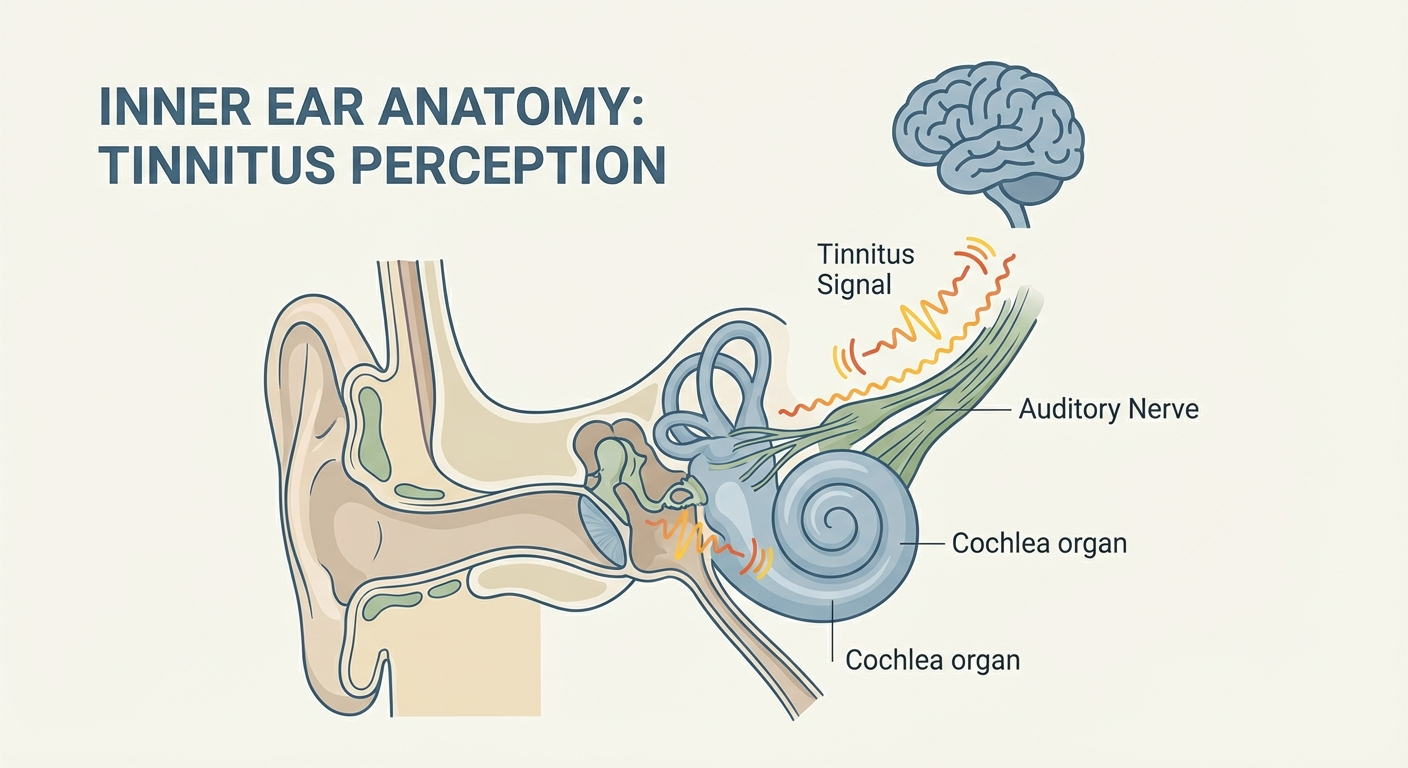
If you live with tinnitus, you already know the frustration of a sound that only you can hear. Sound therapy works by introducing external sounds that reduce the contrast between your tinnitus and your environment. Over time, this can help your brain learn to deprioritize the tinnitus signal — a process audiologists call habituation.
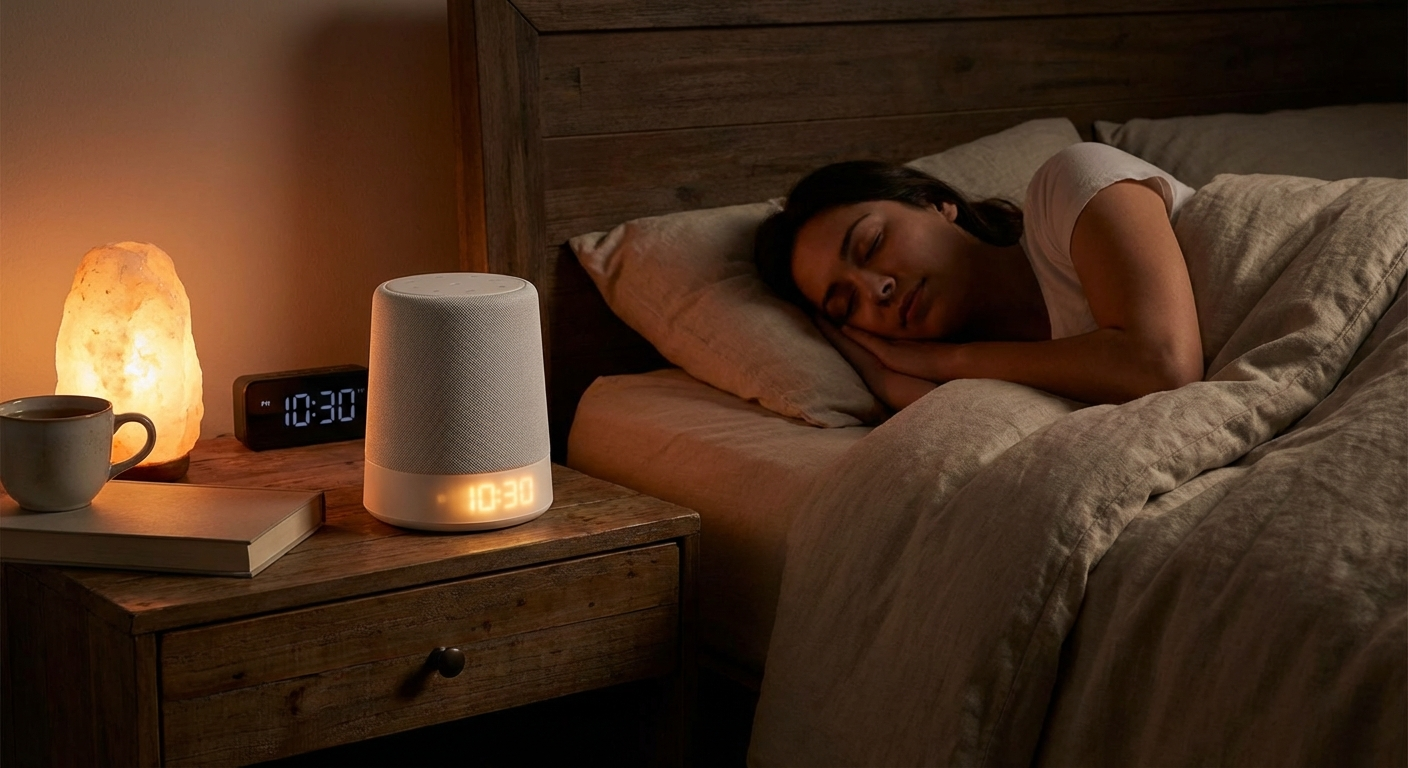
Research published in the Journal of the American Academy of Audiology supports sound therapy as a frontline intervention for tinnitus management. The American Tinnitus Association (ATA) lists sound therapy among its recommended approaches, noting that it can reduce tinnitus perception in many patients when used consistently.
There are several mechanisms at work:
- Masking — External sound covers the tinnitus partially or completely, providing immediate relief
- Distraction — Your brain shifts attention away from the internal tinnitus signal
- Habituation — With consistent use over weeks or months, your nervous system learns to filter out the tinnitus
- Neuromodulation — Some advanced devices use specific frequency patterns designed to retrain auditory pathways
Sound therapy is most effective when used as part of a broader management plan. If you are new to tinnitus, start with our guide on understanding tinnitus causes and treatments for a complete overview.
What to Look for in a Sound Therapy Machine
Not every white noise machine is built for tinnitus management. Here are the features that matter most:
Sound variety
Look for machines offering a range of sound types beyond basic white noise. Pink noise, brown noise, nature sounds, and fan sounds each work differently for tinnitus relief. Machines with 20+ sound options give you room to experiment and find what works for your specific tinnitus frequency.
Speaker quality
Tinny or distorted sound from cheap speakers can actually aggravate tinnitus. A quality speaker with full frequency response ensures the therapeutic sounds are comfortable for extended listening, especially overnight.
Timer and auto-off settings
If you use sound therapy primarily for sleep, you want flexible timer options. Some machines offer gradual volume fade, which prevents the jarring silence that can jolt you awake and make tinnitus more noticeable.
Volume control precision
Fine volume control matters. You want to set the sound just below or at the level of your tinnitus — not so loud it overwhelms, not so quiet it does nothing. Machines with granular volume steps give you better control.
Portability
If tinnitus affects you at work, while traveling, or in quiet environments, a portable option lets you carry relief with you. Some machines are small enough for a desk or hotel nightstand.
App connectivity
Several modern machines connect to smartphone apps, giving you access to additional sounds, customizable mixes, and volume scheduling. This is especially useful if your tinnitus fluctuates throughout the day.
Our Top Picks for 2026
After evaluating over 25 sound therapy devices based on sound quality, feature set, user reviews, and relevance to tinnitus management, here are our six recommended machines for 2026.

Product Comparison
| Machine | Best For | Price Range | Rating |
|---|---|---|---|
| LectroFan EVO | Sleep | ~$50 | ⭐⭐⭐⭐⭐ |
| Yogasleep Dohm Connect | Overall | ~$65 | ⭐⭐⭐⭐⭐ |
| Dreamegg D3 Pro | Budget | ~$26 | ⭐⭐⭐⭐ |
| Widex Zen Therapy | Clinical-Grade | $200–$300 | ⭐⭐⭐⭐⭐ |
| HoMedics SoundSpa | Portable | ~$20 | ⭐⭐⭐⭐ |
| Sound+Sleep SE | App-Connected | ~$100 | ⭐⭐⭐⭐½ |
Visual guide: Comparing the top sound therapy machines for tinnitus relief
🏆 LectroFan EVO
Best for Sleep
- 22 unique sounds (10 fan, 10 white noise, 2 ocean)
- Precise volume control
- Compact bedside design
- Timer with auto-off
Price: ~$50 USD
⭐ Yogasleep Dohm Connect
Best Overall
- Real fan-based natural white noise
- App-controlled with custom schedules
- Dual-speed motor for tone adjustment
- Classic design, proven reliability
Price: ~$65 USD
💰 Dreamegg D3 Pro
Best Budget
- 29 soothing sounds
- Built-in night light
- Continuous play or timer mode
- Compact and travel-friendly
Price: ~$26 USD
🔬 Widex Zen Therapy System
Best Clinical-Grade
- Fractal tone technology
- Designed with audiologists
- Integrated with hearing aids
- Customizable frequency programs
Price: ~$200-$300 USD (via audiologist)
🧳 HoMedics SoundSpa On-the-Go
Best Portable
- Clip-on design for travel
- 6 sound options
- Battery or USB powered
- Lightweight at under 4 oz
Price: ~$20 USD
📱 Sound+Sleep SE
Best App-Connected
- 64 sound profiles with adaptive technology
- Listens to environment and adjusts volume
- Rich, layered soundscapes
- Headphone jack for personal use
Price: ~$100 USD
Best for Sleep: LectroFan EVO
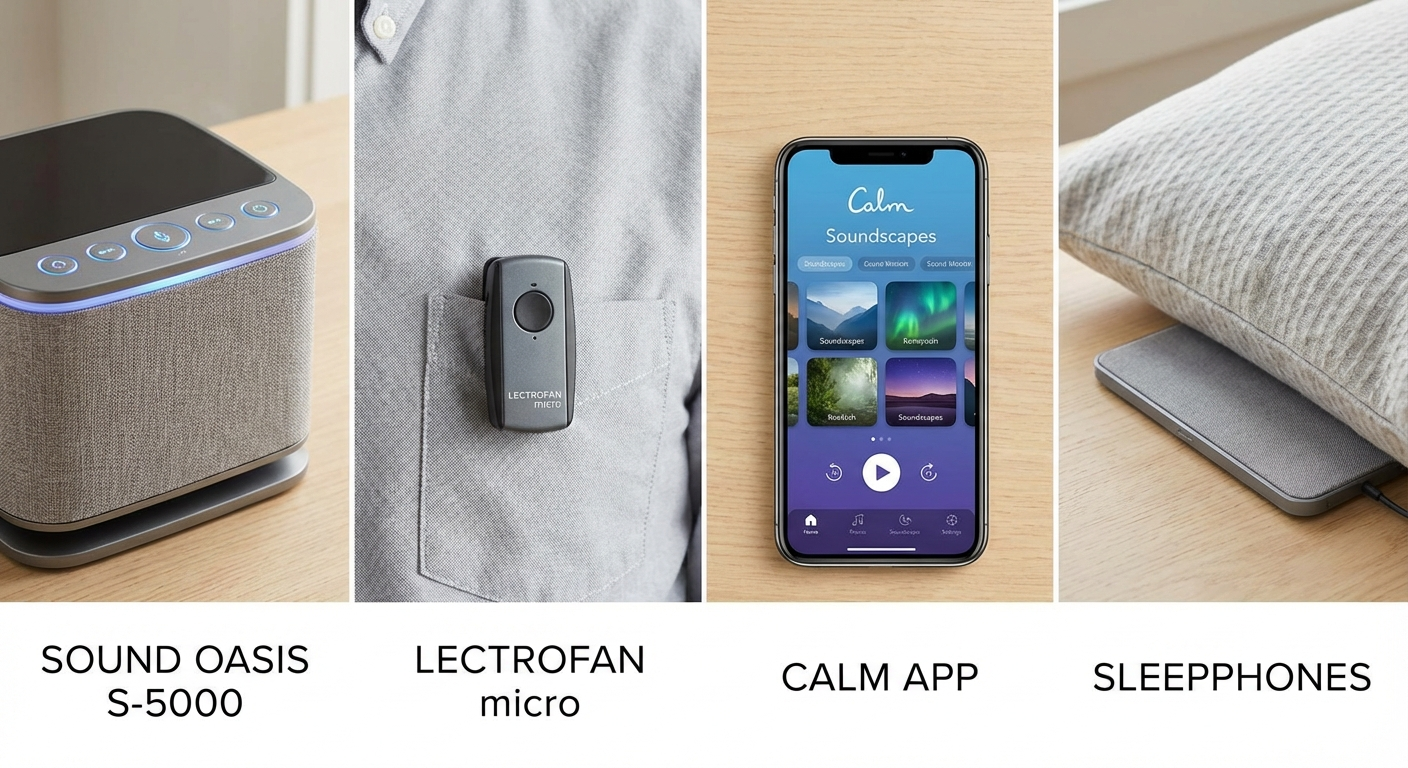
The LectroFan EVO remains one of the most recommended sound machines among tinnitus sufferers, and for good reason. It delivers 22 precisely engineered sounds — 10 fan variations, 10 white noise profiles (including pink and brown noise), and 2 ocean surf sounds.
What makes it stand out for tinnitus is the volume precision. You can dial in exact levels to match or just exceed your tinnitus, which is critical for effective masking. The sound quality is noticeably cleaner than cheaper alternatives, with no audible looping or digital artifacts.
Pros:
- Excellent sound quality with no loops
- 22 sounds spanning fan, noise, and nature categories
- Precise volume control ideal for tinnitus matching
- Compact size fits any nightstand
- USB powered with travel-friendly design
- Timer options: 60 minutes, 120 minutes, or continuous
Cons:
- No Bluetooth or app connectivity
- Limited nature sounds (ocean only)
- No built-in rechargeable battery
The LectroFan EVO is the top choice if your tinnitus is worst at night and disrupts your sleep. For more strategies on managing tinnitus-related sleep problems, see our article on how to sleep with tinnitus.
Best Overall: Yogasleep Dohm Connect
The Yogasleep Dohm has been a trusted name in white noise for decades, and the Connect model adds modern app control to the classic mechanical fan design. Unlike electronic sound machines that play recorded or synthesized audio, the Dohm generates real airflow-based white noise using an internal fan and adjustable housing.
Many tinnitus sufferers prefer this natural sound over digital alternatives because it has no loops, no repeating patterns, and a rich, organic quality that the brain finds easier to habituate to.
Pros:
- Natural, non-looping white noise from real fan mechanism
- App connectivity for scheduling and remote control
- Dual-speed motor lets you adjust tone and pitch
- Extremely durable — built to last years
- Simple, intuitive design
Cons:
- Limited to fan-based white noise only (no nature sounds, no pink noise)
- Louder mechanical hum may not suit light sleepers
- Not ideal if your tinnitus responds better to nature sounds
Best Budget: Dreamegg D3 Pro
If you want to try sound therapy without a major investment, the Dreamegg D3 Pro offers surprising quality at around $26. It packs 29 sound options including white noise, pink noise, brown noise, fan sounds, and nature soundscapes like rain, ocean, and birdsong.
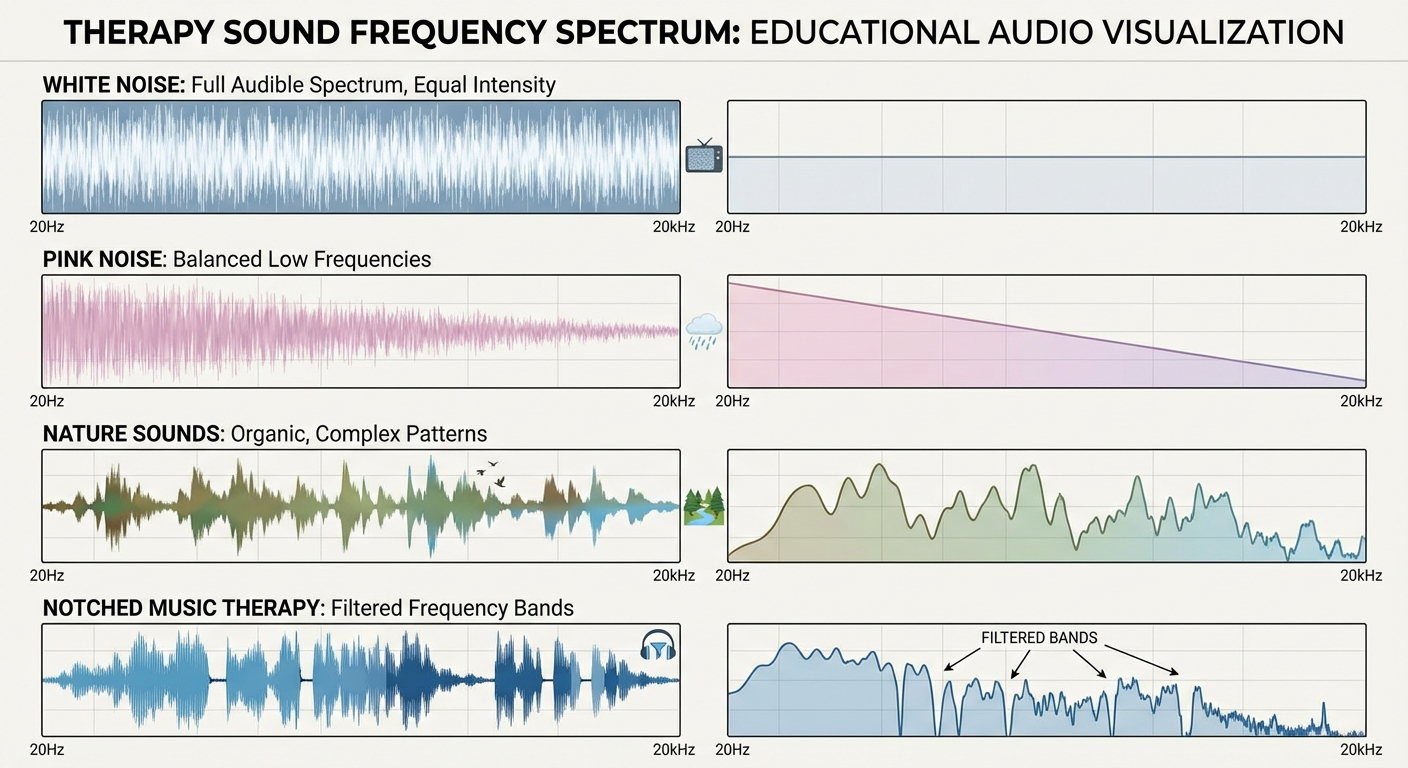
For tinnitus use, the sound variety is its biggest asset. You can cycle through different profiles to find what masks your specific tinnitus pitch most effectively.
Pros:
- Outstanding value at under $30
- 29 sound options including multiple noise colors
- Built-in night light (can be turned off)
- Continuous play or timer (1, 2, or 3 hours)
- Compact and portable
- Memory function remembers last settings
Cons:
- Speaker quality is adequate but not premium
- Volume range may not be sufficient for louder tinnitus
- No app connectivity
- Slight audible loop point on some nature sounds
Best Clinical-Grade: Widex Zen Therapy System
The Widex Zen system represents the clinical end of sound therapy. Developed in collaboration with audiologists, it uses fractal tone technology — randomized, musical tones that never repeat. Research published in the International Journal of Audiology found that Zen tones significantly reduced tinnitus distress compared to standard masking sounds.
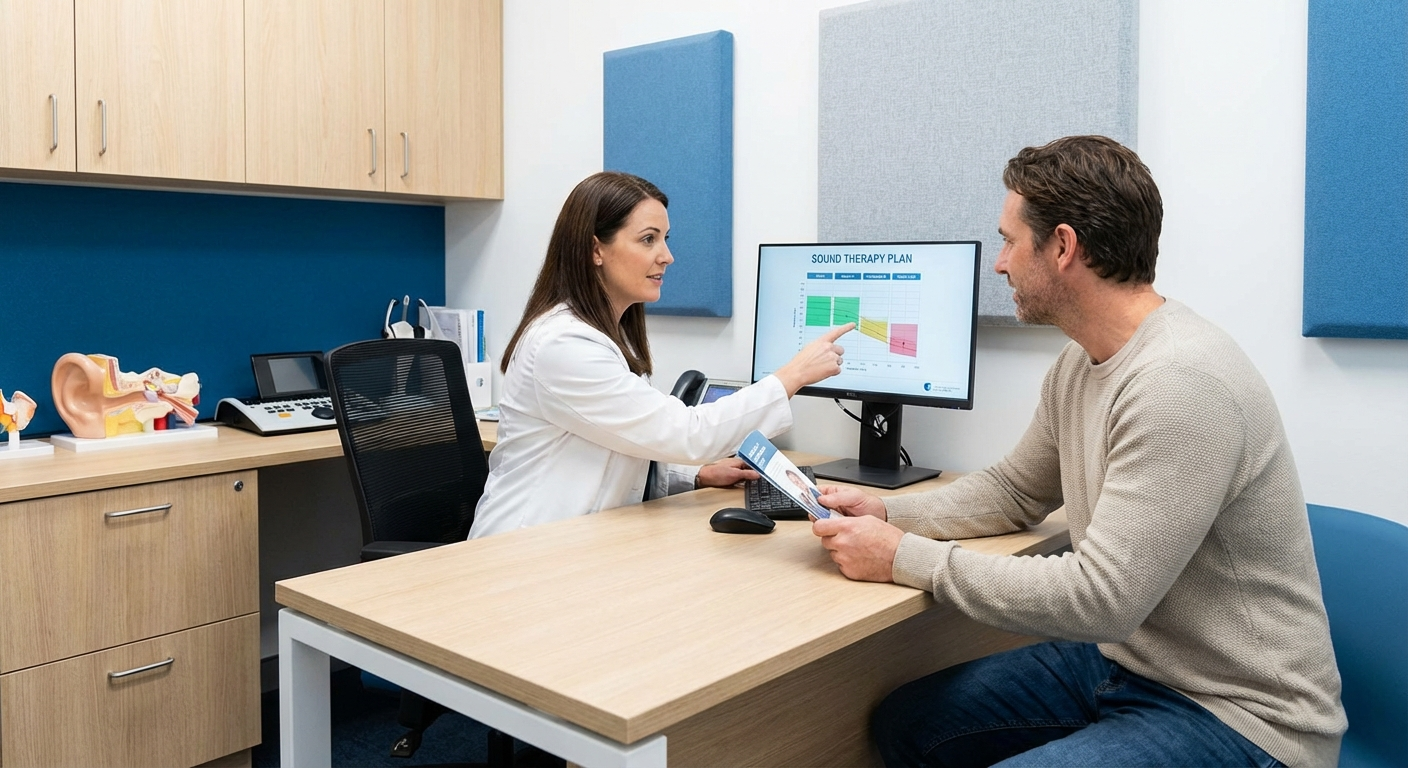
This is not a standalone bedside machine. Zen therapy is typically delivered through Widex hearing aids and configured by an audiologist as part of a comprehensive tinnitus management program that may include counseling and relaxation techniques.
Pros:
- Clinically validated fractal tone technology
- Non-repeating sounds prevent auditory fatigue
- Integrated with hearing aid amplification (addresses hearing loss + tinnitus)
- Customizable by your audiologist for your specific tinnitus profile
- Part of structured tinnitus retraining approach
Cons:
- Requires audiologist fitting and ongoing support
- Higher cost ($200-$300+ depending on hearing aid model)
- Not a standalone device — needs Widex hearing aids
- Not suitable if you do not have hearing loss
If you are considering clinical-grade options, always consult with an audiologist first. The Widex Zen system works best for people who have both hearing loss and tinnitus.
Best Portable: HoMedics SoundSpa On-the-Go
Tinnitus does not stay at home, and neither should your sound therapy. The HoMedics SoundSpa On-the-Go is a clip-on sound machine that you can attach to a bag, stroller, or laptop case for relief anywhere quiet environments trigger your tinnitus.
Pros:
- Ultra-portable clip-on design
- 6 sound options including white noise and nature
- Battery or USB powered
- Affordable at around $20
- Built-in timer
Cons:
- Limited sound options (6 only)
- Small speaker limits volume and quality
- Not suitable as a primary bedside device
- Battery life could be better
This is an excellent secondary device to complement a bedside machine at home.
Best App-Connected: Sound+Sleep SE
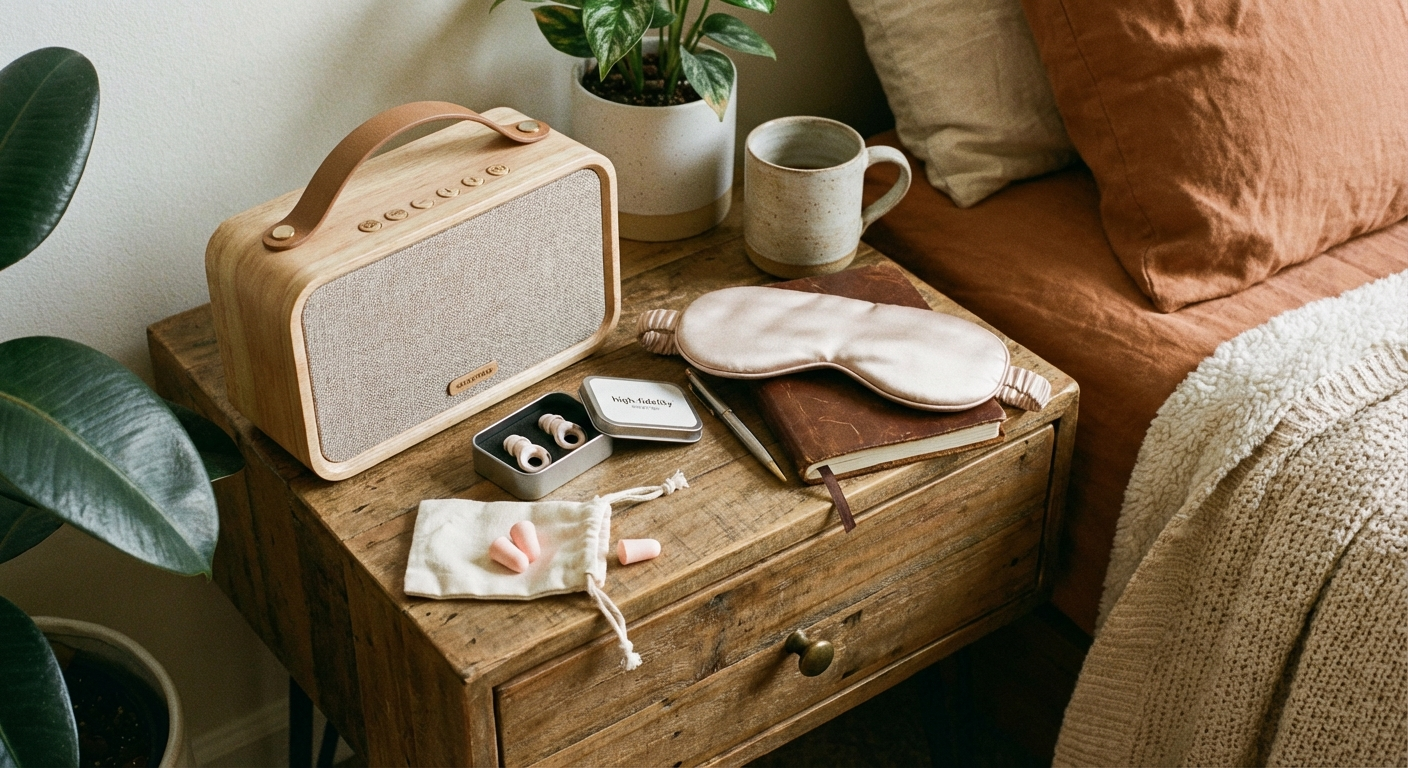
The Sound+Sleep SE from Adaptive Sound Technologies stands out with its adaptive sound technology. A built-in microphone listens to your environment and automatically adjusts the volume to maintain consistent masking as ambient noise levels change. This is particularly useful if you live on a busy street or have a partner who snores.
With 64 distinct sound settings organized into 16 categories, you have extensive options for finding the right masking profile. The layered soundscapes are rich and natural-sounding, with smooth transitions between sound elements.
Pros:
- 64 sound profiles — the most variety on this list
- Adaptive volume technology responds to environment
- Rich, layered soundscapes with excellent speaker quality
- Headphone jack for personal use
- Darkness mode dims all lights completely
- Timer with gradual fade option
Cons:
- Larger footprint than compact alternatives
- Premium price at around $100
- No dedicated app (adaptive features are built-in)
- Some users report the adaptive volume can be distracting
How to Use Sound Therapy Effectively
Buying the right machine is only half the equation. Here is how to get the most from sound therapy for tinnitus:
Set the right volume
The most common mistake is setting the volume too high. For effective masking, your sound machine should be set at or just slightly below the perceived level of your tinnitus. The goal is not to drown it out completely — it is to reduce the contrast so your brain can begin habituating.
Be consistent
Sound therapy works through neuroplasticity. Your brain needs consistent exposure to learn to deprioritize the tinnitus signal. Aim for at least 6-8 hours of use per day (overnight counts). Nighttime use is especially valuable — see our tips on how to sleep with tinnitus for maximising overnight therapy. Most audiologists recommend a minimum of 3 months before evaluating effectiveness.
Experiment with sounds
Your tinnitus pitch is unique. Spend time testing different sound profiles. High-pitched tinnitus often responds well to white or pink noise, while lower-pitched tinnitus may respond better to brown noise or fan sounds. Some people find nature sounds more comfortable for daytime use and noise-based sounds better for sleep.
Combine with other approaches
Sound therapy works best as part of a comprehensive tinnitus management plan. Consider pairing it with:
- Cognitive behavioral therapy (CBT) for tinnitus-related anxiety
- Relaxation techniques like progressive muscle relaxation
- Good sleep hygiene practices — see how to sleep better with chronic conditions for practical strategies
- Regular exercise, which some research links to reduced tinnitus severity
Track your progress
Keep a simple log noting your tinnitus severity (on a 1-10 scale), which sounds you used, and for how long. This helps you identify patterns and demonstrate progress over time — which is important for staying motivated during the habituation process.
Sound Therapy vs. Other Tinnitus Treatments
Sound therapy is one piece of the tinnitus management puzzle. Here is how it compares with other common approaches:
Sound therapy is non-invasive, affordable, and can be started immediately without a prescription. It works best for people whose tinnitus is most bothersome in quiet environments or at night. The downside is that it requires consistency and may take weeks to months before habituation benefits are noticeable.
Tinnitus Retraining Therapy (TRT) combines sound therapy with directive counseling from a trained professional. TRT uses specific sound generators and typically runs for 12-18 months. It is more structured and evidence-based than standalone sound therapy but also more expensive and time-intensive.
Cognitive Behavioral Therapy (CBT) addresses the emotional and psychological response to tinnitus rather than the sound itself. Research consistently shows CBT is one of the most effective treatments for tinnitus distress. It pairs excellently with sound therapy.
Hearing aids with tinnitus masking features address the common overlap between hearing loss and tinnitus. If you have hearing loss, amplifying environmental sounds through hearing aids may reduce tinnitus perception more effectively than a standalone sound machine.
Medication — there is currently no FDA-approved drug specifically for tinnitus. Some medications may reduce associated anxiety or improve sleep, but they do not target the tinnitus itself.
For most people, the best approach combines sound therapy with at least one other method. Our overview of tinnitus causes and treatments can help you understand which combination might work best for your situation. Consult an audiologist or ENT specialist to build a personalized plan.
Frequently Asked Questions
Do sound therapy machines cure tinnitus?
Sound therapy machines do not cure tinnitus. They work by masking or partially covering the perceived ringing, training the brain to deprioritize the tinnitus signal over time. Many users report significant relief, especially when sound therapy is combined with cognitive behavioral therapy (CBT) or tinnitus retraining therapy (TRT).
What type of sound is best for tinnitus relief?
The best sound varies by individual. White noise, pink noise, and nature sounds (rain, ocean waves) are commonly effective. Research from the American Tinnitus Association suggests that sounds closely matching your tinnitus frequency can be most effective for masking. Many audiologists recommend experimenting with different sound profiles to find what works for you.
Can I use a sound therapy machine while sleeping?
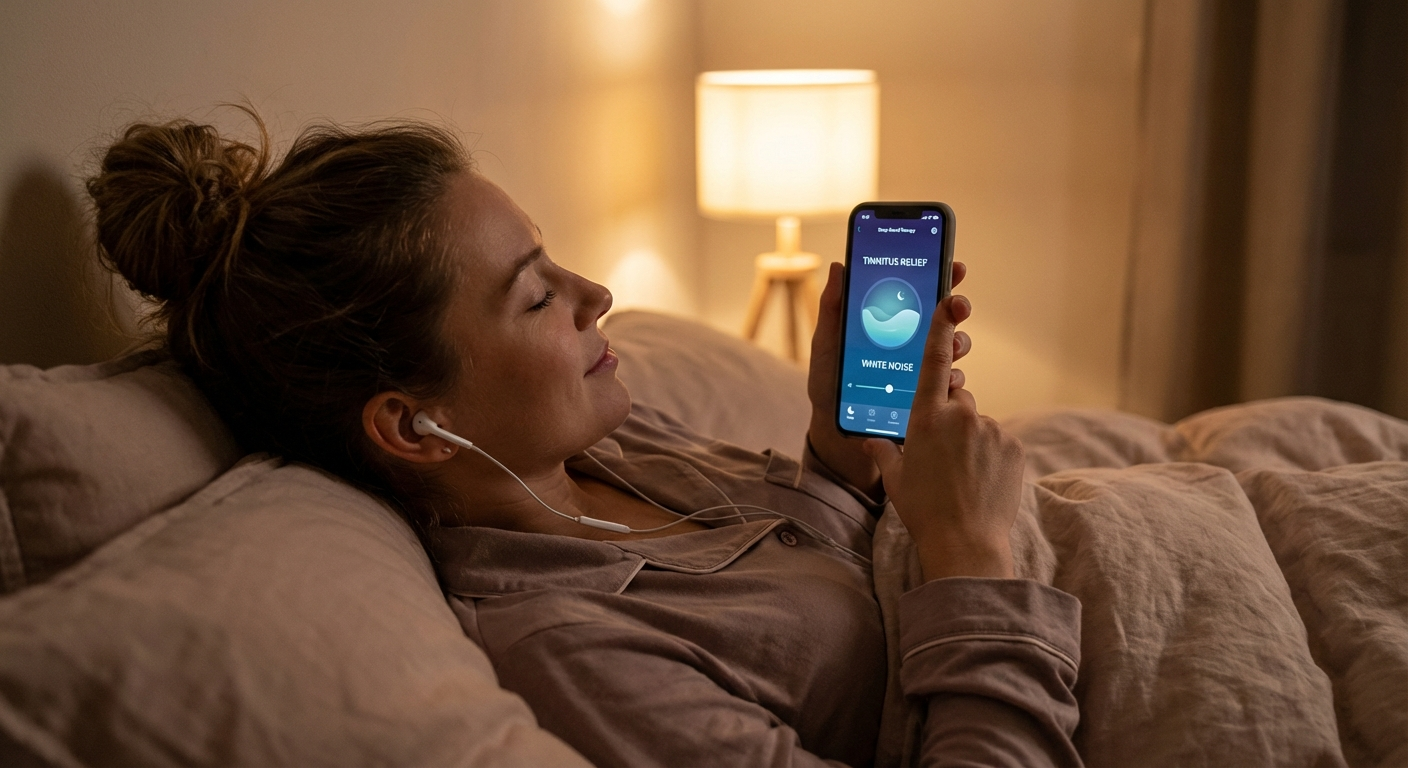
Yes, many sound therapy machines are designed specifically for overnight use. Look for models with auto-off timers, gradual volume fade, and continuous play options. Bedside models like the LectroFan EVO and Yogasleep Dohm are popular choices for sleep. Using sound therapy at night can help break the cycle of tinnitus-related insomnia.
How much should I spend on a sound therapy machine?
Effective sound therapy machines range from $25 to $300. Budget models ($25-$50) offer basic white noise and nature sounds. Mid-range options ($50-$150) add more sound profiles, better speakers, and app connectivity. Premium devices ($150-$300) include audiologist-grade features like notched sound therapy and customizable frequency matching.
Is sound therapy covered by insurance?
Most standard sound machines are not covered by insurance. However, if your audiologist prescribes a clinical-grade sound therapy device as part of a tinnitus retraining therapy (TRT) program, some insurance plans may cover part of the cost. Check with your provider and ask your audiologist for a letter of medical necessity.
What is the difference between white noise and pink noise for tinnitus?
White noise contains equal energy across all frequencies, producing a consistent hiss. Pink noise reduces energy at higher frequencies, creating a deeper, more balanced sound similar to rainfall. Many tinnitus sufferers find pink noise more comfortable for extended listening because it is less harsh on the ears. Clinical studies suggest pink noise may be more effective for high-frequency tinnitus.
Sources and Methodology
This guide was compiled using the following approach:
Product evaluation criteria: Each device was assessed on sound quality, variety of sound options, build quality, ease of use, tinnitus-specific features, user reviews, and value for money. We prioritized devices with features specifically relevant to tinnitus management (precise volume control, non-looping sounds, timer functions).
Clinical and research sources:
- American Tinnitus Association (ATA). "Sound Therapies." ata.org. Accessed March 2026.
- Hoare, D.J., Searchfield, G.D., El Refaie, A., & Henry, J.A. (2014). "Sound therapy for tinnitus management: practicable options." Journal of the American Academy of Audiology, 25(1), 62-75.
- Sweetow, R.W. & Sabes, J.H. (2010). "Effects of acoustical stimuli delivered through hearing aids on tinnitus." Journal of the American Academy of Audiology, 21(7), 461-473.
- Herzfeld, M. & Hesser, H. (2015). "Clinical application of Widex Zen Therapy." International Journal of Audiology, 54(sup1), S37-S44.
- National Institute on Deafness and Other Communication Disorders (NIDCD). "Tinnitus." nidcd.nih.gov. Accessed March 2026.
- British Tinnitus Association (BTA). "Sound therapy." tinnitus.org.uk. Accessed March 2026.
Methodology note: We do not accept payment from manufacturers for product placement. Affiliate links help support this site at no additional cost to you. Product recommendations are based on clinical relevance, user feedback, and editorial evaluation. We update this guide regularly as new products and research become available.
Medical Disclaimer
This article is for informational purposes only and does not constitute medical advice. Tinnitus can be a symptom of underlying medical conditions that require professional evaluation. If you experience sudden onset tinnitus, tinnitus in only one ear, tinnitus accompanied by hearing loss or dizziness, or pulsatile tinnitus (rhythmic tinnitus matching your heartbeat), seek evaluation from an audiologist or ENT specialist promptly. Sound therapy should complement — not replace — professional medical guidance. Always consult a qualified healthcare provider before starting any tinnitus treatment program.
This article contains affiliate links. If you purchase through these links, tinnitusguides.com may earn a commission at no extra cost to you. This does not influence our recommendations — we only feature products we believe provide genuine value for tinnitus management.